 Travel in China
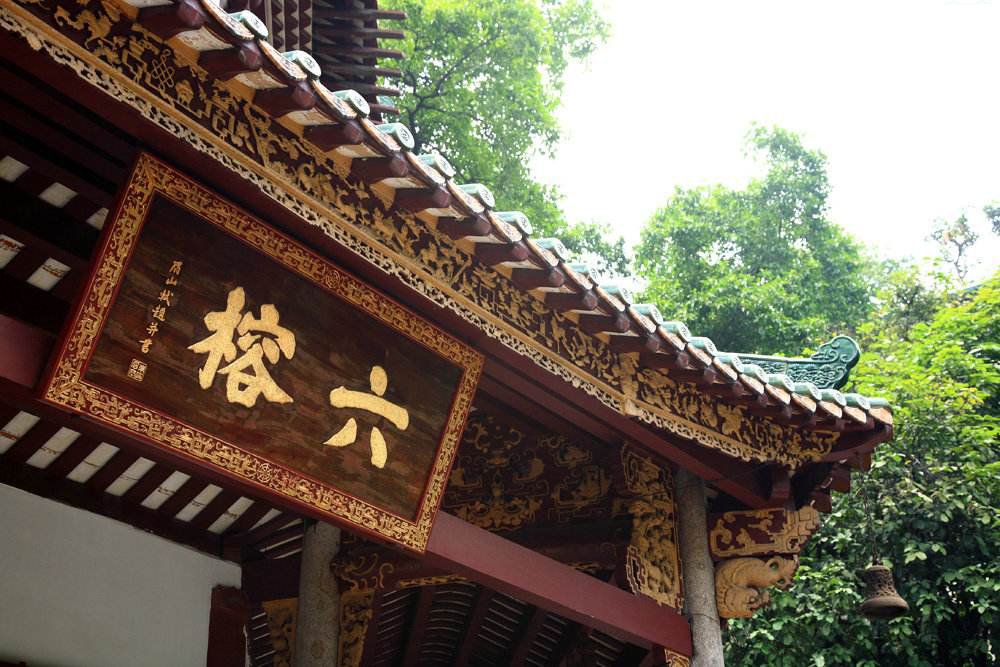
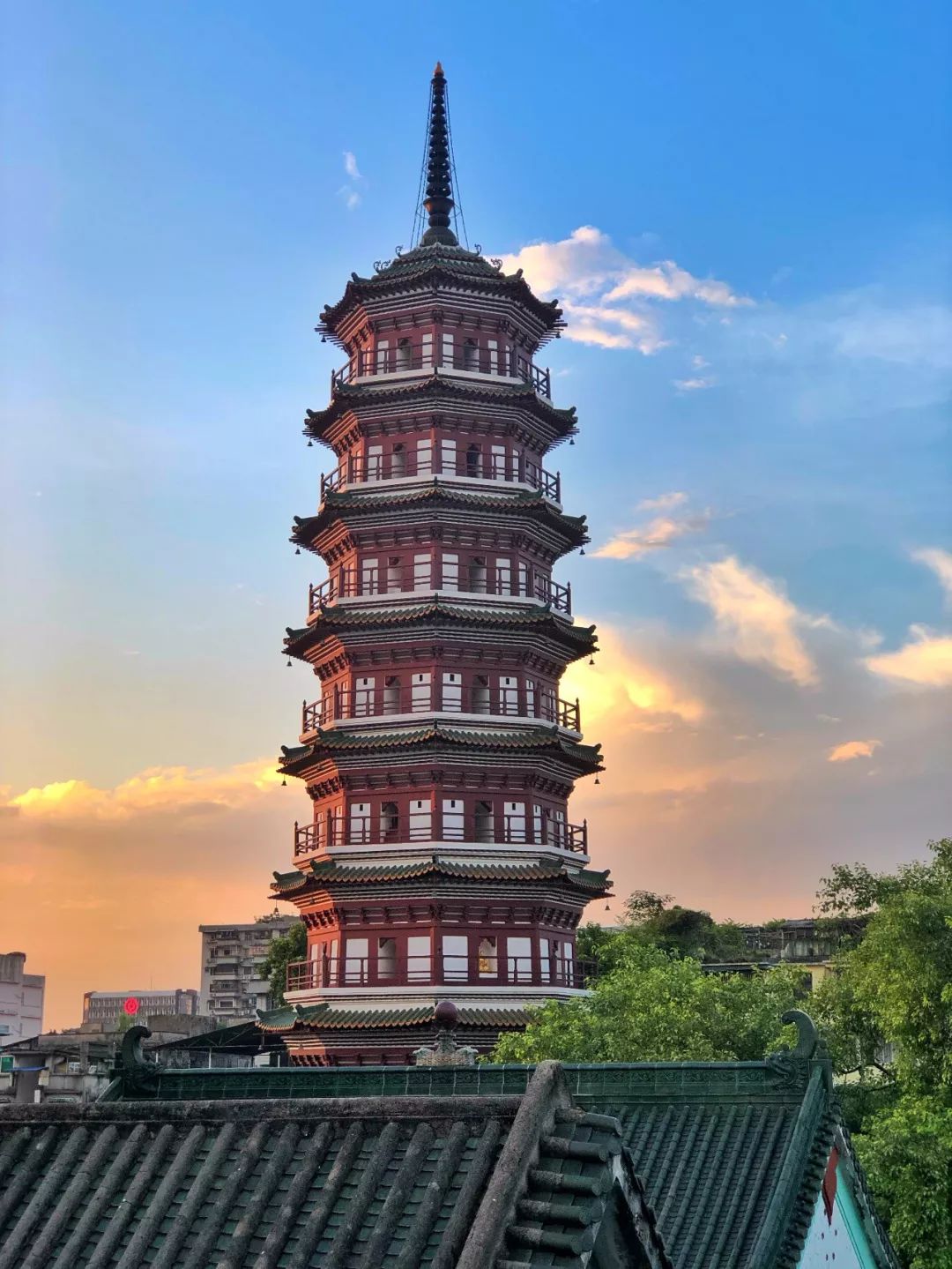
Guangzhou's most storied old temple, founded in 537 and renamed by the poet Su Shi, who inscribed 'Six Banyans' here in 1100. The Flower Pagoda — nine storeys outside, seventeen levels inside, 57.6 metres tall — is the tallest surviving Song pagoda in the region, and a Northern Song bronze Sixth Patriarch sits in the halls. Free entry, daily 8:00-16:30; tower climbing depends on the day.
Dive deeper: full travel guide · transport & map · where to stay & book
The story opens in 537 AD, when the monk Tanyu, an imperial kinsman of the Liang dynasty, founded Baozhuangyan Temple here by decree, housing Buddhist relics he had carried back from the southern seas. The pagoda was rebuilt in 1097, in the Northern Song, and in 1100 the exiled poet Su Shi passed through, admiring six old banyan trees in the courtyard and inscribing the two characters 'Liu Rong' — Six Banyans. The name outlived every other: the temple has been the Temple of the Six Banyan Trees ever since. Its Flower Pagoda remains the tallest surviving ancient pagoda in Guangzhou and one of the oldest standing structures in a city that rebuilds itself constantly.
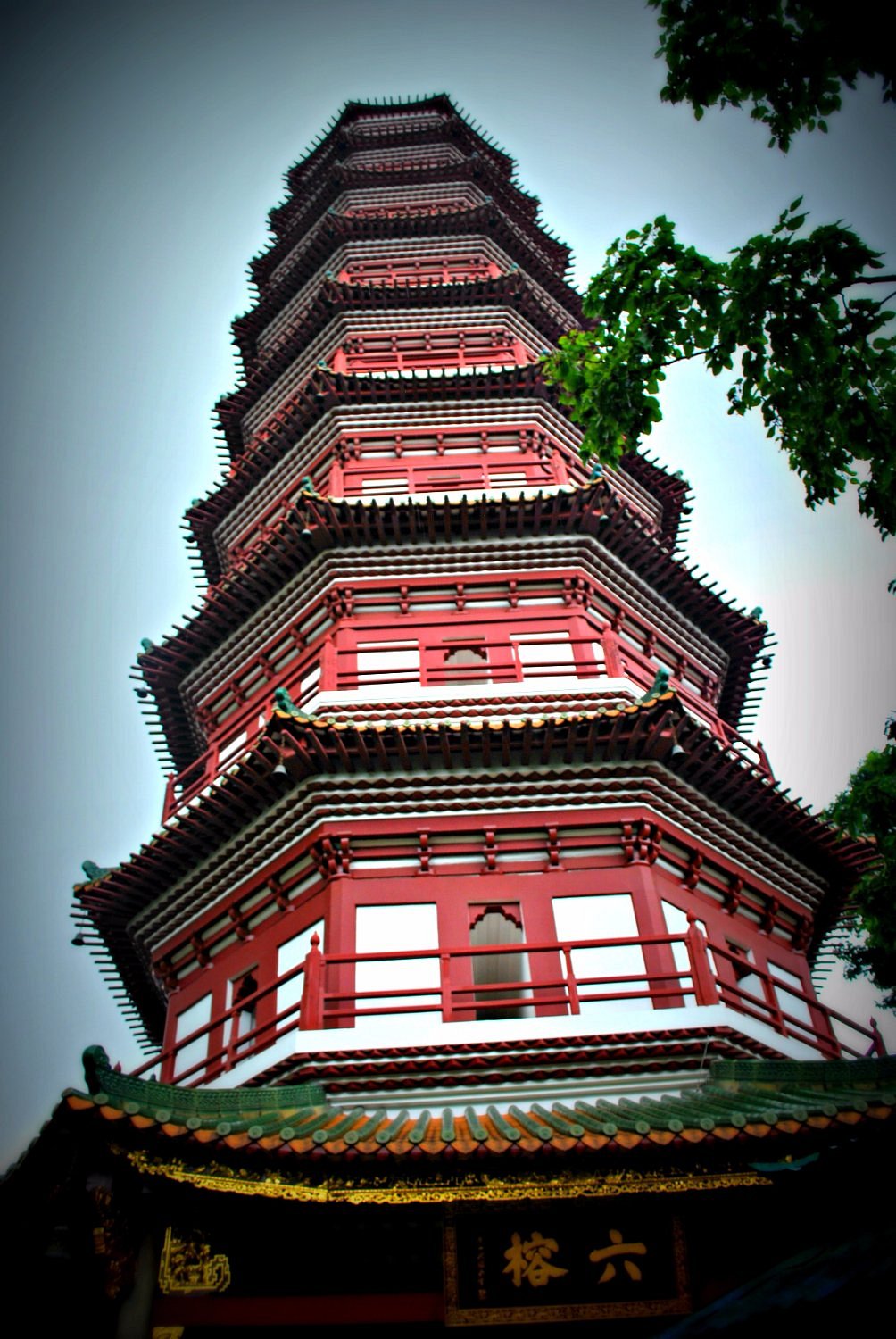
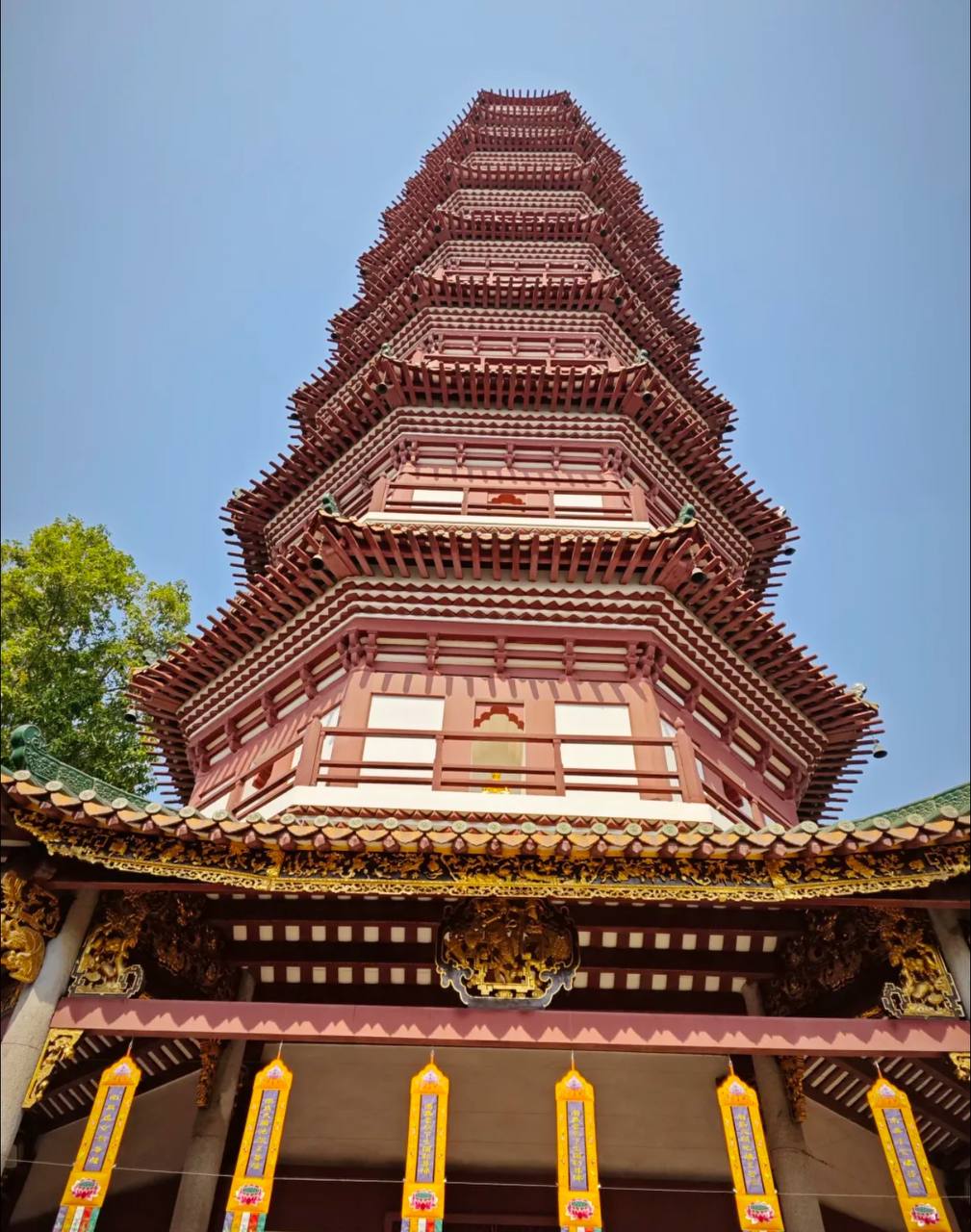
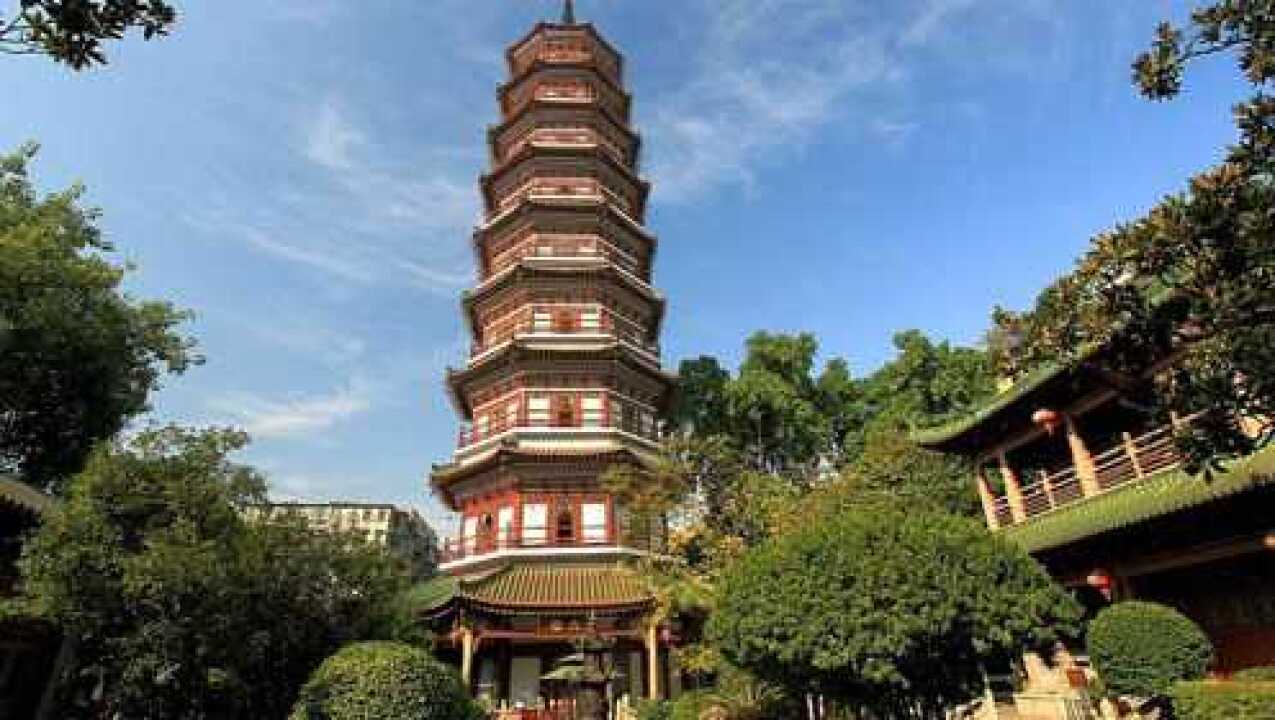
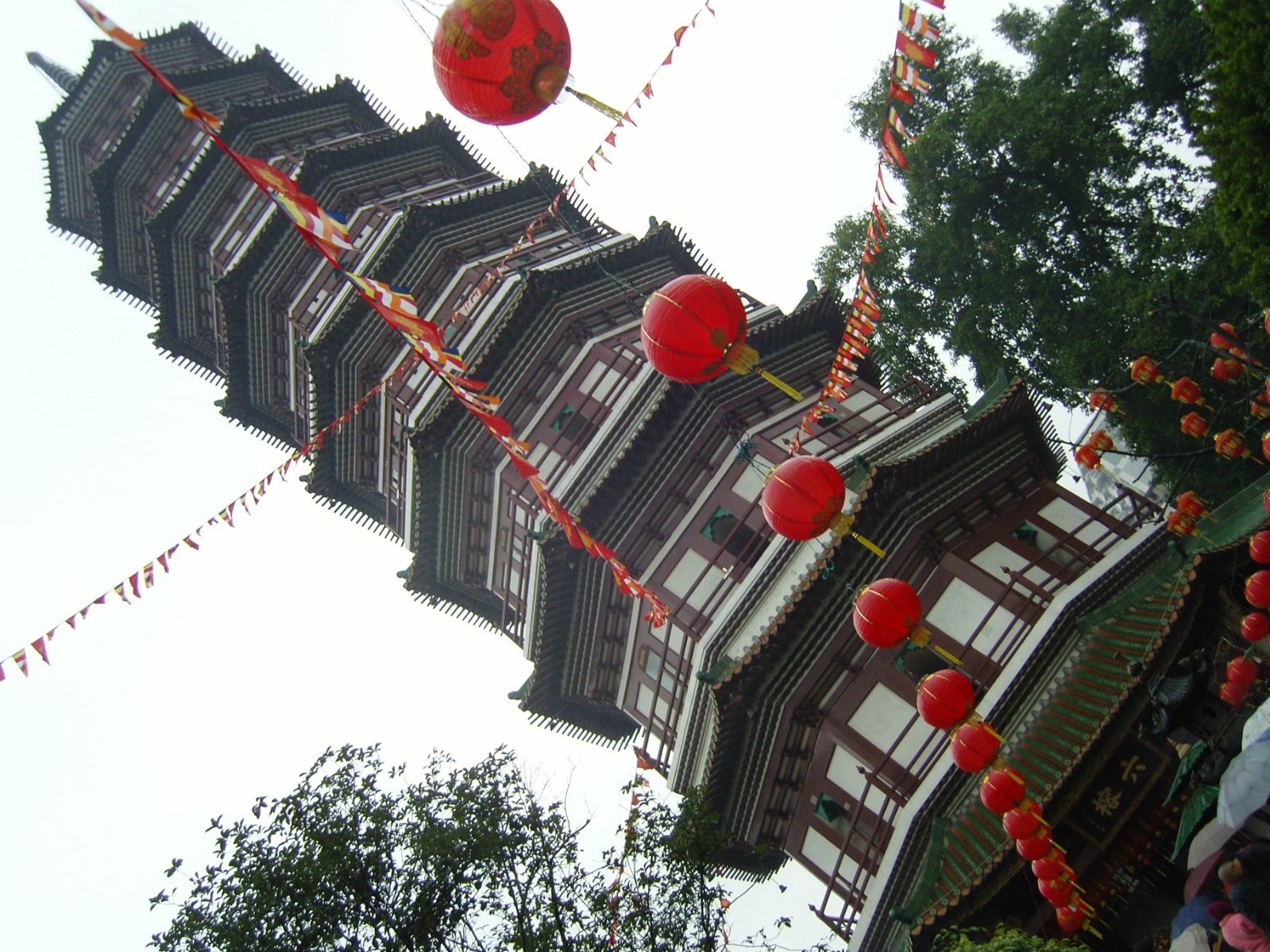
The Flower Pagoda is the sight: nine storeys from the outside, seventeen levels of staircase within, rising 57.6 metres, each level edged with lotus-petal eaves that read, stacked together, like a bud half-open — the origin of the 'flower' name. Tower climbing depends on the day: ask at the gate whether the stairway is open. Inside the halls, a Northern Song bronze statue of Huineng, the Sixth Patriarch of Chan Buddhism, is the treasure of the collection; the Ming and Qing stele corridor by the side wall charts the temple's patrons and rebuilds. Forty-five to seventy-five minutes covers everything at temple pace, and the banyan shade in the front court makes lingering easy.
Under the Yuexiu district's 2026 arrangements the temple keeps daily hours of 8:00-16:30, free of charge, with arrival before 15:45 the safe play. It remains a working neighbourhood monastery rather than a museum — morning light through the banyans, regulars bowing to the halls, monks crossing between offices. The location makes it a natural node on the old-city axis: the Sun Yat-sen Memorial Hall and the Nanyue King Museum sit within a two-kilometre loop, and Guangxiao Temple — the old saying ranks 'Guangxiao for its bodhi tree, Liurong for its pagoda' — is a twelve-minute walk west, its own ¥5 ticket doubling the half-day. Gongyuanqian metro hub is ten minutes' walk south.
Highlights
The Flower Pagoda
Nine storeys outside, seventeen levels within — 57.6 m, the tallest surviving Song pagoda in the region.
Su Shi's 'Six Banyans' plaque
The poet's 1100 inscription that gave the temple its name.
Bronze Sixth Patriarch
A Northern Song bronze of Huineng, Chan Buddhism's sixth patriarch.
Lotus-petal eaves
Stacked petal rooflines that give the pagoda its 'flower' name.
Ming-Qing stele corridor
Centuries of patronage carved in stone along the wall.
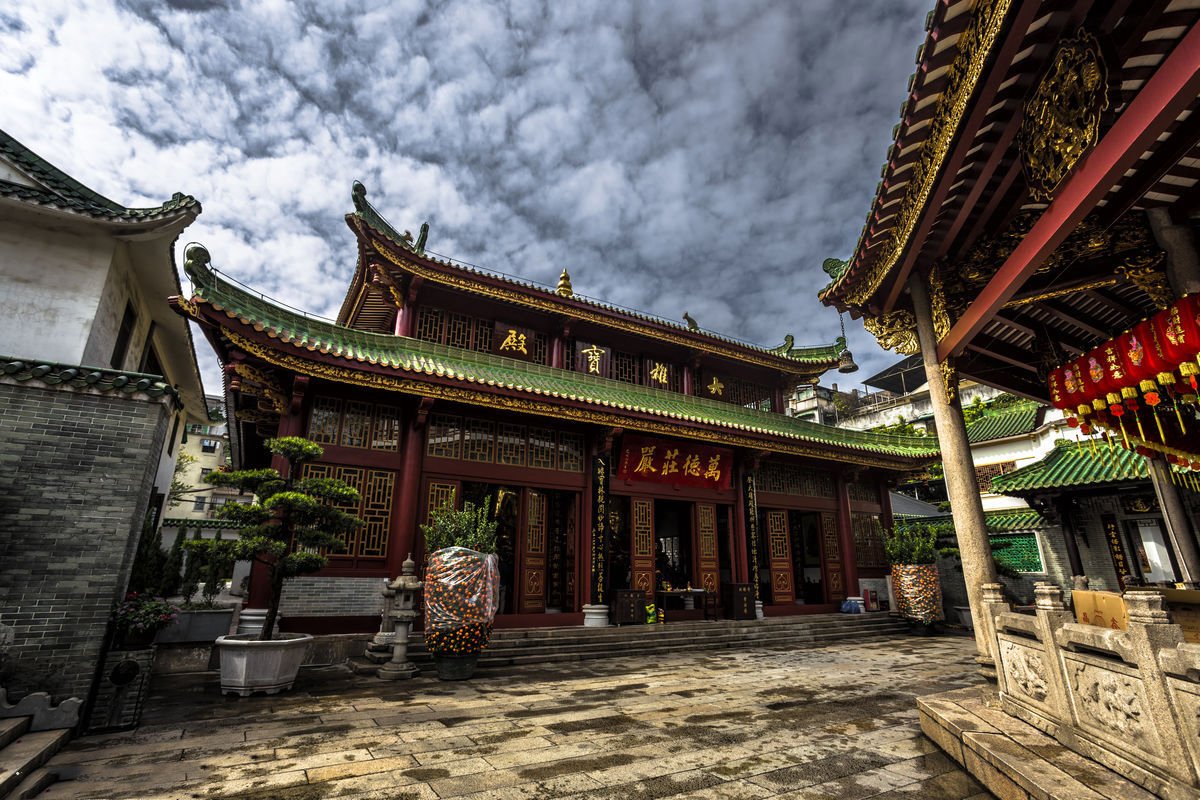
The banyan-shaded courts
A working monastery's daily life under old trees.
Photo Gallery
Comments