 Travel in China
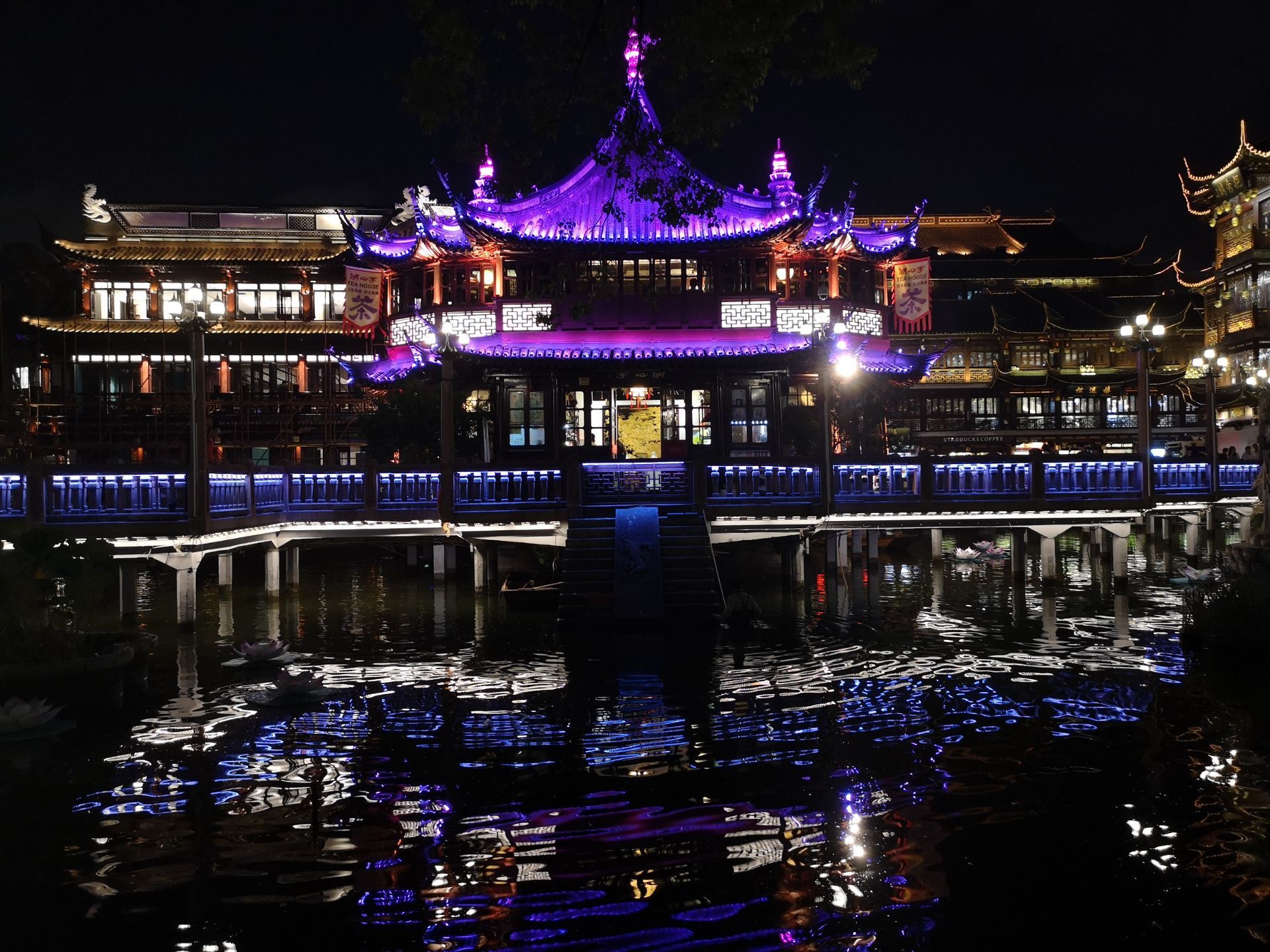
Yuyuan Bazaar is old Shanghai's beating heart: a free, always-open maze of curved-roof lanes around the Ming-dynasty Yu Garden, where the Nine-Zigzag Bridge crosses the lotus pond to the 1784 Huxinting Teahouse and the City God Temple draws incense crowds. Xiaolongbao steam from the 1900-founded Nanxiang counters, silk, gold and snack shops pack the alleys, and the rooflines glow nightly. The walled garden itself is a separate ticketed sight; the bazaar streets, bridge and lights cost nothing.
Dive deeper: full travel guide · transport & map · where to stay & book
Yuyuan Bazaar traces its story to the Ming dynasty, when the scholar-official Pan Yunduan built the adjacent Yu Garden between 1559 and 1577 as a private family retreat. Over the following centuries, a lively commercial quarter grew up around the garden's walls, fuelled by pilgrims visiting the City God Temple, which was relocated to this spot in 1403 and rebuilt in its present form after a devastating fire in the 1920s. Today the bazaar is not a single building but a sprawling complex of reconstructed curved-roof lanes and pavilions, largely redeveloped in the 1990s to evoke the old Chinese city that once stood apart from the foreign concessions. Free to enter and open around the clock, it ranks among Shanghai's most visited attractions.
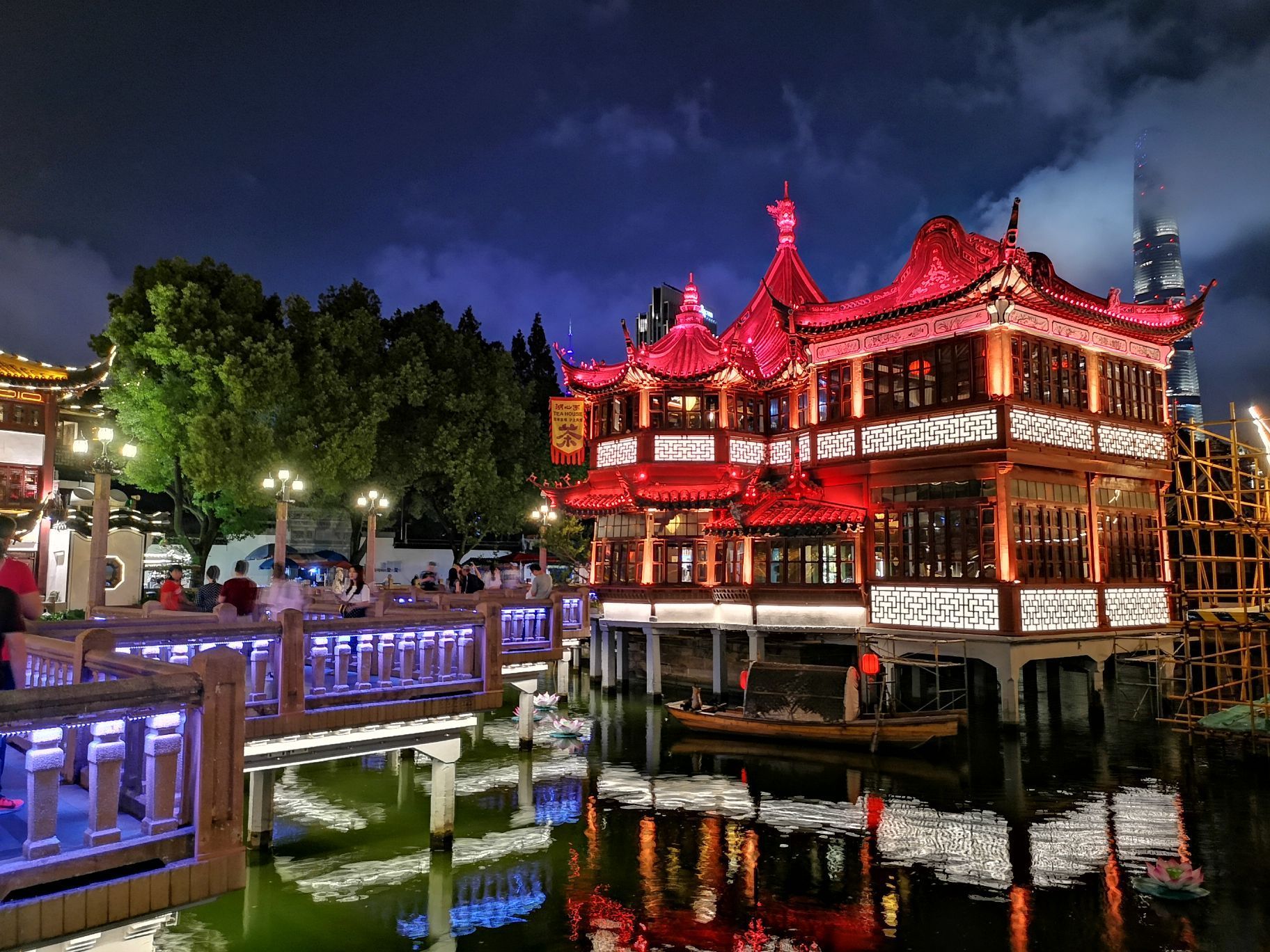
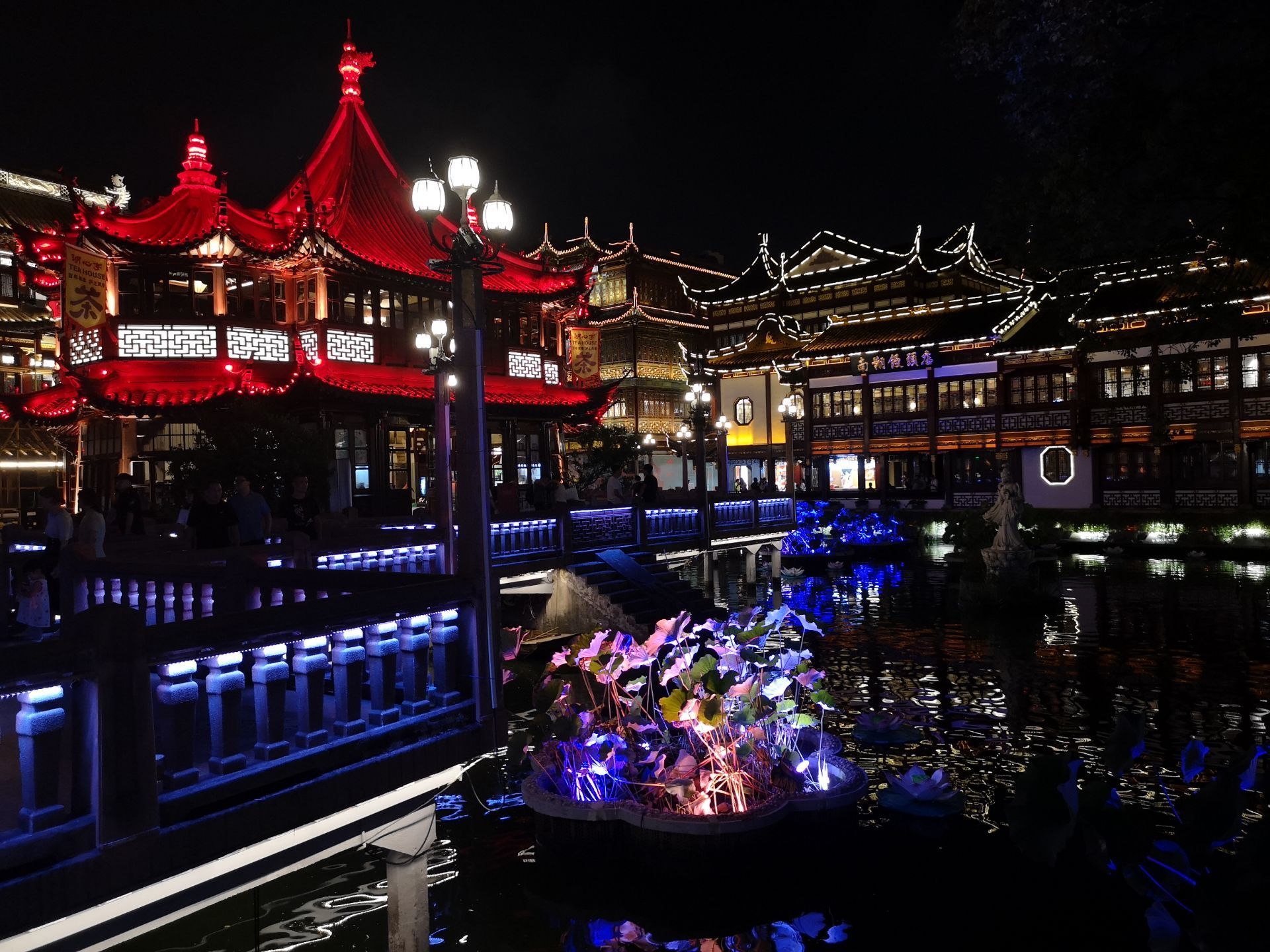
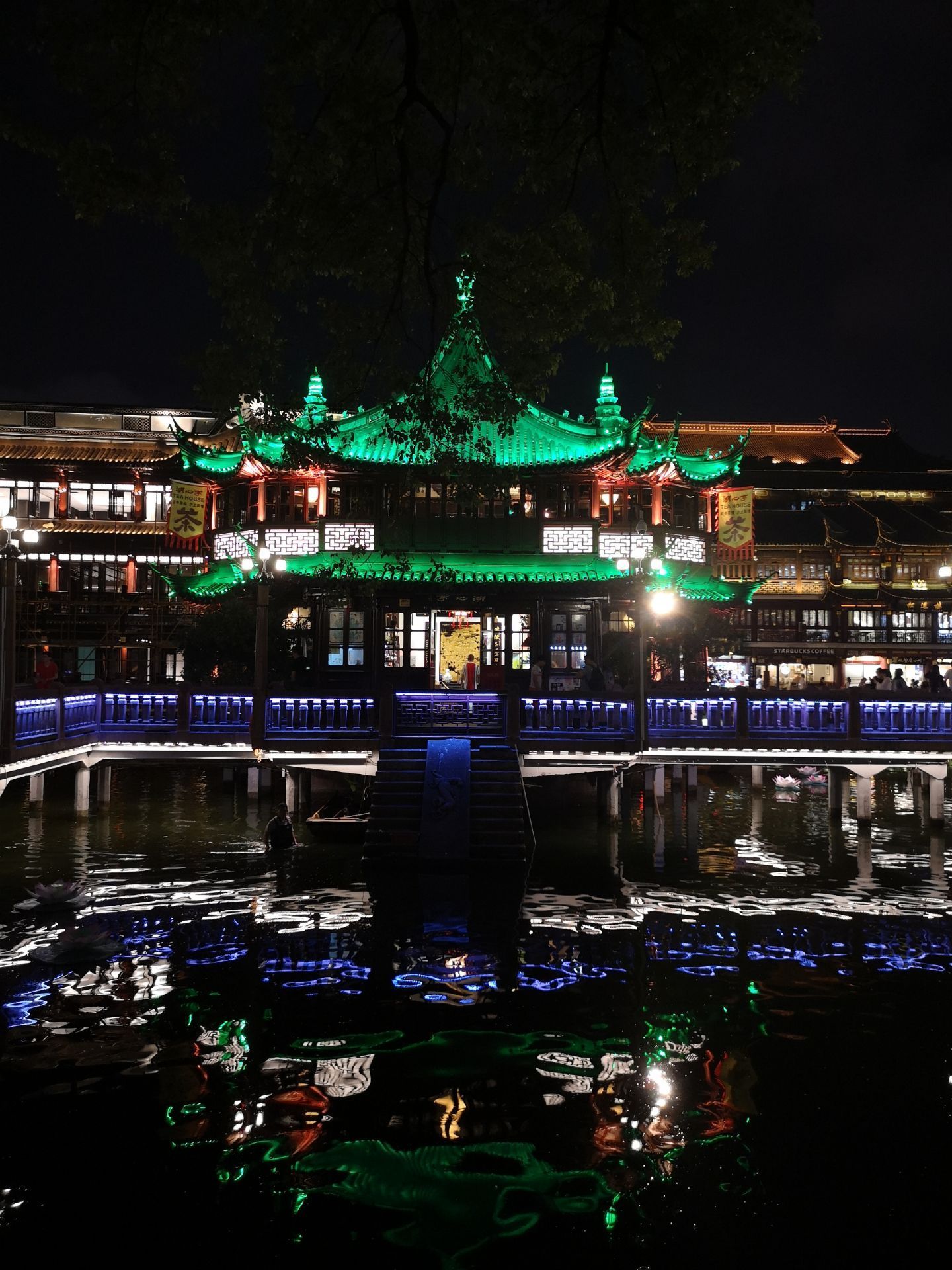
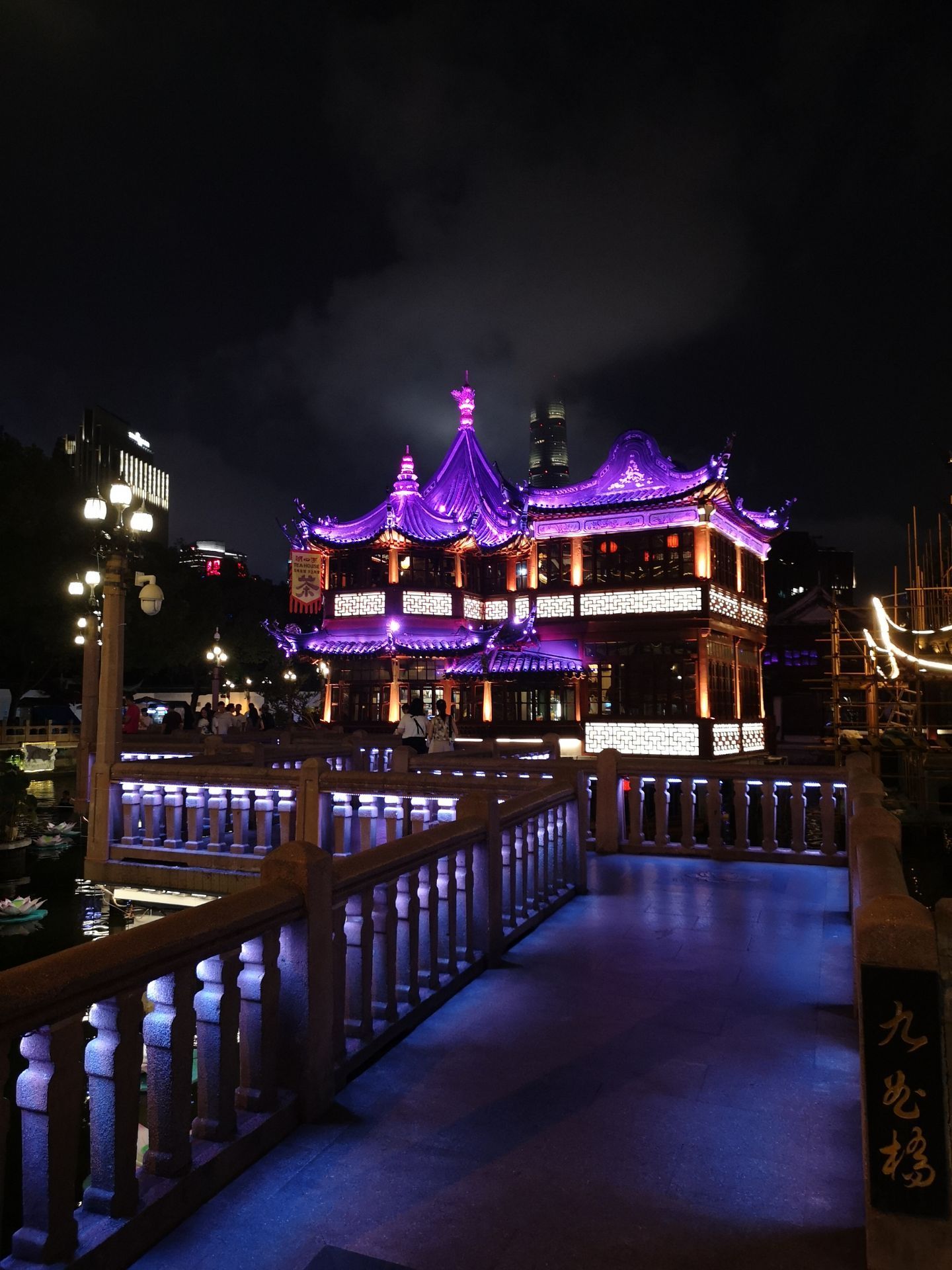
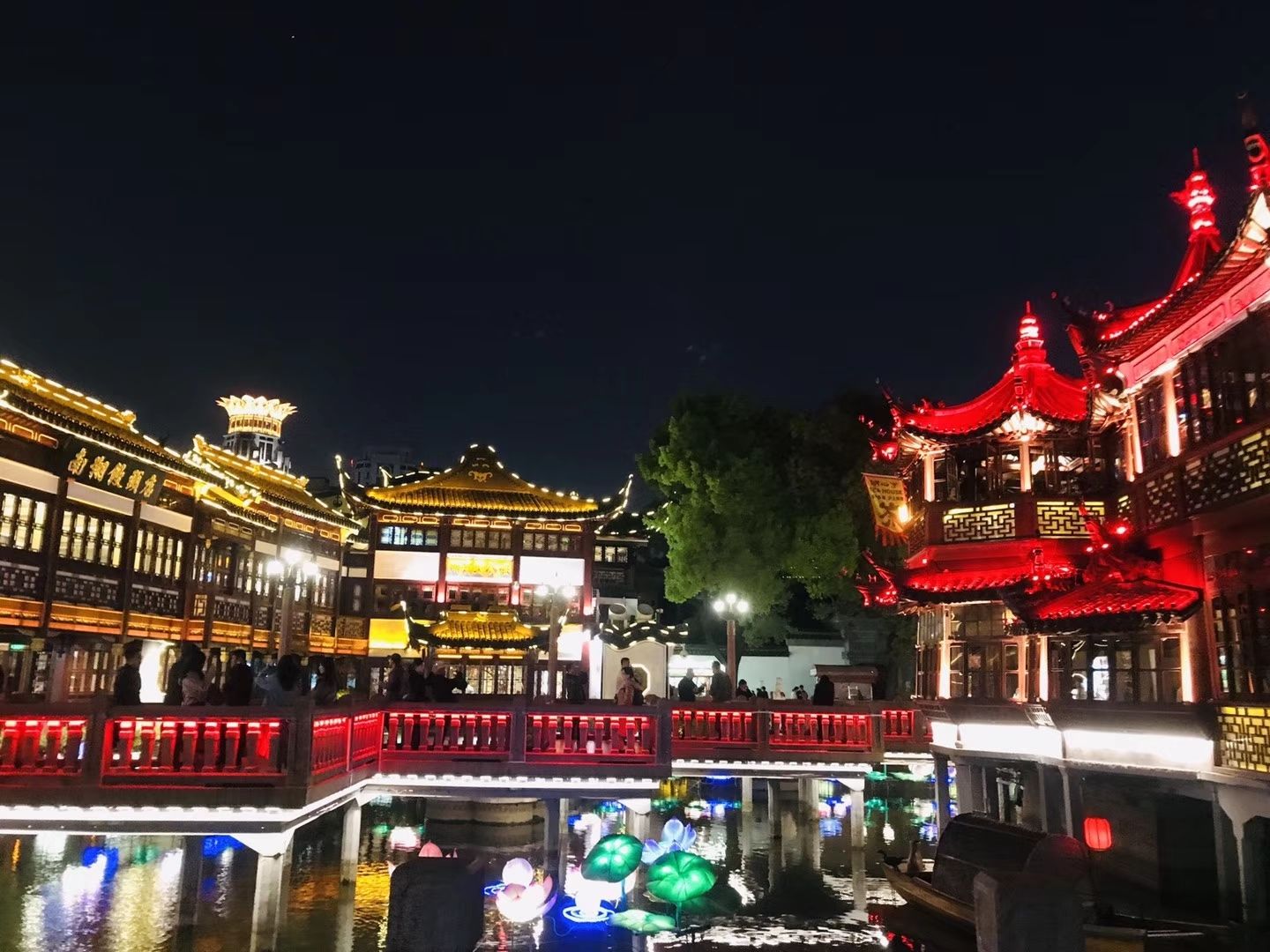
The bazaar's centrepiece is the Nine-Zigzag Bridge, a deliberately crooked crossing — legend holds that evil spirits cannot manage its turns — that arcs over a lotus pond to Huxinting Teahouse, an 1784 teahouse pavilion on its own island where waiters in traditional gowns serve gaiwan tea in tiered surroundings. Photographers crowd the bridge year-round, drawn by the goldfish, lantern reflections and the famous view of the teahouse. Nearby, the City God Temple fills with spiral incense coils burning overhead, while the 1900-founded Nanxiang counter steams its celebrated xiaolongbao at the pond corner — the takeaway window moves faster than the sit-down queue. The lanes themselves pack in silk shops, gold stores and snack stalls, and after dusk the curved-tile rooflines glow gold and red in the definitive Shanghai postcard shot.
In 2026 Yuyuan Bazaar remains both a working tourist district and a genuine neighbourhood hub, drawing tens of millions of visitors annually and peaking during the Chinese New Year Lantern Festival season, when late January to early March brings zodiac lanterns and floating installations across themed zones. Practical details are simple: the lanes and bridge are free and accessible 24 hours, shops run roughly 10:00–22:00, the teahouse about 09:00–21:00, and the temple 08:30–16:30, while the Yu Garden itself requires a separate ticket. Sat in Shanghai's old city just south of the Bund, the bazaar links the colonial riverfront with the historic Chinese town, making it an easy, atmospheric stop on any walking route through central Shanghai.
Highlights
Nine-Zigzag Bridge & lotus pond
The crooked bridge (evil spirits can't cross it, they say) packed with photographers, goldfish and lantern reflections.
Huxinting Teahouse
The 1784 teahouse on the pond island; gaiwan tea in a tiered setting, waiters in gowns.
Night rooftop illumination
After dusk the curved-tile rooflines light gold and red — the postcard Shanghai shot, free.
City God Temple
The working Taoist temple with spiral incense coils burning overhead.
Nanxiang xiaolongbao queue
The 1900 original steaming baskets at the pond corner; the takeaway window beats the sit-down queue.
Lantern Festival season
Late January to early March: zodiac lanterns, floating installations and themed zones across the old city.
Photo Gallery
Comments