 Travel in China
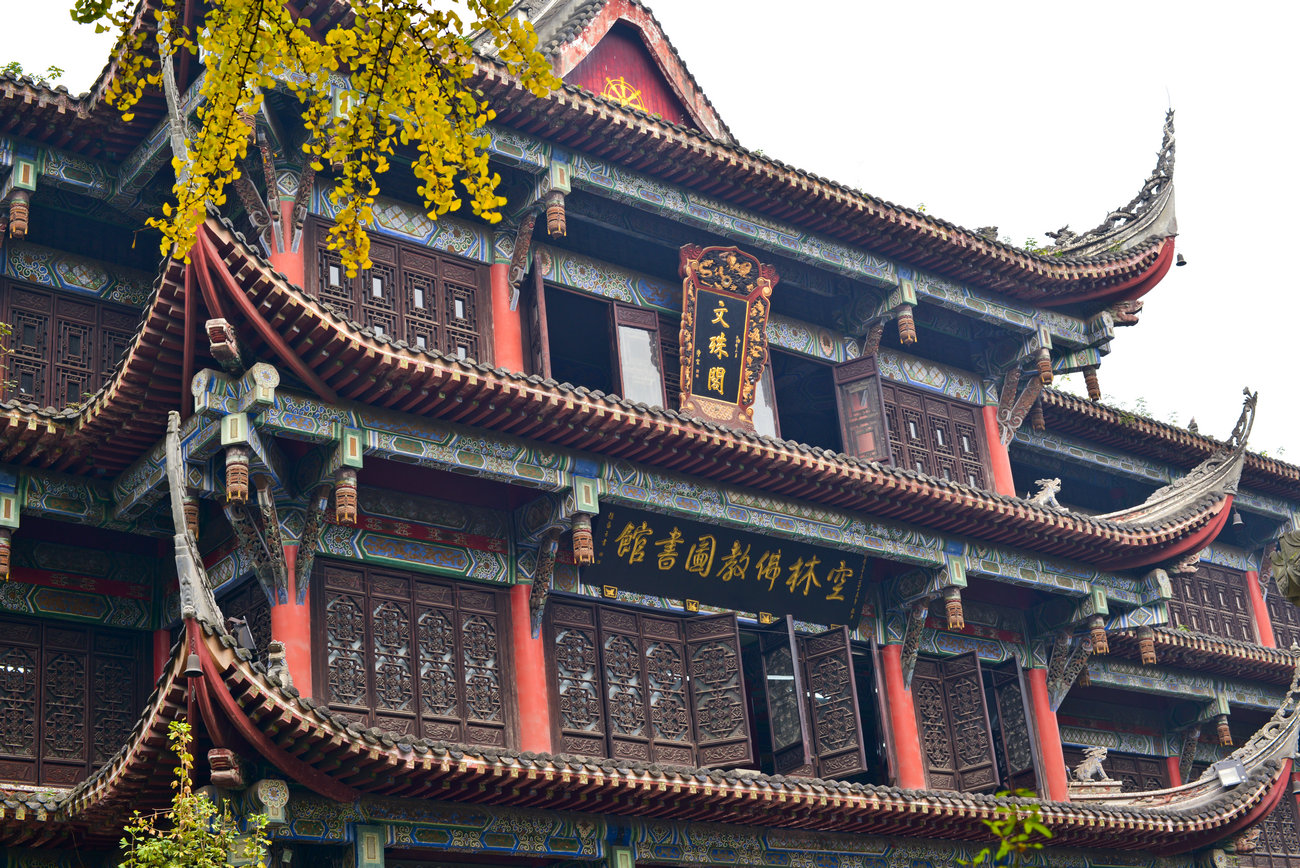
Wenshu Monastery is Chengdu's best-preserved Buddhist temple — founded in the Sui dynasty and rebuilt under Kangxi. Free to enter, its six timber halls shelter 300-plus Buddhas and relics of the pilgrim Xuanzang, while locals pack the courtyard teahouse and vegetarian kitchen; the red walls and bamboo shadows make it the city's most serene photo stop, ringed by the snack lanes of Wenshu Fang.
Dive deeper: full travel guide · transport & map · where to stay & book
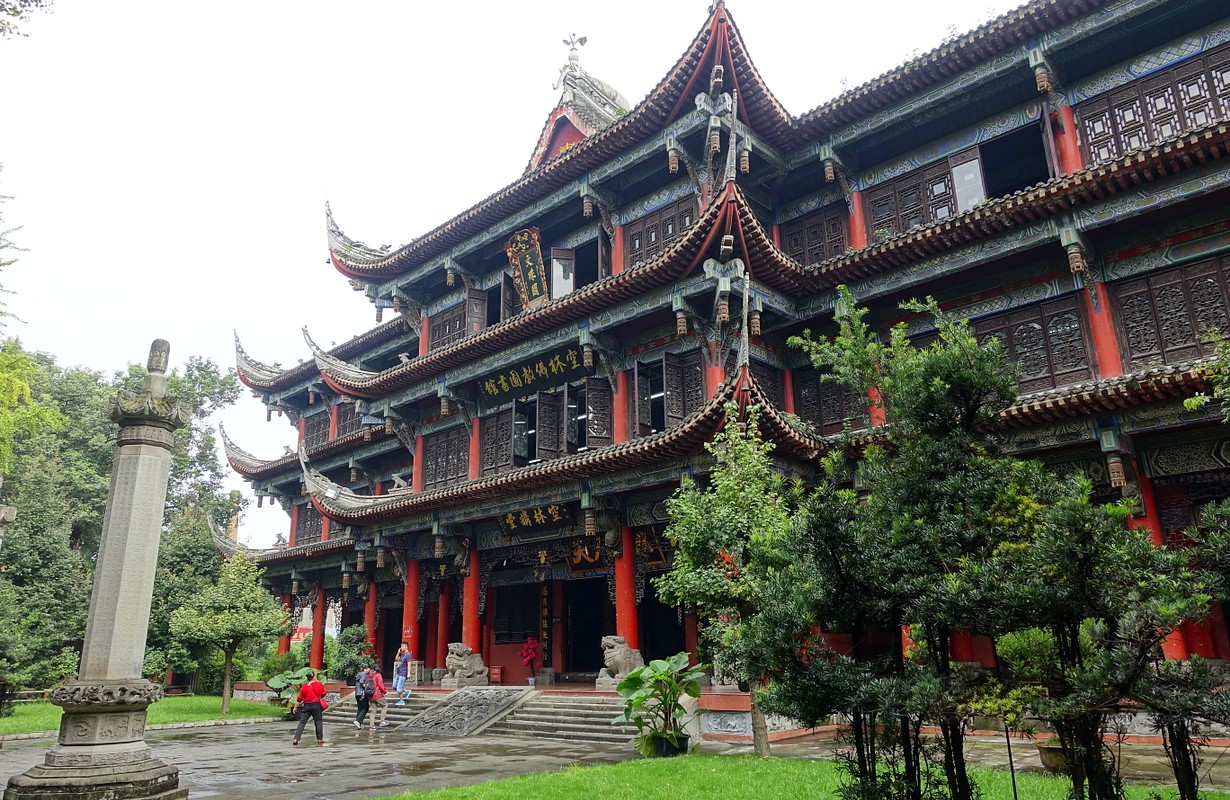
Wenshu Monastery traces its origins to the Sui dynasty, making it one of Chengdu's oldest places of worship, though little survives from those early centuries. The temple's defining moment came in 1702, when the Kangxi Emperor bestowed his imperial calligraphy — the "Konglin" plaque — along with a new name and patronage, prompting the reconstruction that produced the complex visitors see today. The resulting Qing-era halls of timber and grey tile now form the most complete Qing Buddhist monastery in central Chengdu. Its full name, Xinxiang Zen Temple, honours the bodhisattva Manjushri (Wenshu in Chinese), the embodiment of wisdom, and the temple remains a working monastery, its heritage preserved through monastic continuity rather than museumification.
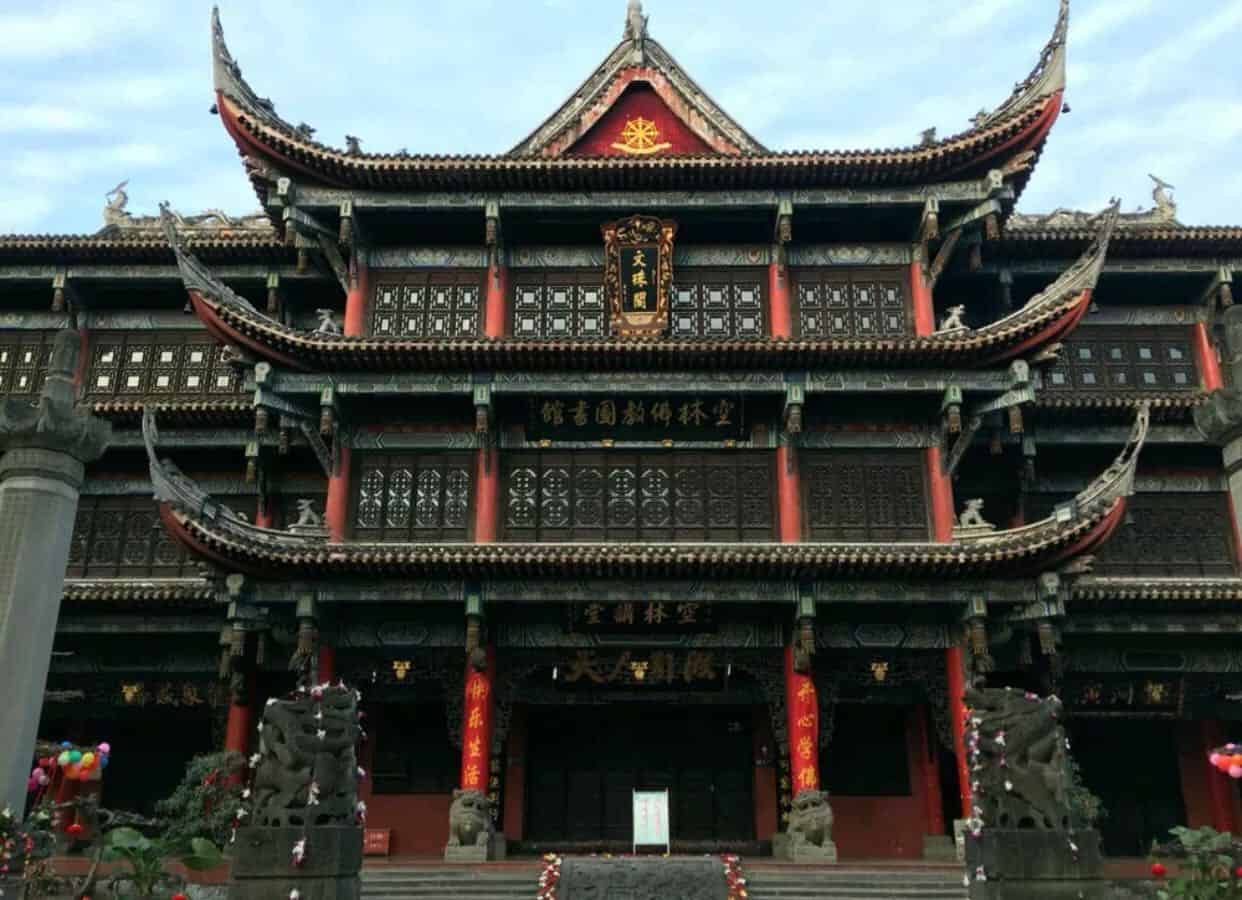
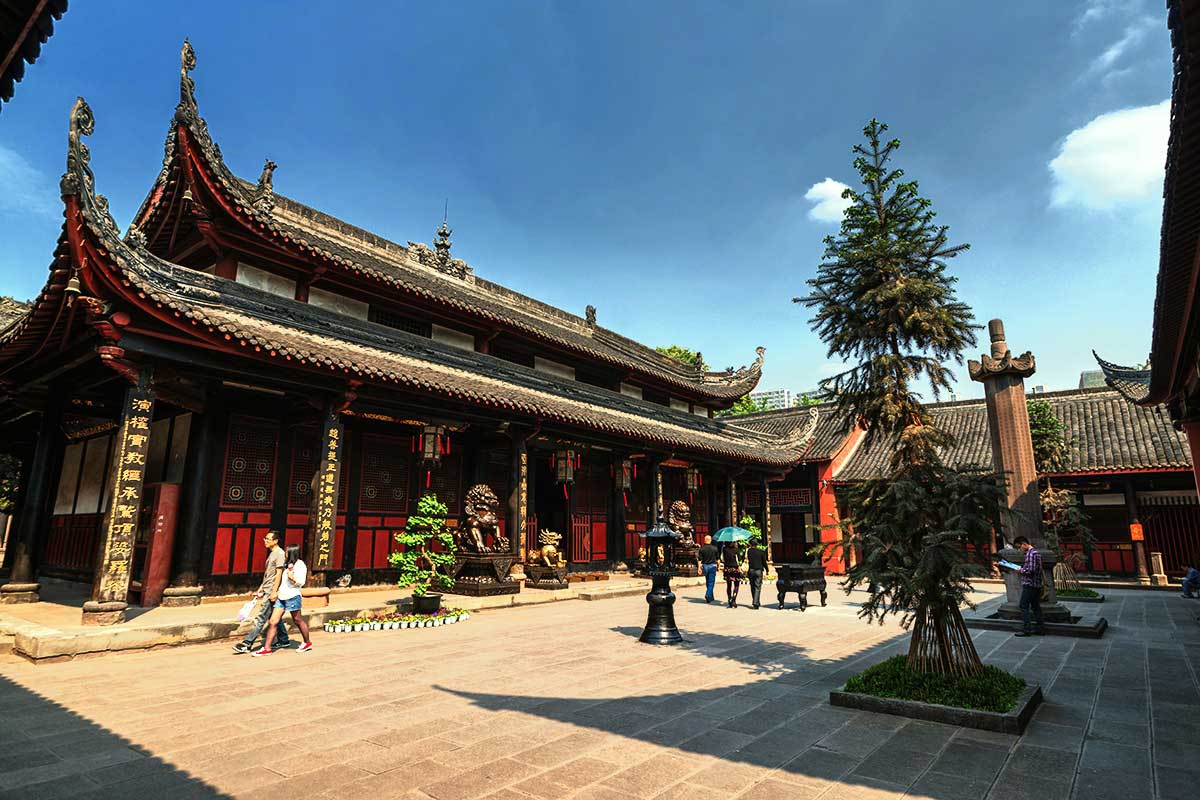
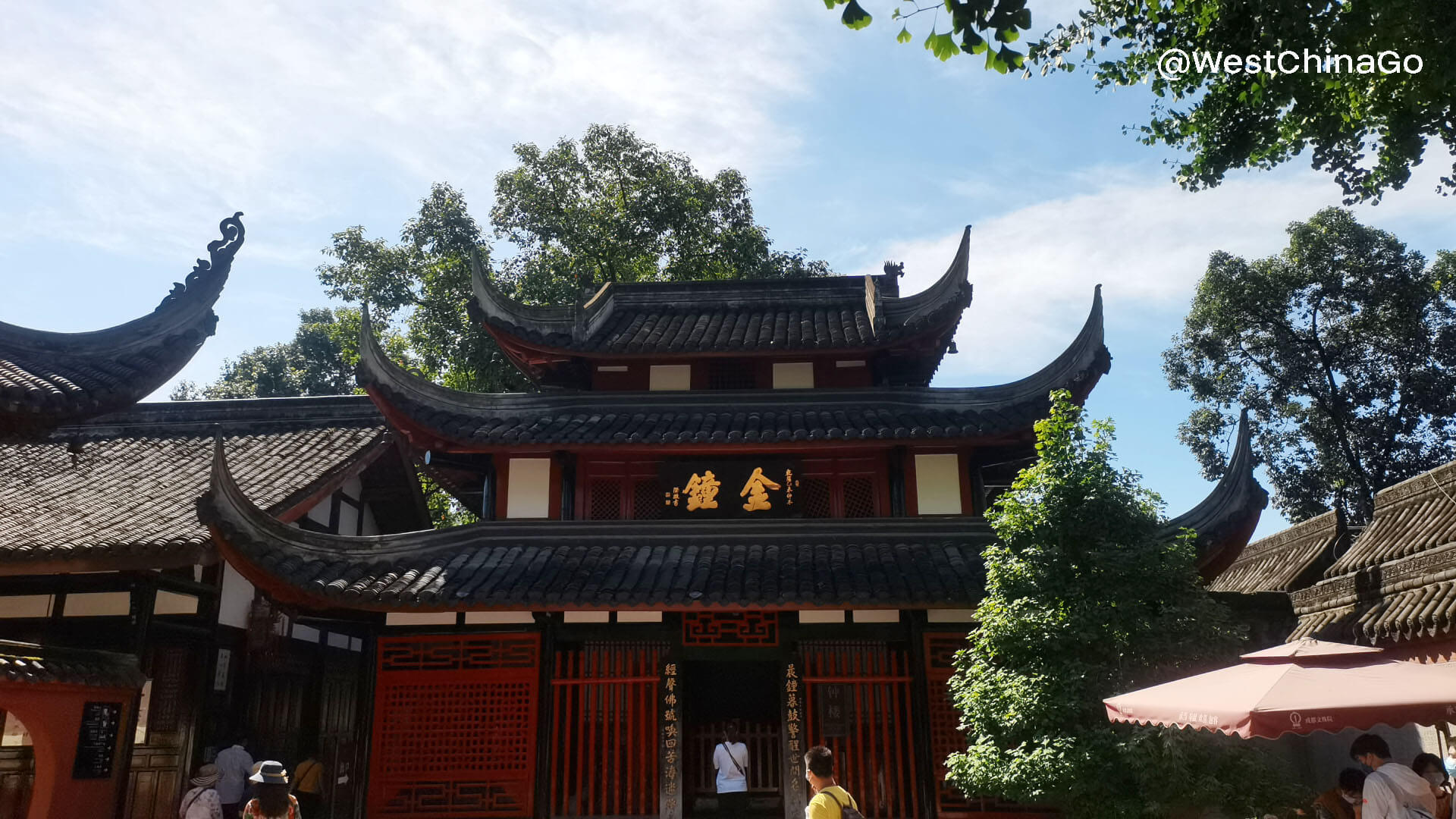
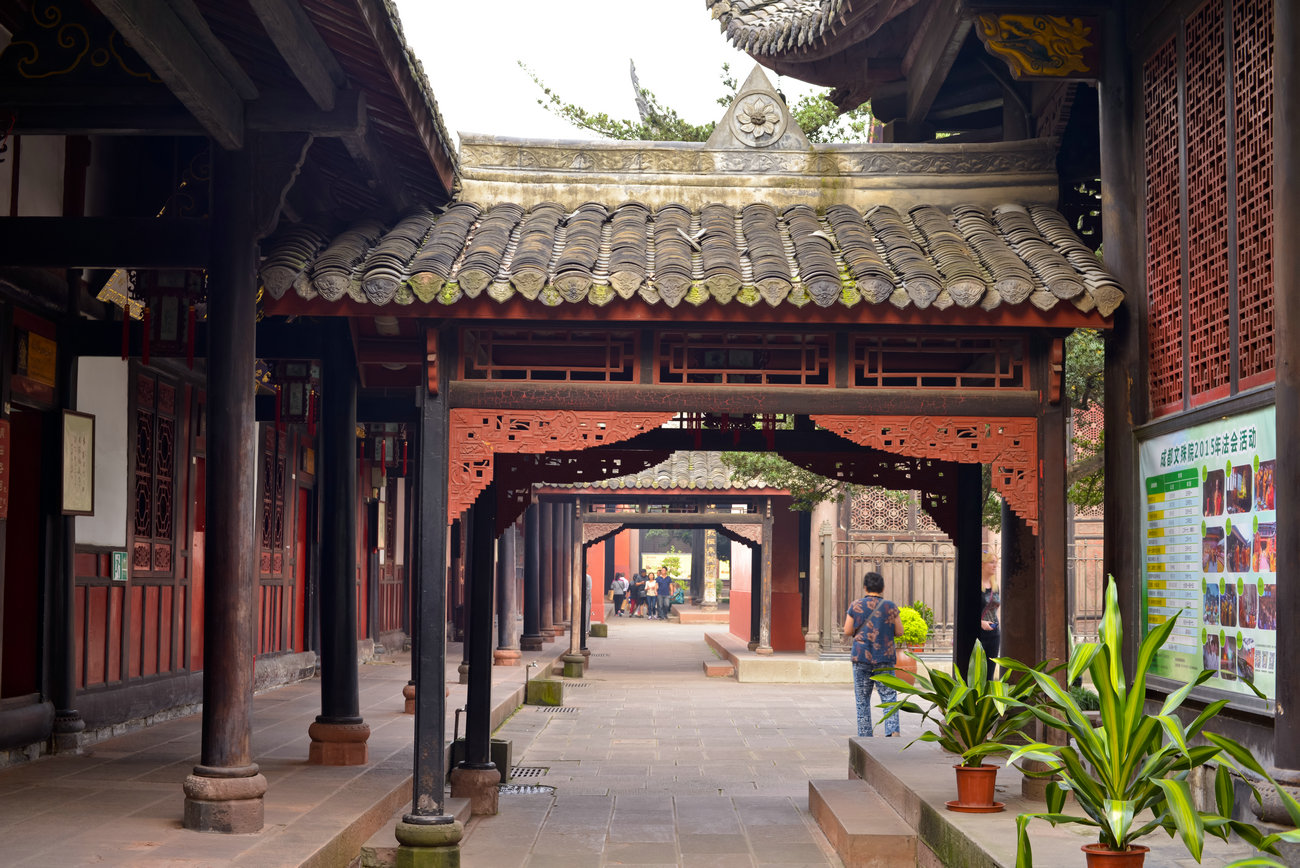
The monastery unfolds across a classical north-south axis of six timber halls, each rising behind courtyards shaded by ancient ginkgoes and bamboo; more than 300 Buddhas and bodhisattvas line the altars, and a reliquary connected to the Tang-dynasty pilgrim Xuanzang is enshrined here. The Thousand Buddha Peace Pagoda, an iron-sheathed brick tower ringed by prayer wheels, marks the southern entrance. Visitors gravitate to the famous red wall, its gold characters reading "World Peace, Human Happiness" — Chengdu's most beloved photo backdrop, especially for costume portraits. At the heart of it all sits the Xiang Yuan teahouse, where bamboo chairs, gaiwan tea, resident monks and mahjong-playing locals share a single courtyard of remarkable tranquillity, with incense drifting from the halls.
In 2026, Wenshu Monastery remains Chengdu's best-preserved Buddhist temple and one of the city's essential experiences — remarkably, entry is free, with hours from 08:00 to 17:00 daily (last entry 16:30), while the teahouse and sutra-copying sessions continue into the evening until around 22:00. The vegetarian restaurant, Xiang Xin Hall, draws devoted crowds for its meat-free Sichuan classics, particularly the ¥18 mushroom rice. The surrounding Wenshu Fang quarter wraps the temple in snack lanes, teahouses and craft shops, binding the monastery seamlessly into the fabric of the old city; arriving via the Wenshu Monastery metro station, visitors step from modern Chengdu straight into its most serene and enduring sanctuary.
Highlights
Konglin Plaque & Kangxi Heritage
The 1702 imperial calligraphy and Qing timber halls — the most complete Qing Buddhist complex in the city centre.
Red Walls & Gold Inscriptions
The grey-tiled red wall with 'World Peace, Human Happiness' characters — Chengdu's classic costume-photo backdrop.
Thousand Buddha Peace Pagoda
The iron brick pagoda by the south entrance, ringed by prayer wheels.
Courtyard Teahouse (Xiang Yuan)
Bamboo chairs, gaiwan tea, monks and mahjong players sharing one courtyard — Chengdu's slow life at its purest.
Vegetarian Kitchen (Xiang Xin Hall)
Meat-free Sichuan classics; the mushroom rice (~¥18) is a cult favourite.
Sutra Copying
Brush-and-ink copying of Buddhist texts at a shaded table with tea service — a meditative hour open to all.
Photo Gallery
Comments