 Travel in China
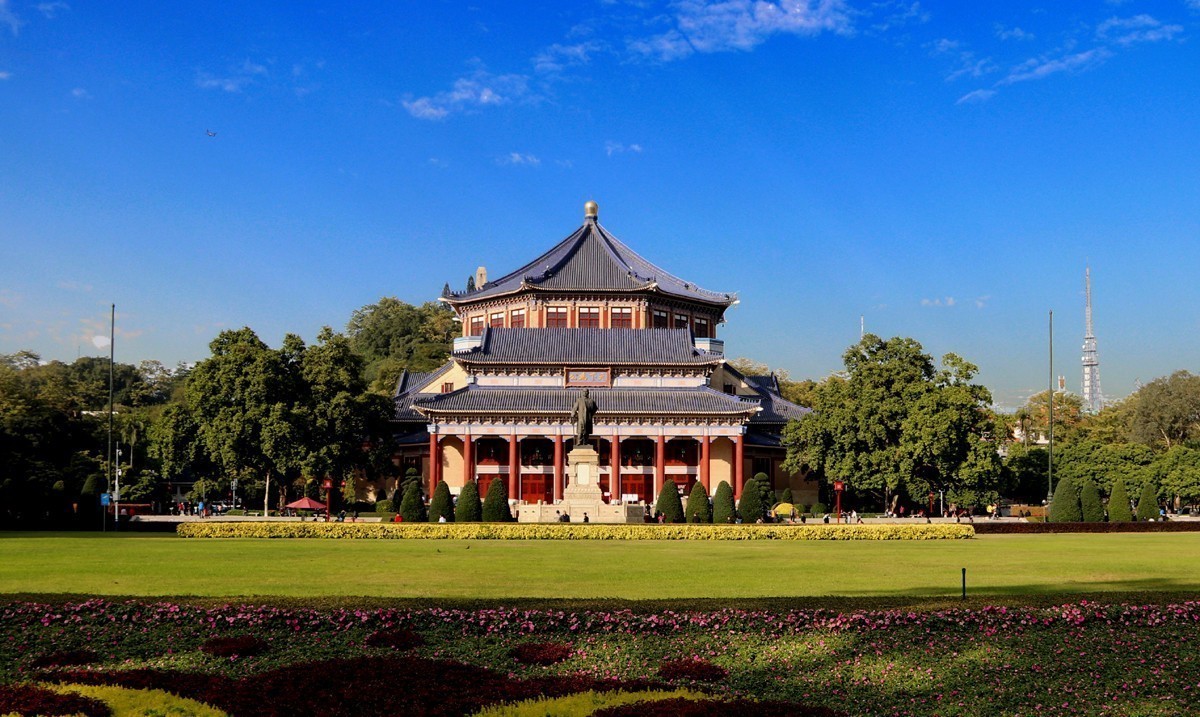
Guangzhou's 1931 monument to Sun Yat-sen by architect Lü Yanzhi: an octagonal palace of blue glazed tiles whose steel dome spans 71 metres without a single column over 3,238 seats. Grounds are free 6:00-22:00 with a 300-year kapok tree; the CNY 10 interior opens 9:00-17:30, closed Mondays and on performance days. This is where Japan's south-China commander signed the 1945 surrender. Free talks at 9:30 and 16:00.
Dive deeper: full travel guide · transport & map · where to stay & book
The site has seen the highest and lowest of the Republic's fortunes. Here, in 1921, Sun Yat-sen took office as 'extraordinary president' of the southern government; here, in 1922, the guns of his one-time ally Chen Jiongming burned the presidential compound to the ground. The memorial that rose in its place was designed by Lü Yanzhi — the young architect also responsible for the Sun Yat-sen Mausoleum in Nanjing — with foundations laid in 1929 and the hall finished in 1931. History came full circle in September 1945, when General Tanaka Naoki, commander of Japanese forces in south China, signed the region's surrender inside the hall. In 2001 it was listed among China's key protected heritage sites.
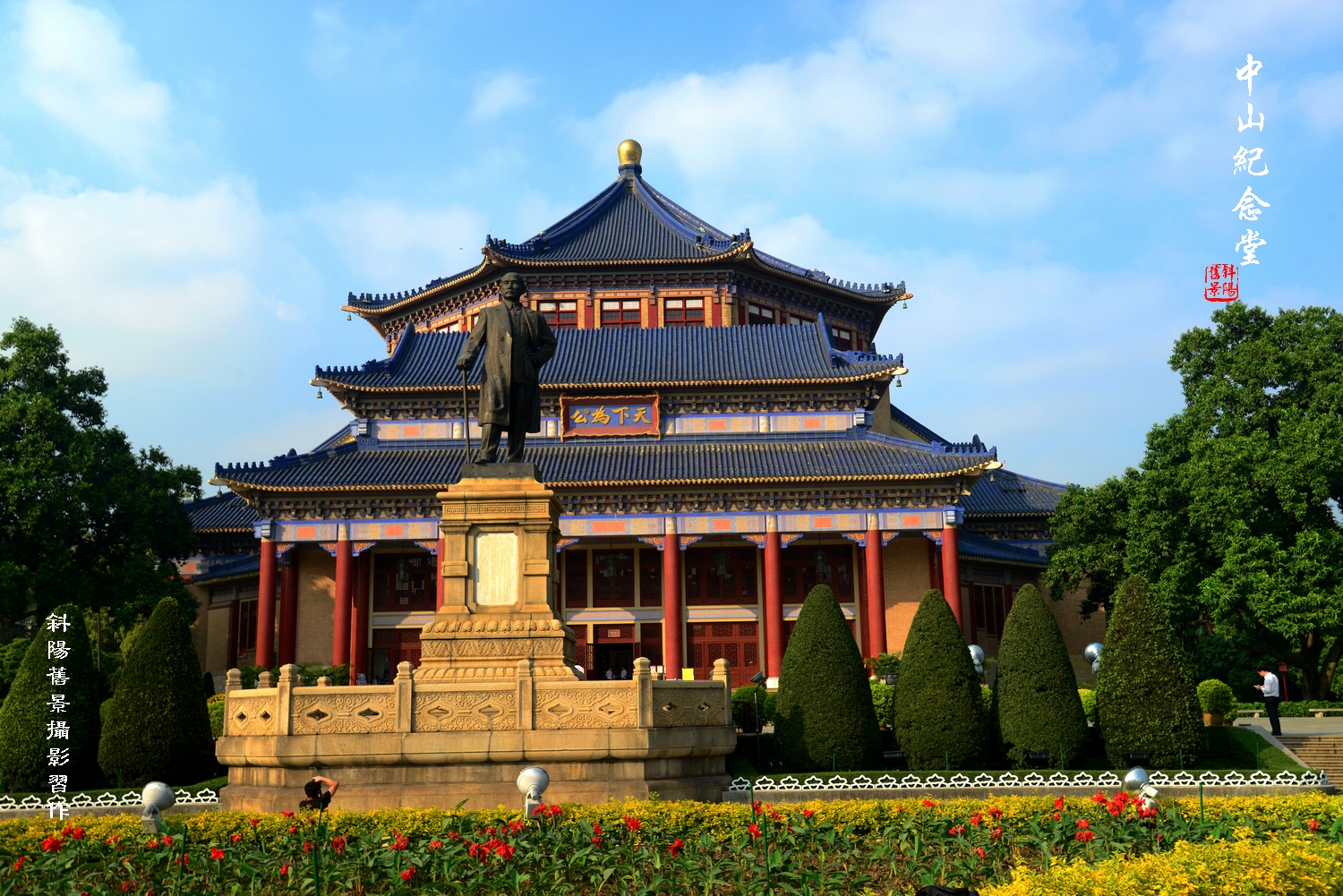
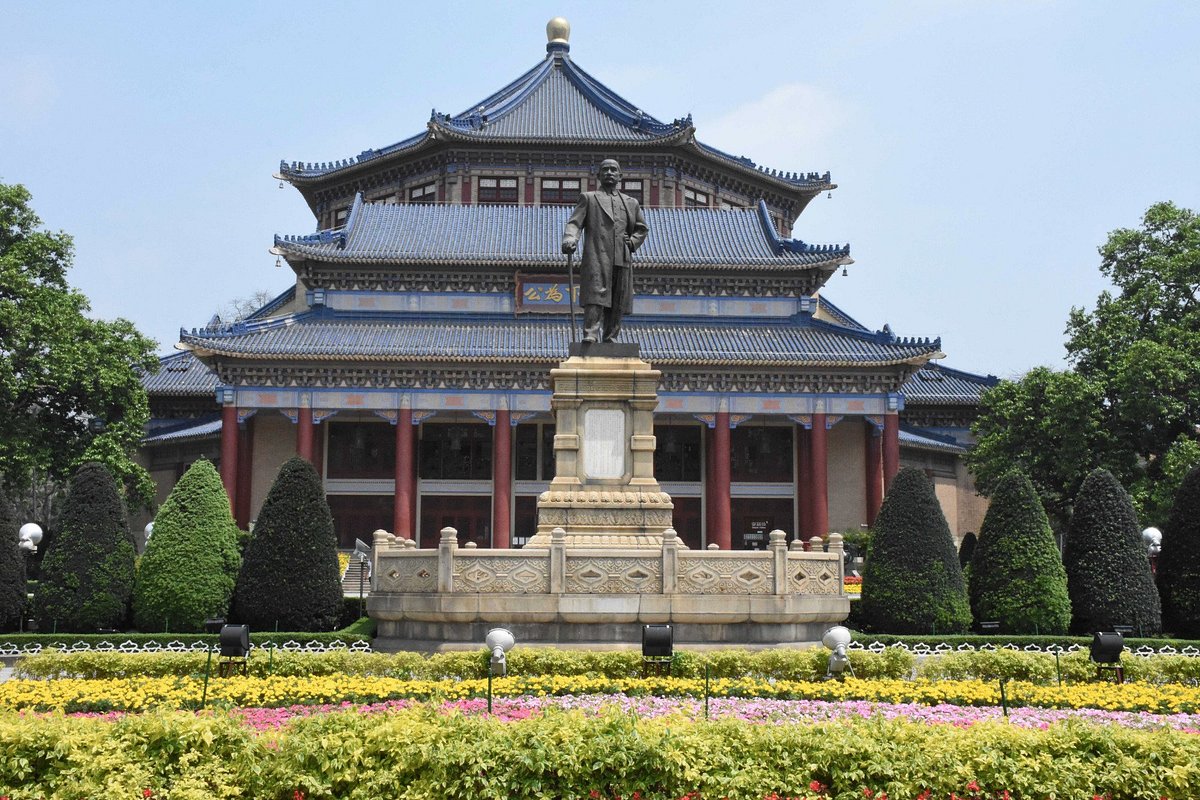
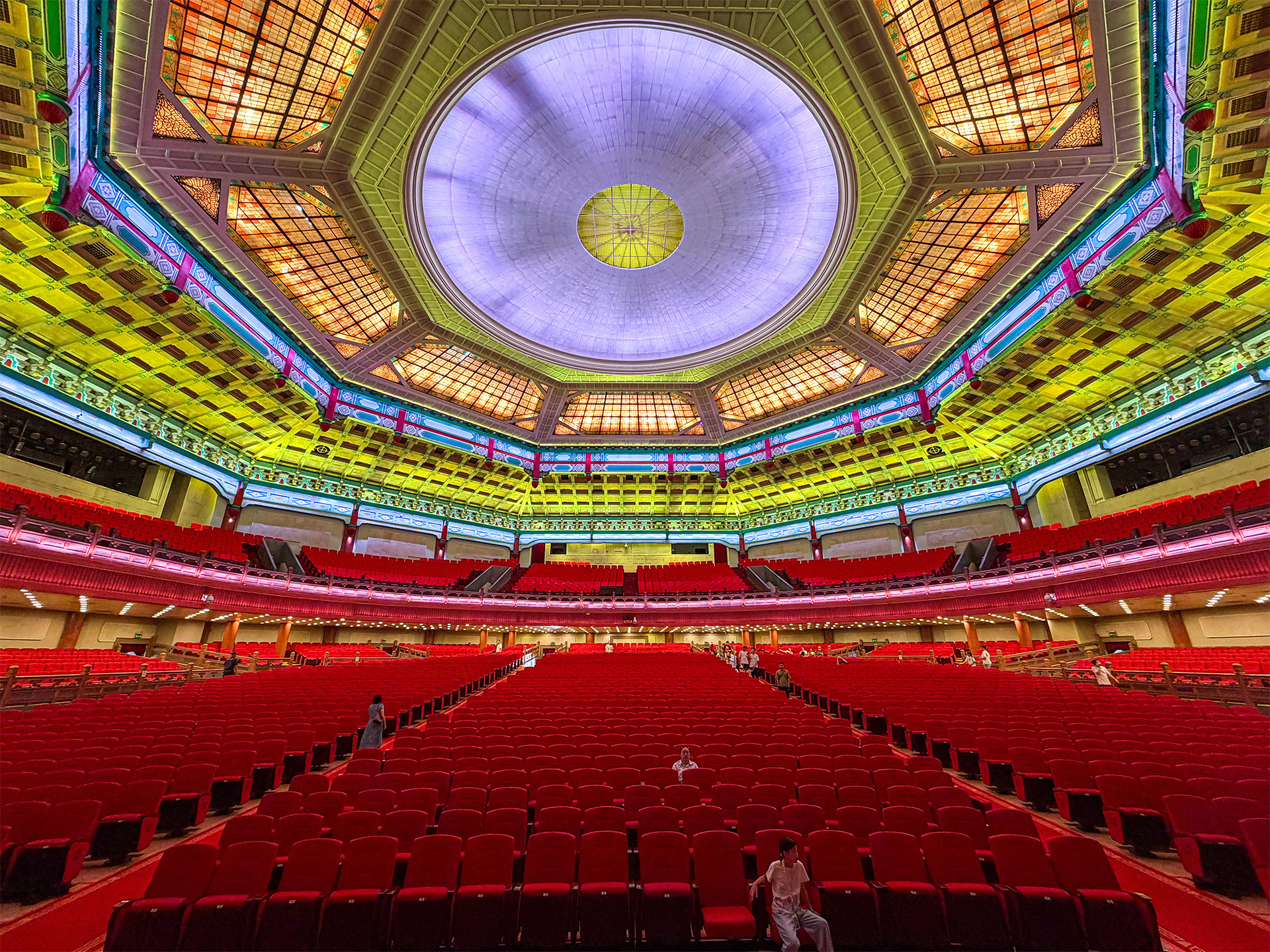
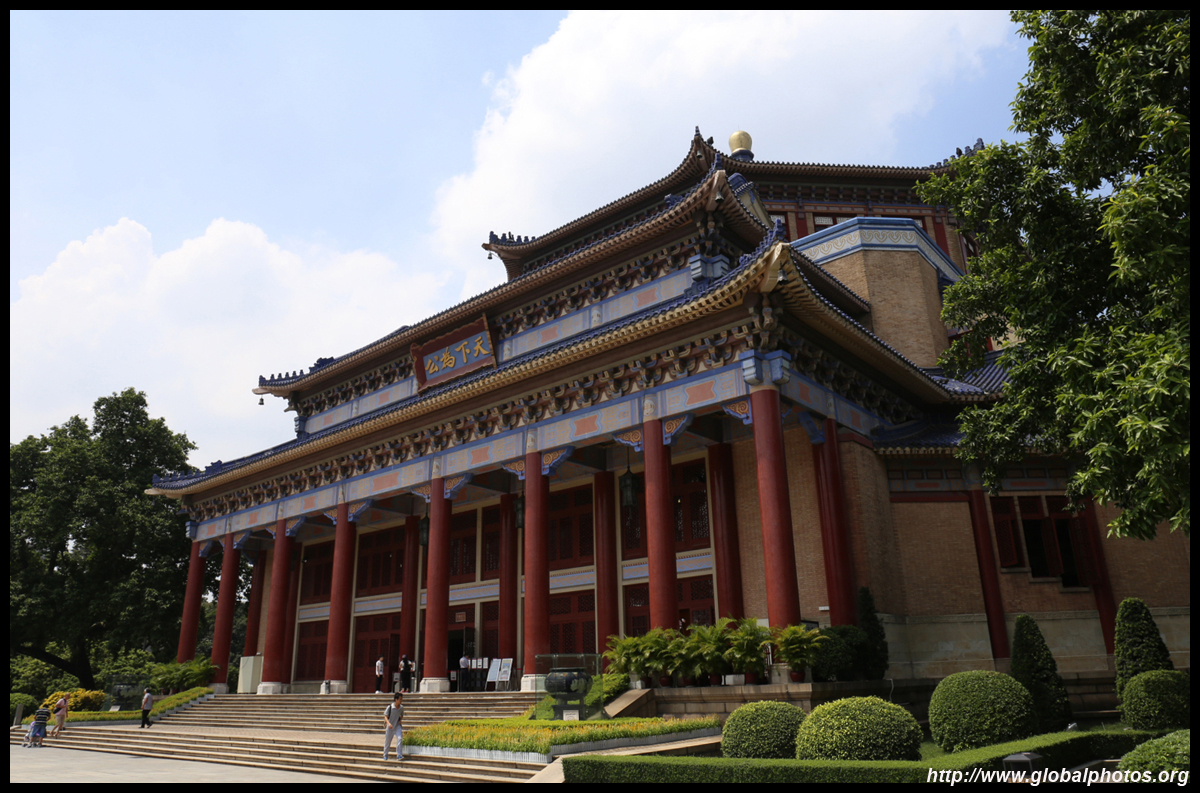
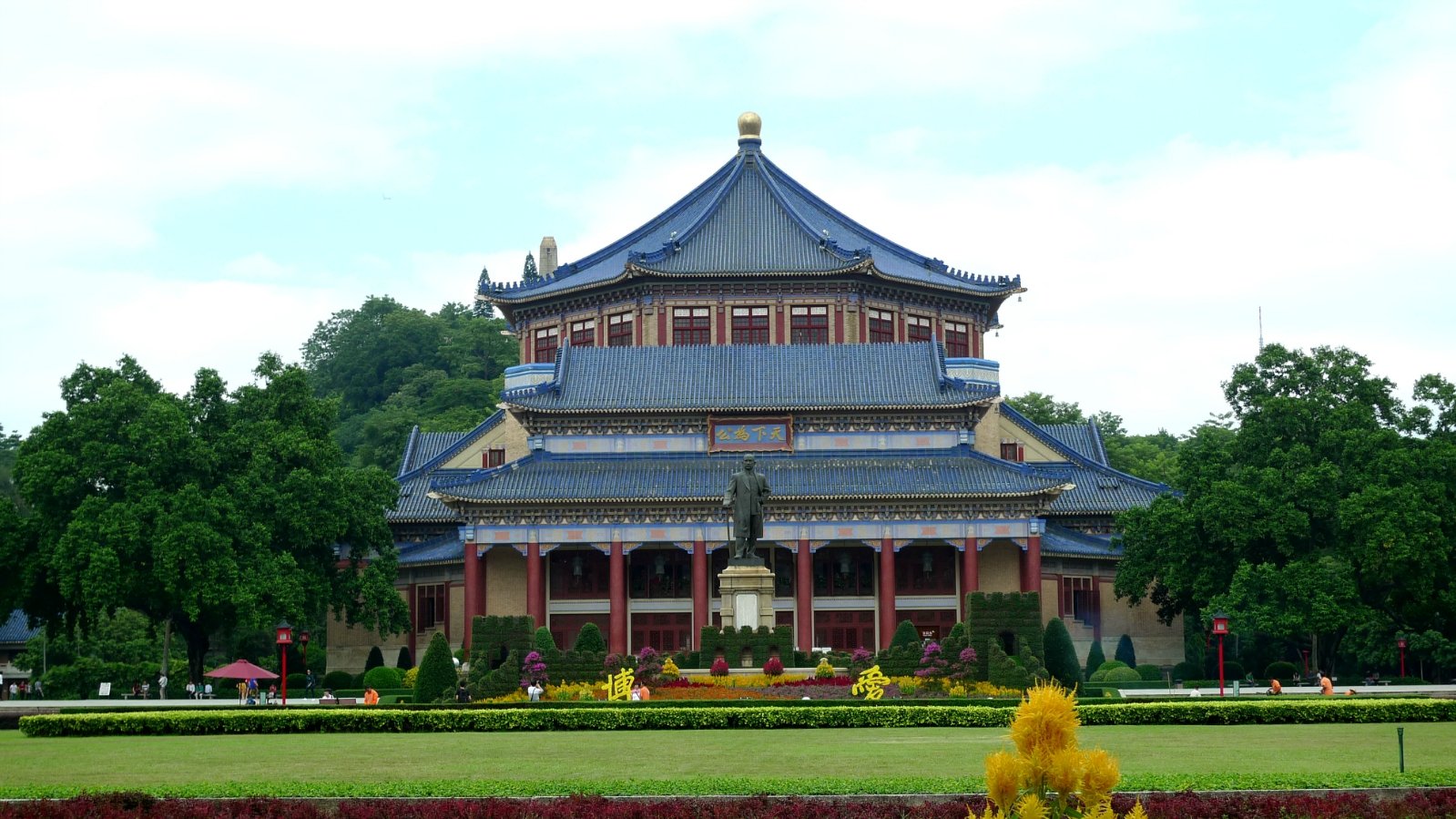
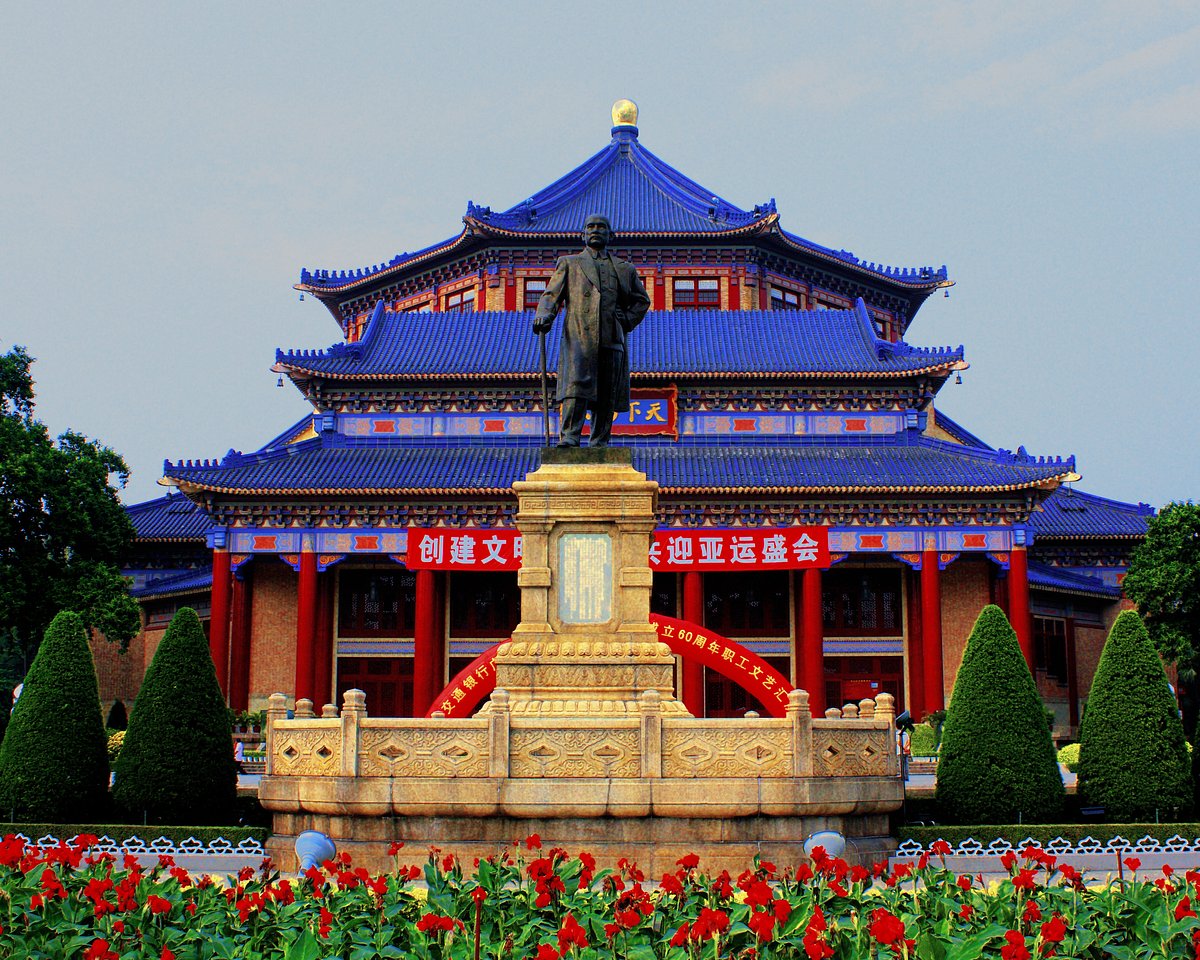
Lü Yanzhi's design fused an octagonal pyramid roof with four projecting wings — a Song-dynasty palace vocabulary in blue glazed tiles, cream-yellow walls and a granite base, capped by Sun Yat-sen's own calligraphy of 'Tian Xia Wei Gong' (The World Belongs to All) over the entrance. The engineering was the marvel of its age: a steel-truss dome spanning 71 metres with not a single column beneath, seating 3,238 people with unbroken sightlines — one of Asia's largest clear-span halls of its day. Outside, a 5.5-metre bronze Sun Yat-sen faces south from the axis, cloud-crane columns line the forecourt, and a 300-year kapok tree — the 'Kapok King' — stands off to the side, blazing full red from mid-March to early April.
A 2023-2024 restoration repaired the roof tiles and renewed the 1931 fabric, and the hall remains a working venue: concerts and civic events fill it regularly, and on show days the interior closes to tourists while the grounds stay open. For visitors the split is simple — the park-like grounds are free, open 6:00-22:00, with the 10-yuan interior open 9:00-17:30 and closed Mondays (except public holidays); free guided talks gather at 9:30 and 16:00. Metro Line 2's Jiniantang (Memorial Hall) Exit C is 130 metres from the gate, and most visits fold in Yuexiu Park's hill behind or the Nanyue King Museum a kilometre north for a one-day history loop.
Highlights
The 71-metre column-free dome
A 1931 steel truss spanning the full auditorium — 3,238 seats, not one pillar.
Sun Yat-sen bronze
5.5 metres tall, facing south along the ceremonial axis.
'Tian Xia Wei Gong' plaque
Sun's own calligraphy: 'The world belongs to all.'
The Kapok King
A 300-year kapok that flames full red from mid-March to early April.
Cloud-crane columns
Ornamental columns lining the forecourt in imperial style.
The 1945 surrender site
Where General Tanaka Naoki signed the Japanese capitulation of south China.
Photo Gallery
Comments