 Travel in China
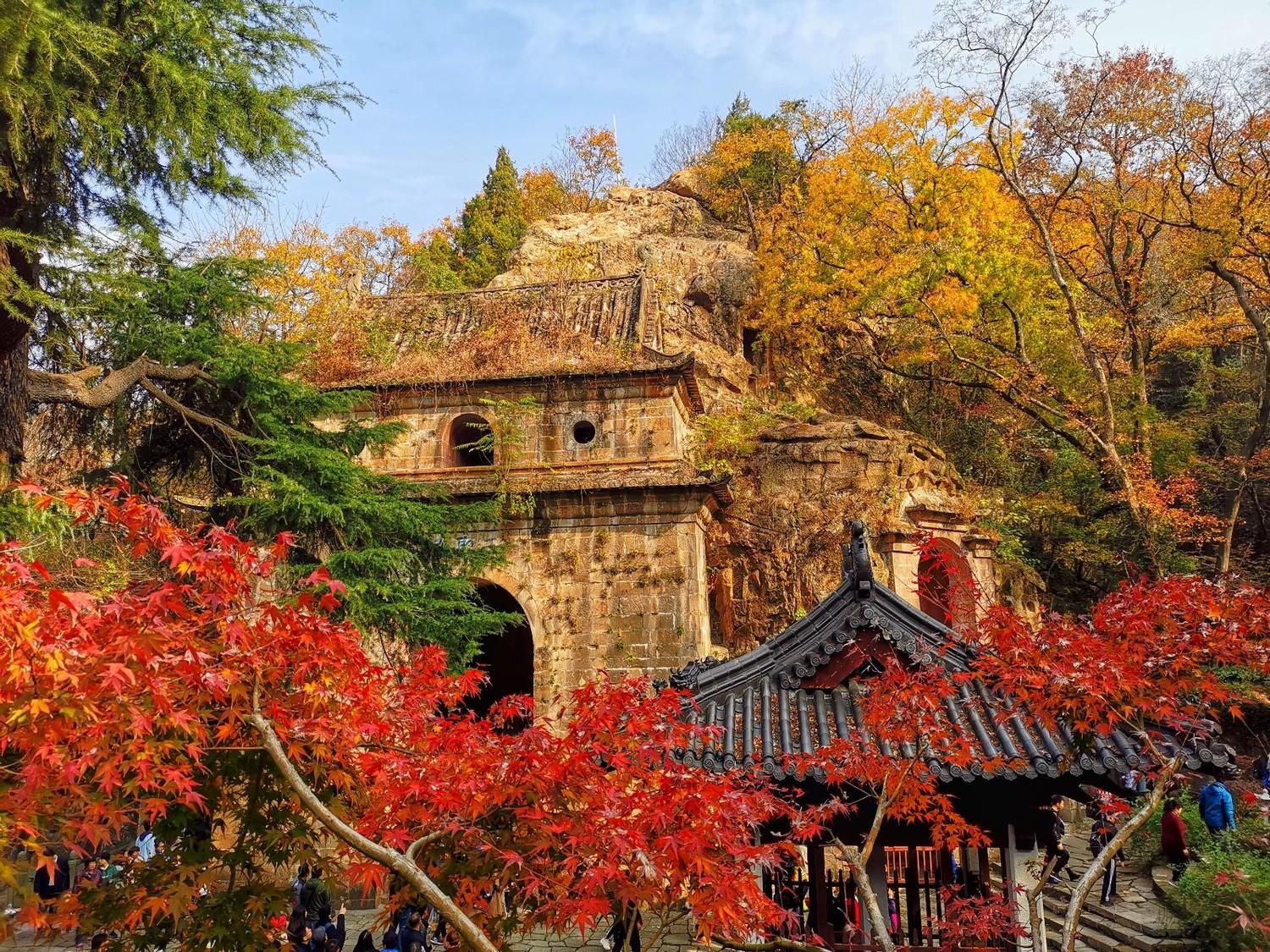
Qixia Mountain — 'the loveliest mountain of Jinling', eastern China's most celebrated red-leaf destination, where half a million maples ignite each November above the 489-founded Qixia Temple and the Thousand Buddha Cliff grottoes; a half-day trip since Metro Line 6's 2026 opening.
Dive deeper: full travel guide · transport & map · where to stay & book
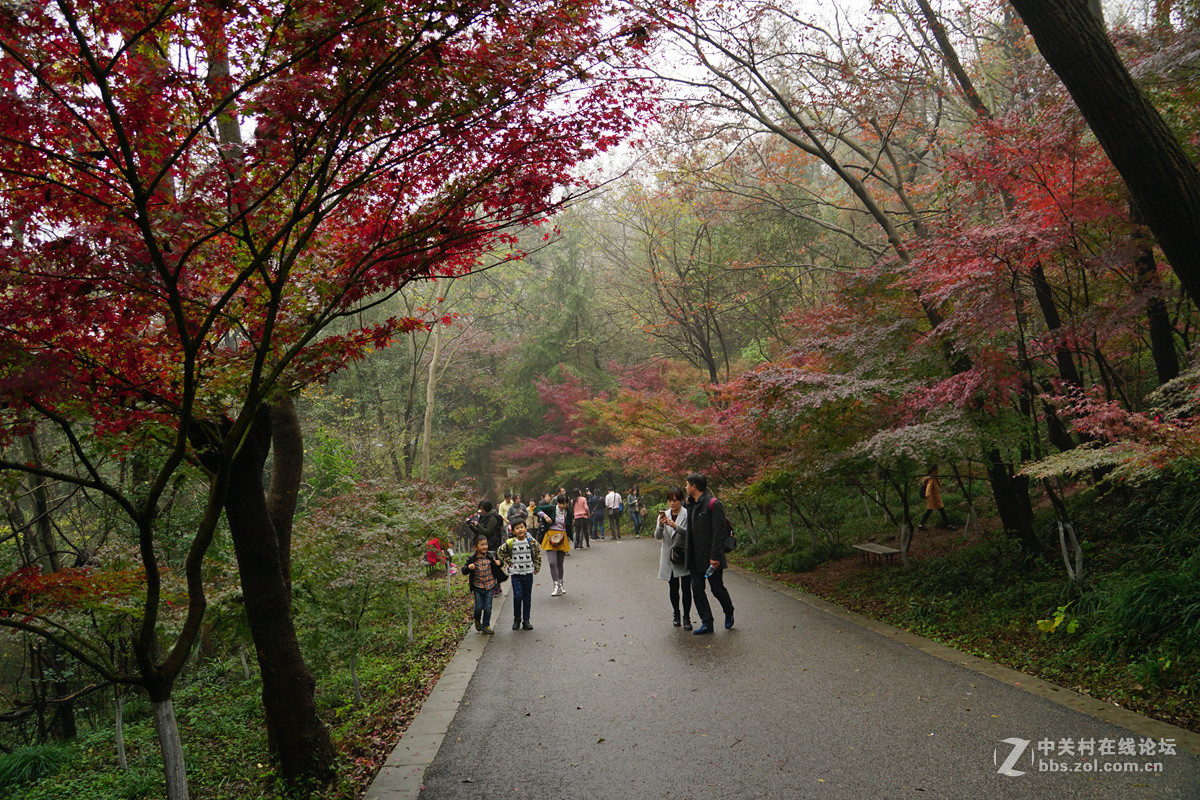
About 20 km north-east of central Nanjing, Qixia Mountain — 'the loveliest mountain of Jinling' in the Qianlong Emperor's words — is eastern China's most celebrated red-leaf destination, the origin of the saying 'spring at Niushou, autumn at Qixia'. The 284-metre Fengxiang peak rises above the Yangtze with more than half a million maple trees of 50-plus species that turn from late October, peaking mid-November to early December when the canopy passes 60 percent red and the Red Maple Art Festival fills the trails. Five dynasties' emperors left some 80 historic sites across the slopes — the Ming Jing Lake, the First-Emperor-by-the-River viewpoint, Taixu Pavilion and Peach Blossom Ravine among them.
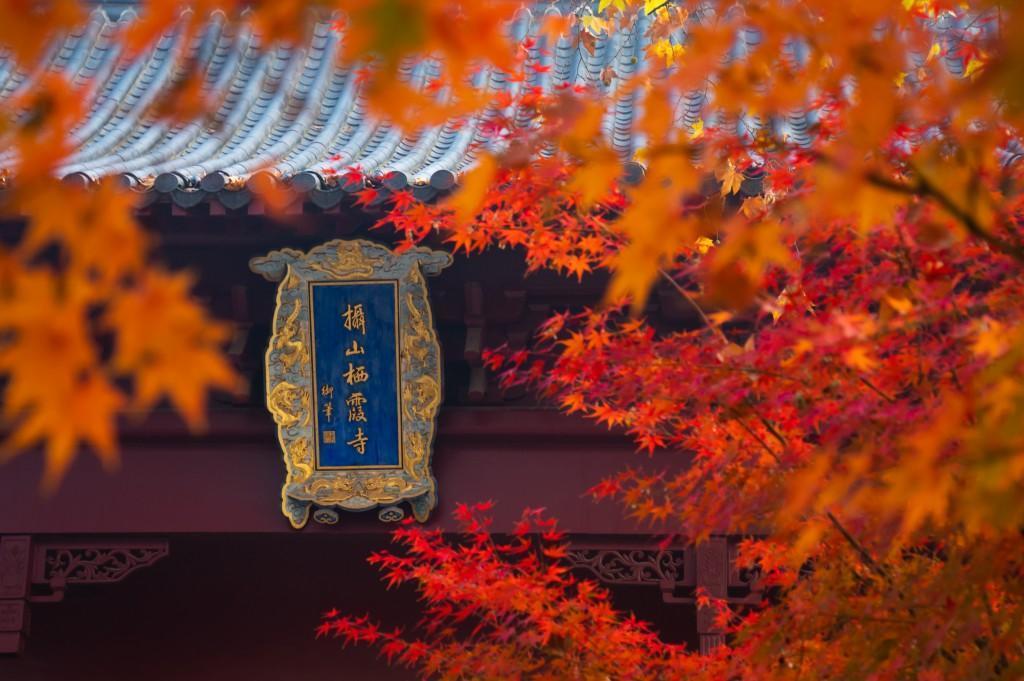
At the mountain's western foot stands Qixia Temple, founded in 489 and counted among Buddhism's 'Four Great Monasteries' of the lower Yangtze, birthplace of the Three Treatises school — its Tang-dynasty screen wall, the 1001 Huiji brick pagoda and a 500-metre corridor of coloured maples inside its courts. Beside the temple, the Thousand Buddha Cliff (Qianfoyan) carries over 520 Buddhas carved from 484 onward — among China's earliest grottoes south of the Yangtze, national treasures of the Southern Qi. Qianlong, who renamed the temple's stele 'First Basilica of Qixia', paused here on his southern tours; the legend of the First-Emperor-by-the-River rock says Qin Shi Huang did too, surveying the river bend and the Zhenjiang hills beyond.
Since Metro Line 6's opening on 29 September 2026 — its terminus Qixiashan Station standing about 500 metres from the south gate — the mountain is a direct 40-minute ride from Nanjing South Railway Station, transforming what was once an awkward day expedition into an easy half-day trip. Peak-season tickets cost CNY 80 (the 2026 festival runs 18 October – 18 December), dropping to CNY 50 off-season, and the famous pre-07:00 free-entry window remains in force. Allow 3–4 hours for temple, grottoes and the west ridge; weekend sell-outs are expected after mid-November, so book timed tickets ahead and ride early — the mountain road closes to private traffic on festival days.
Highlights
Red Maple Art Festival (Autumn)
From mid-October to mid-December the mountain hosts the festival (since 2001); peak redness falls mid-November to early December with 60%+ canopy coverage of 500,000 maples.
Qixia Temple
The 489-founded monastery, Three-Treatise school birthplace, with Tang halls, the 1001 Huiji brick pagoda and a 500-metre corridor of coloured maples inside its courts.
Thousand Buddha Cliff (Qianfoyan)
Over 520 Buddhas carved into the sandstone cliff from the Southern Qi dynasty (484–511) — among China's earliest grottoes south of the Yangtze.
Taixu Pavilion Red-Leaf Viewpoint
The acknowledged best panorama over the red canopy — a stone pavilion on the west ridge where the whole valley of maples opens below.
First Emperor by the River Rock
The ridge viewpoint where — legend says — Qin Shi Huang paused to view the Yangtze; today it frames the river bend and Zhenjiang hills beyond.
Ming Jing Lake & Mirror Pavilion
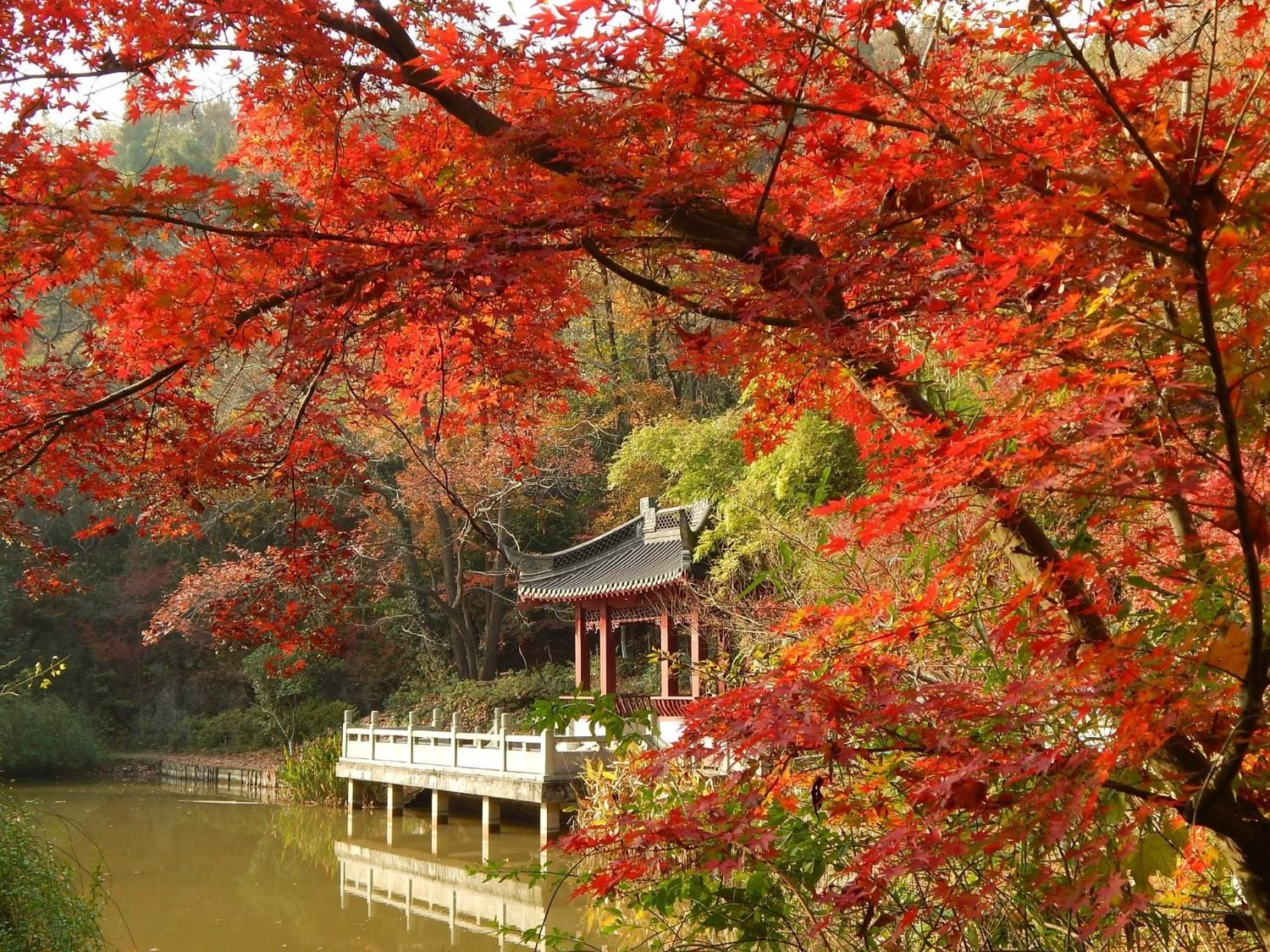
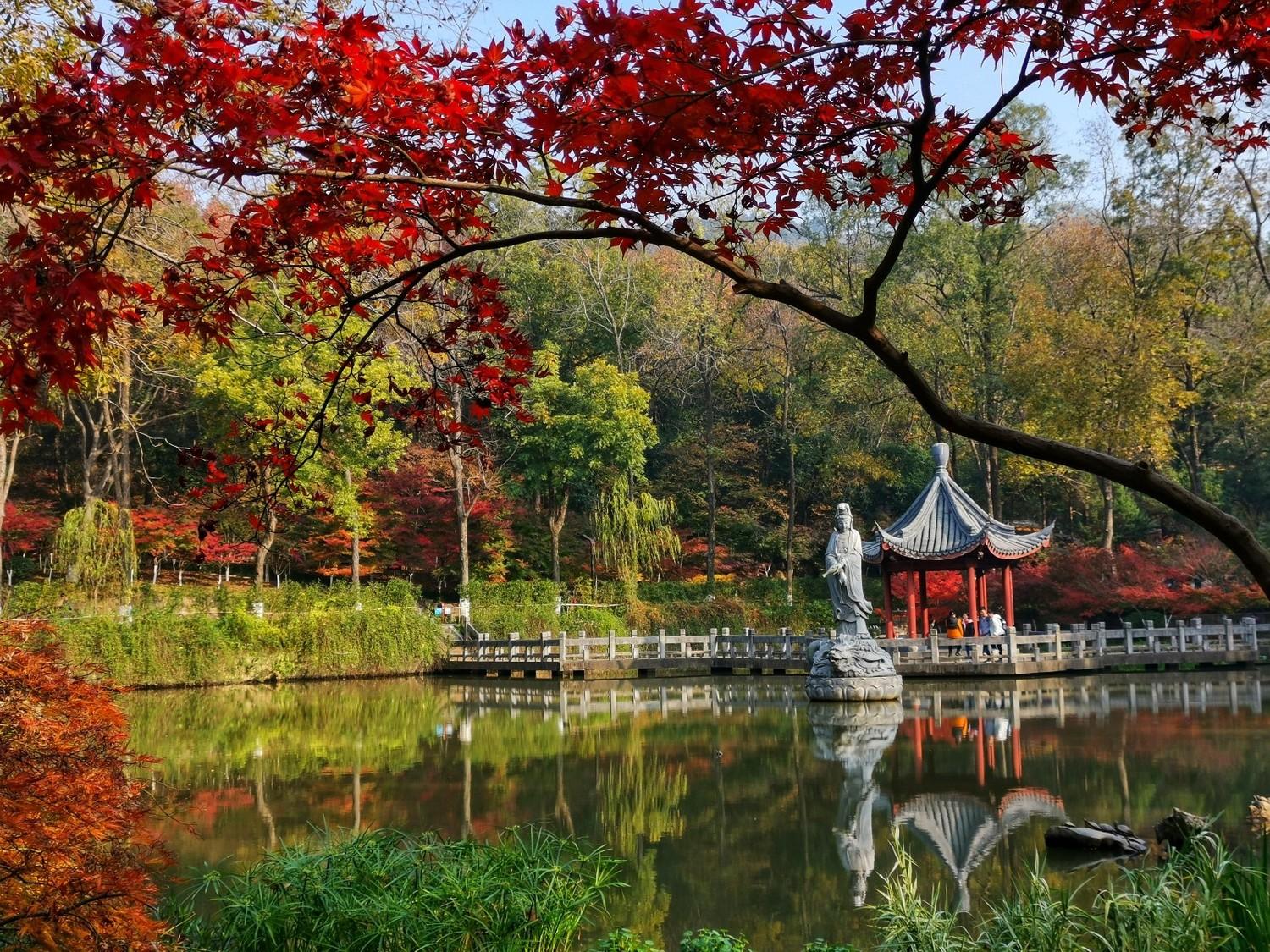
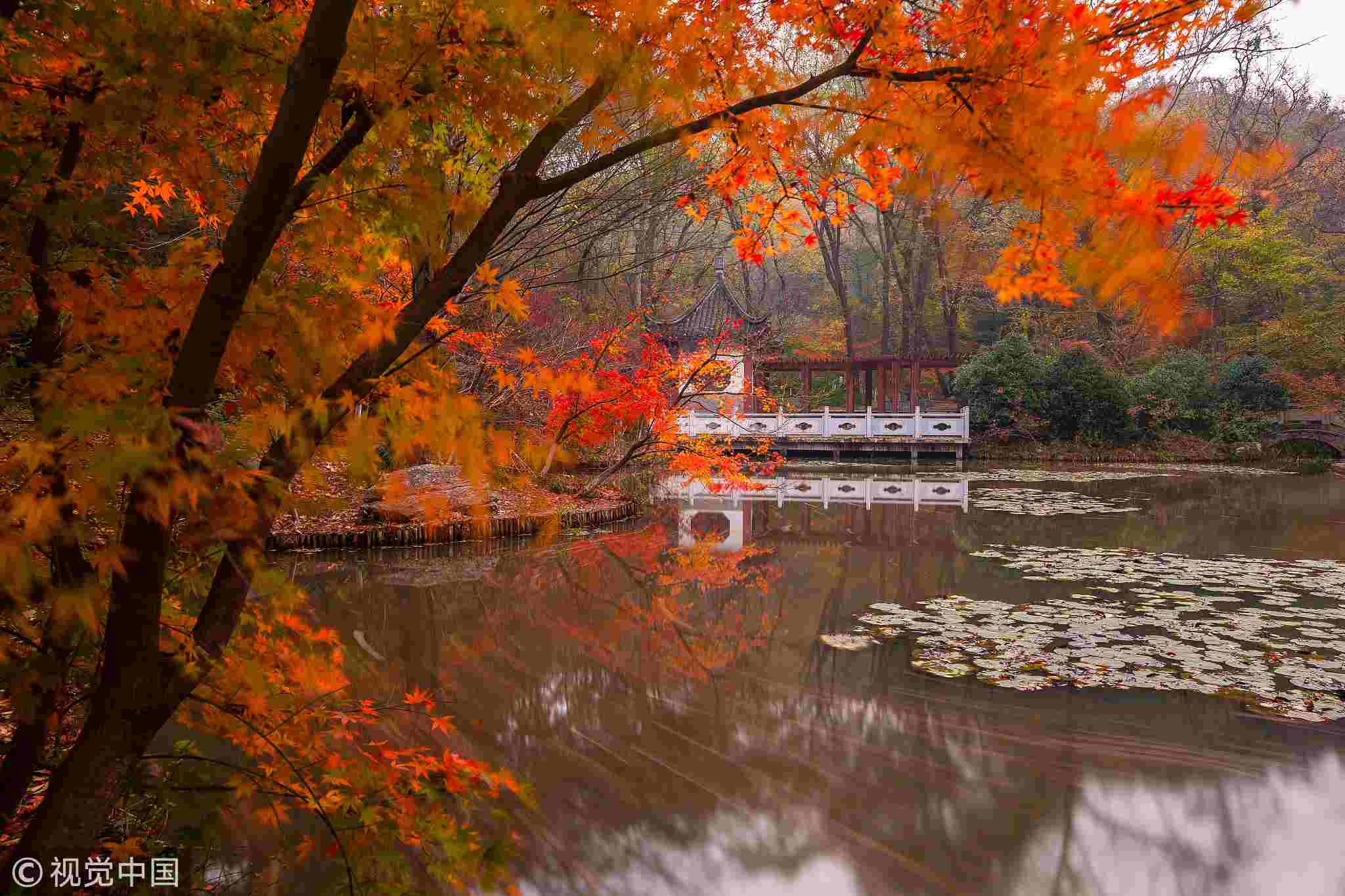
The mirror-calm pond at the trailhead where red maples double in reflection, and the nine-turn bridge favoured for hanfu portraits.
Photo Gallery
Comments