 Travel in China
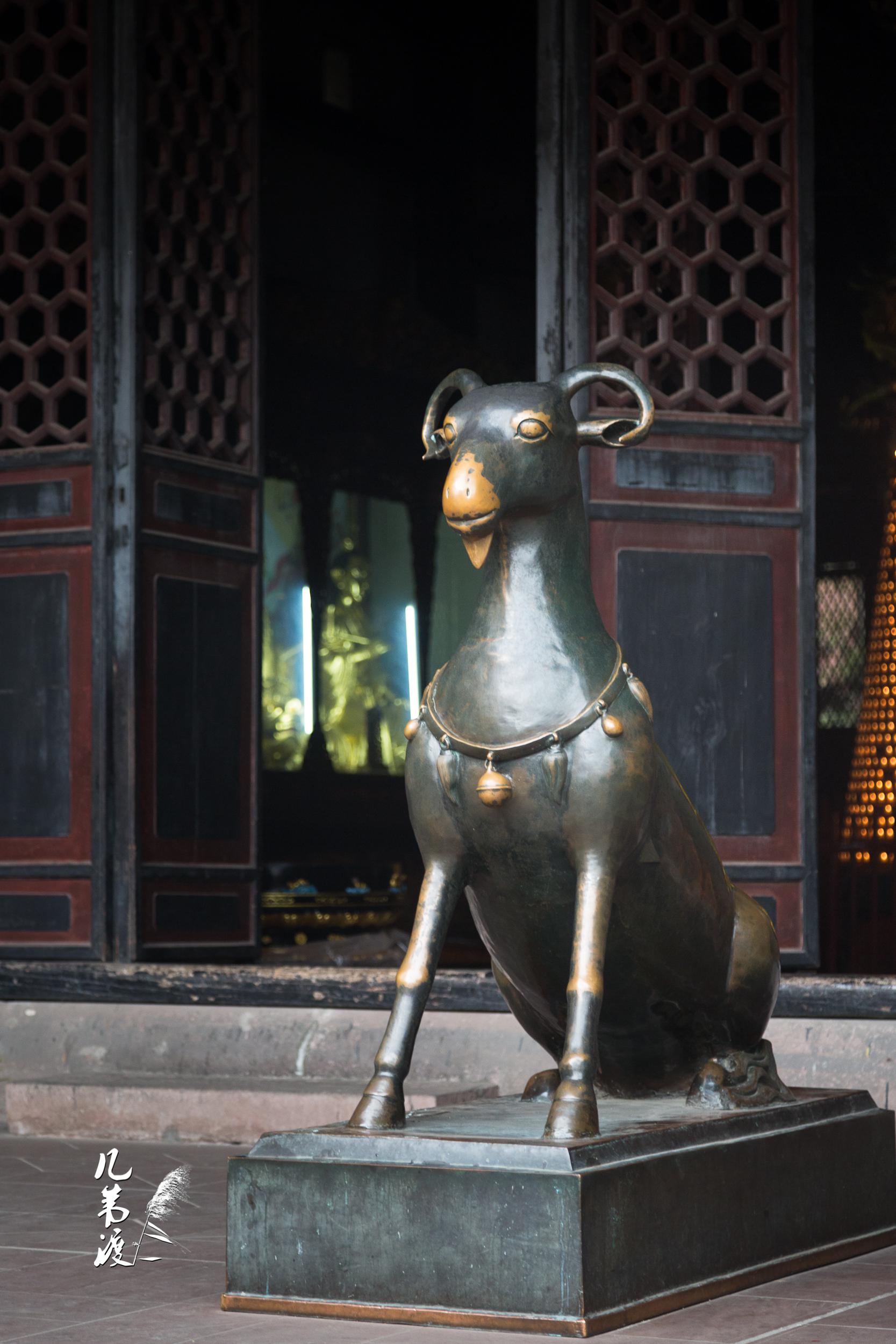
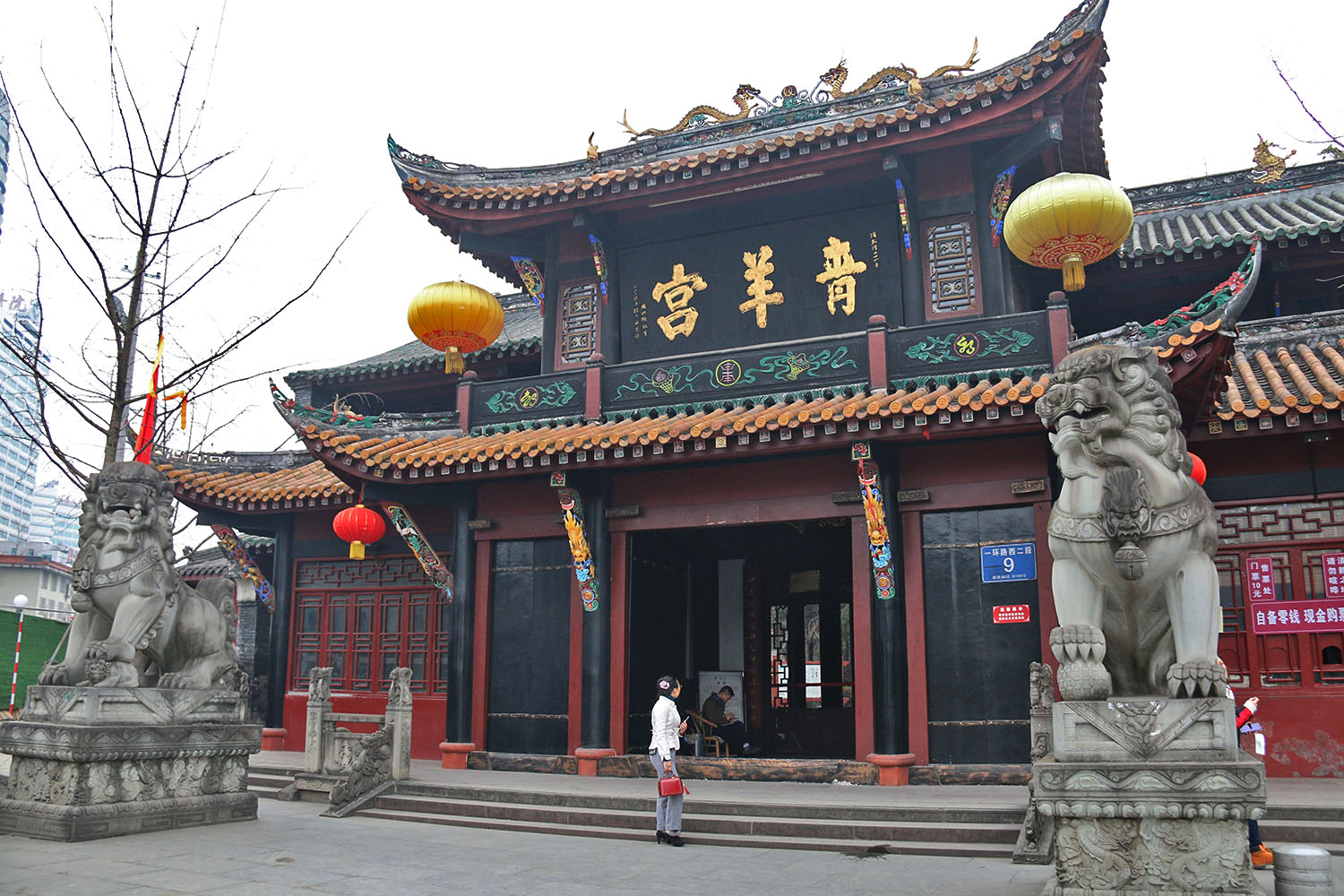
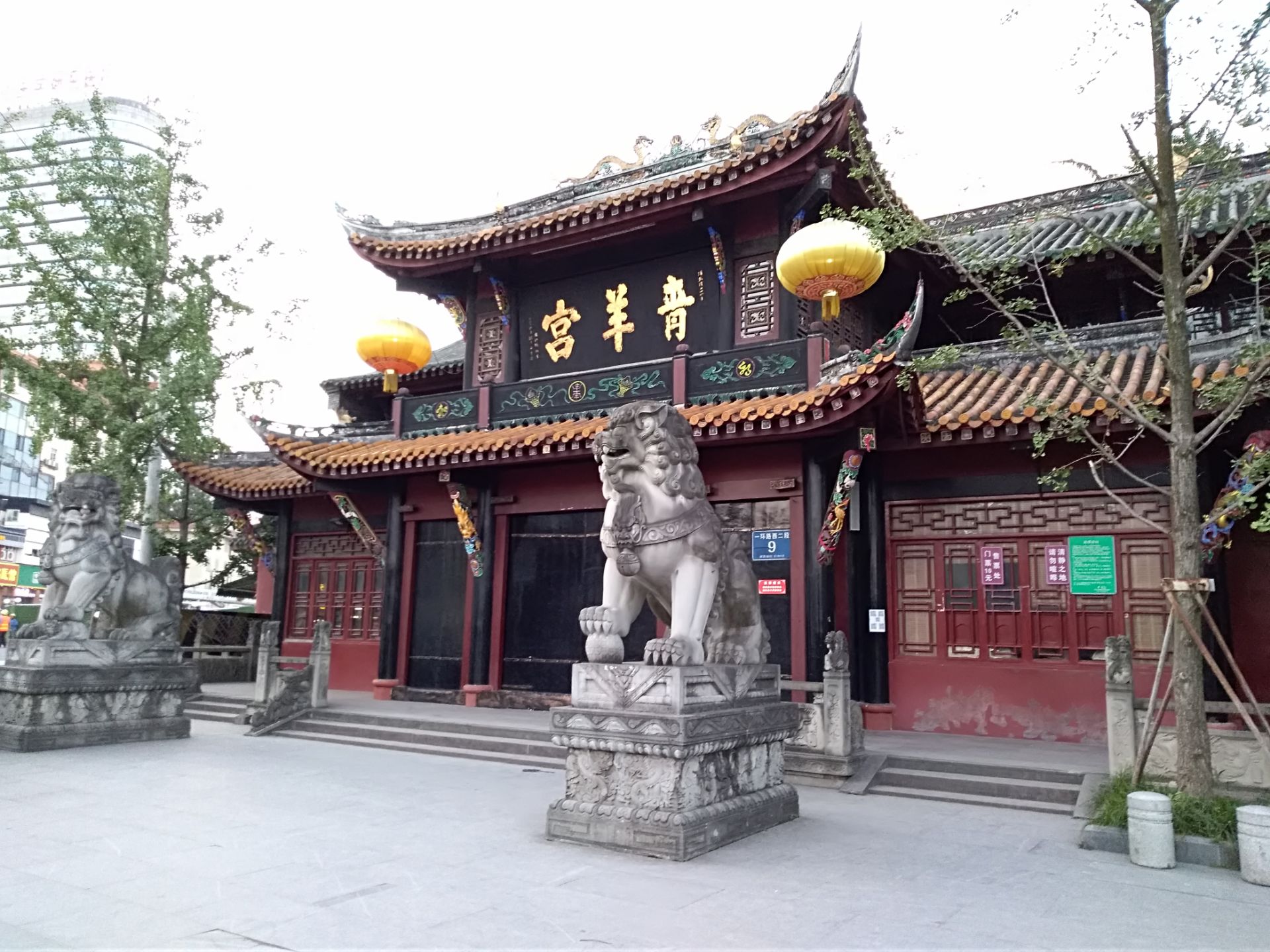
Qingyang Palace is western China's grandest Taoist temple — 'the first temple of Western Sichuan' — with a lineage traced to the Zhou dynasty and a campus rebuilt under Kangxi. Its axis climbs from the Lingzu Hall through the interlocking-timber Bagua Pavilion to the Sanqing Hall, where two bronze goats embody all twelve zodiac animals; rubbing their flanks is held to cure what ails you. Ten yuan buys entry and three sticks of incense, and the courtyard teahouse pours under hundred-year trees.
Dive deeper: full travel guide · transport & map · where to stay & book
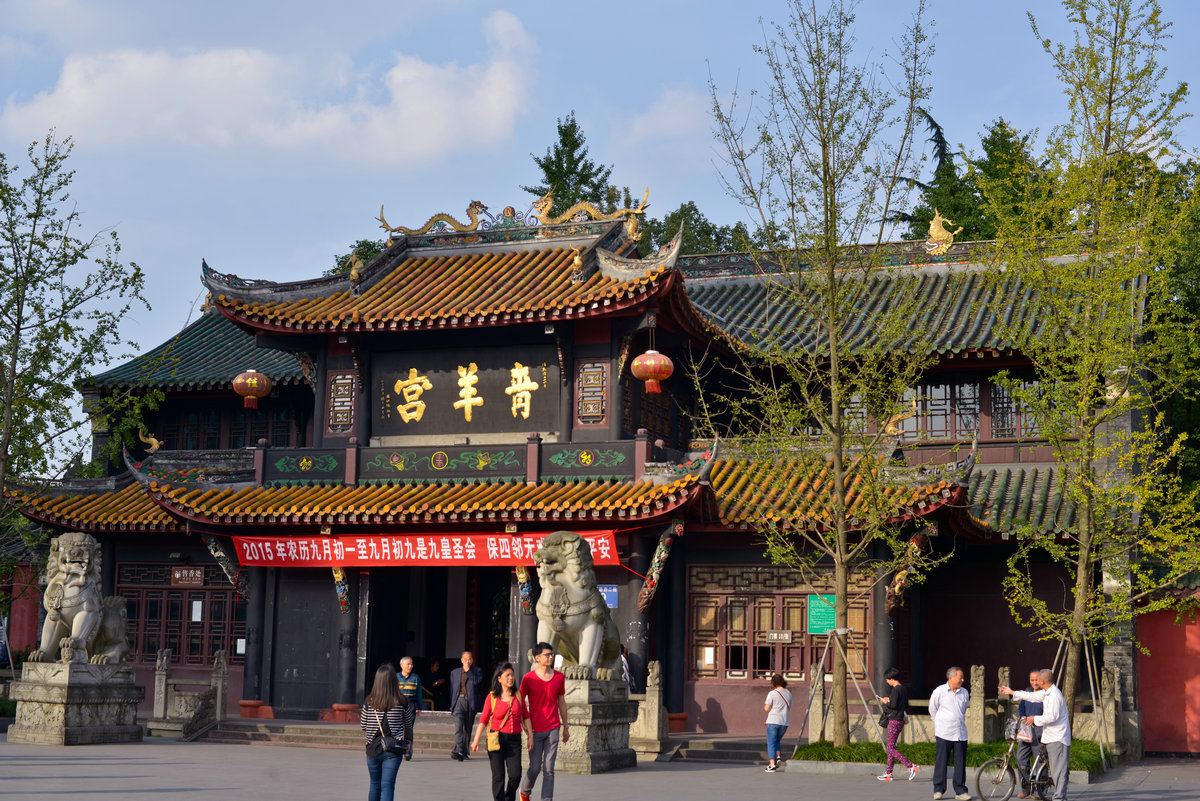
Qingyang Palace stands as western China's grandest Taoist temple, celebrated for centuries as "the first temple of Western Sichuan." Its lineage is traced back to the Zhou dynasty, when, according to legend, Laozi promised to meet his disciples "at the Qing Yang market" — the very words that gave Chengdu's Qingyang District its name. Though the site's origins reach deep into antiquity, the temple campus visitors see today was substantially rebuilt during the reign of the Kangxi Emperor in the Qing dynasty, with later halls added across successive eras. One structure, the Doumu Hall, preserves distinctive Ming-style architecture. The result is a working temple whose layered history spans more than two millennia of Taoist devotion.
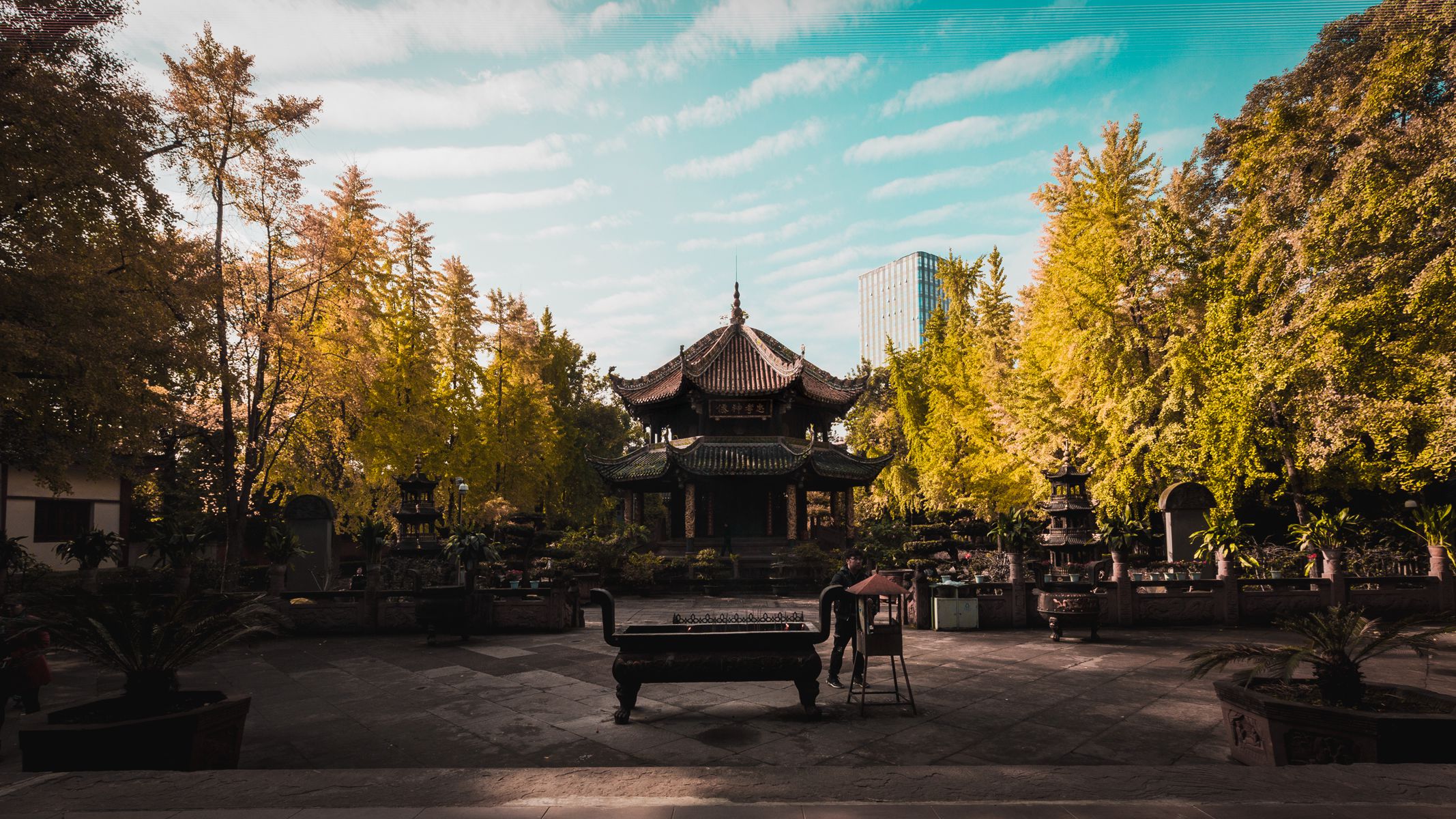
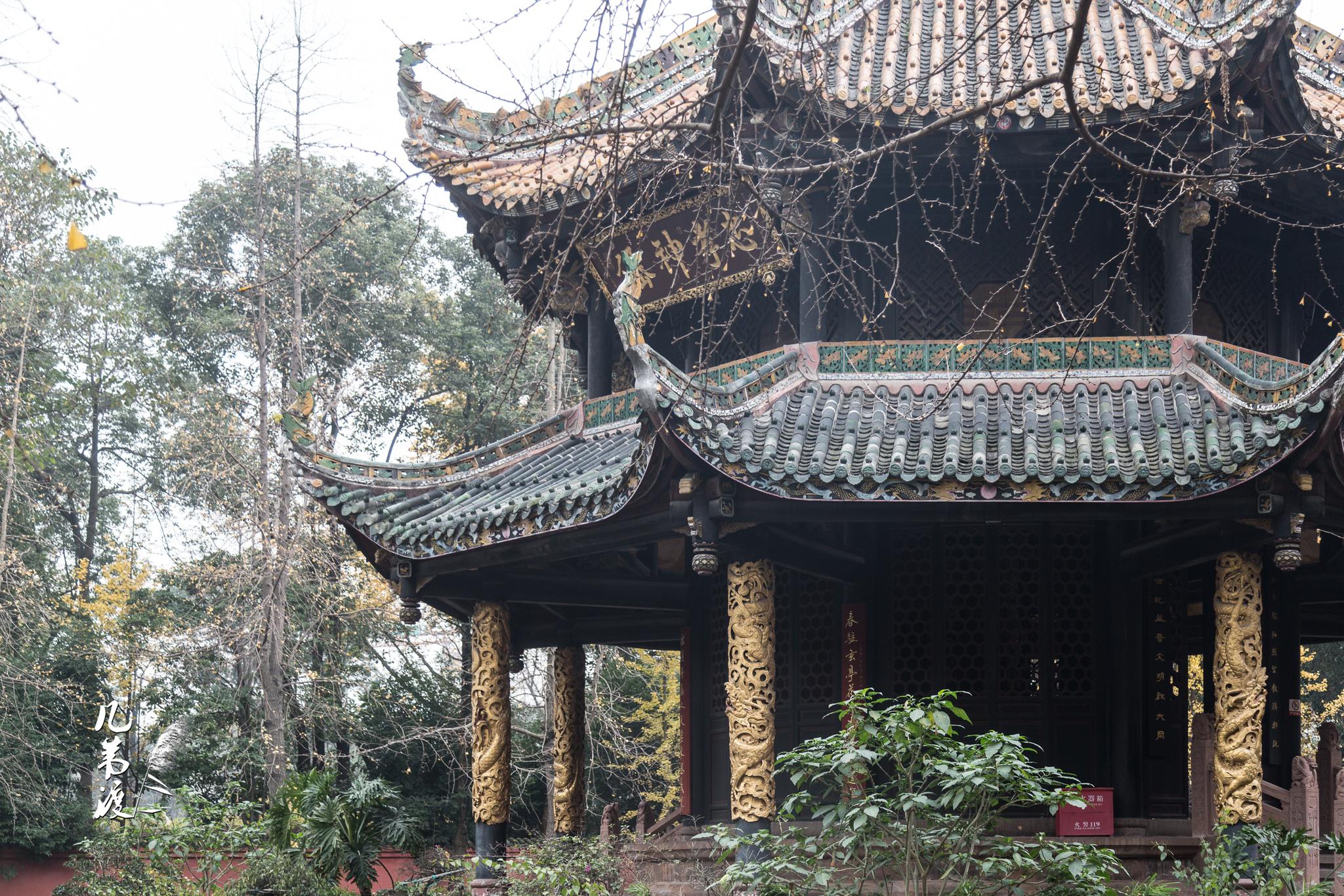
The temple unfolds along a central axis that climbs from the Lingzu Hall up to the great Sanqing Hall, with the exquisite Bagua Pavilion between them — an octagonal marvel of interlocking timber, built without a single nail, sheltering a statue of Laozi riding his ox. In Sanqing Hall, dedicated to the Three Pure Ones, incense coils hang beneath Qing dynasty couplets, and two bronze goats draw steady queues of visitors: the single-horned one ingeniously fuses features of all twelve zodiac animals, and rubbing the spot corresponding to whatever ails you is held to bring relief. Outside, a courtyard teahouse pours gaiwan tea under century-old trees beside tai-chi regulars, lending the whole precinct a serene, unhurried atmosphere.
Today, Qingyang Palace remains one of Chengdu's most beloved spiritual and cultural landmarks, drawing locals and travelers alike with an admission of just ten yuan — which includes three sticks of incense. The temple opens from 08:00 to 17:30, with last entry around 17:00, so morning to late afternoon is the safe planning window; the tea garden runs roughly 09:00 to 16:30. Situated in the heart of Qingyang District, the temple anchors its neighborhood's identity and connects naturally to the city around it, easily combined with nearby parks, street food, and Chengdu's relaxed teahouse culture for a rewarding half-day visit.
Highlights
Bagua Pavilion
The precinct's most exquisite building: an octagonal, nail-free interlocking-wood pavilion over a Laozi-on-ox statue.
The Bronze Goats
Sanqing Hall's pair — the single-horn one fusing the twelve zodiac animals; polish your palm on the ailing body part.
Sanqing Hall
The great main hall to the Three Pure Ones, with its incense coils and Qing couplets.
Doumu Hall
The only surviving Ming-style structure, housing the four-headed, eight-armed Doumu.
Courtyard teahouse
¥10-20 gaiwan tea under ancient cypresses beside tai-chi regulars.
Laozi legend & city name
Where Laozi promised to meet disciples 'at the Qing Yang market' — the name behind Chengdu's Qingyang District.
Photo Gallery
Comments