 Travel in China
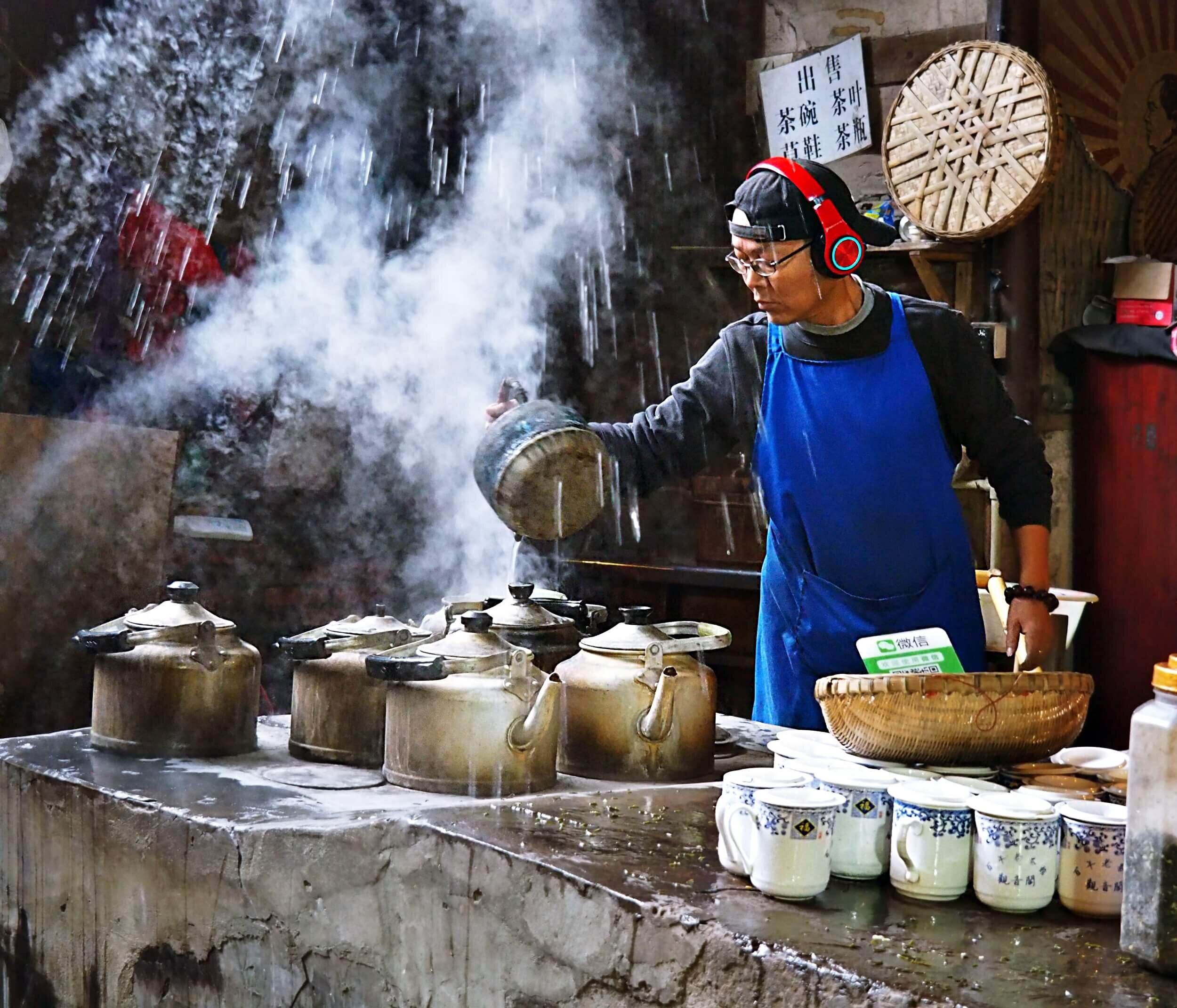
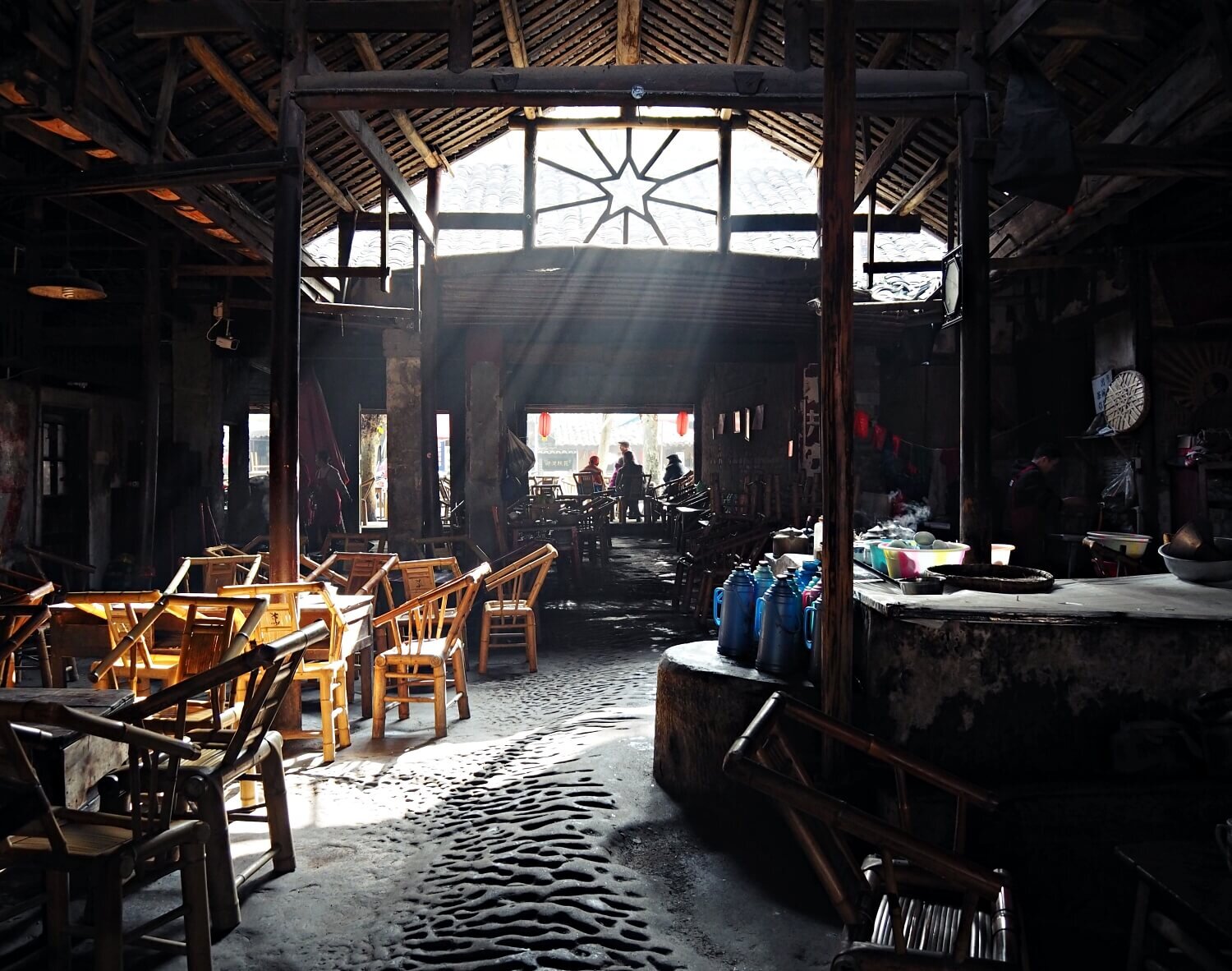
Pengzhen's Guanyin Pavilion Old Teahouse, forty minutes southwest of downtown Chengdu, is the most complete survivor of old-Sichuan teahouse culture — a century-old timber hall with a lamp-black 'tiger stove', a ceiling skylight that spotlights the bamboo chairs, and a floor of packed earth polished by generations of shoes. Village elders still pay one yuan for bottomless tea; visitors pay ten. UNESCO's 2024 Asia-Pacific award crowned the preservation, and at dawn photographers outnumber locals.
Dive deeper: full travel guide · transport & map · where to stay & book
The Guanyin Pavilion Old Teahouse in Pengzhen, a river town some forty minutes southwest of downtown Chengdu, traces its roots to the late Qing era, when itinerant tea merchants established a stall beside the village's Guanyin shrine. By the early Republic years the pavilion had grown into a full timber-framed teahouse serving boatmen, farmers, and market-goers, and it has poured tea continuously through war, collectivization, and reform. A UNESCO Asia-Pacific heritage award in 2024 formally recognized its preservation — a rare instance of a living rural institution, rather than a reconstructed facade, being honored. Today it stands as Sichuan's most complete surviving window onto old teahouse culture, essentially unchanged in layout and ritual for over a century.
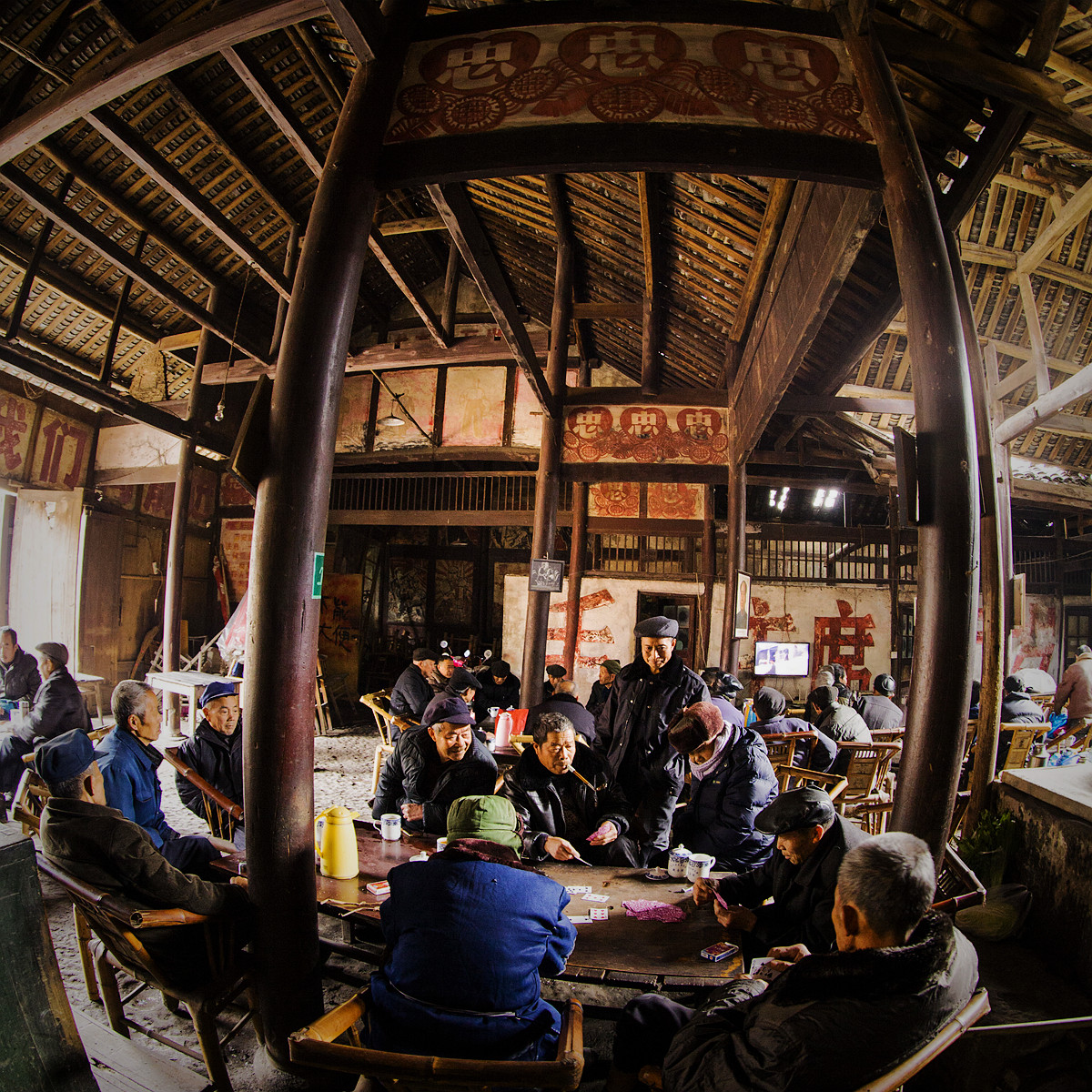
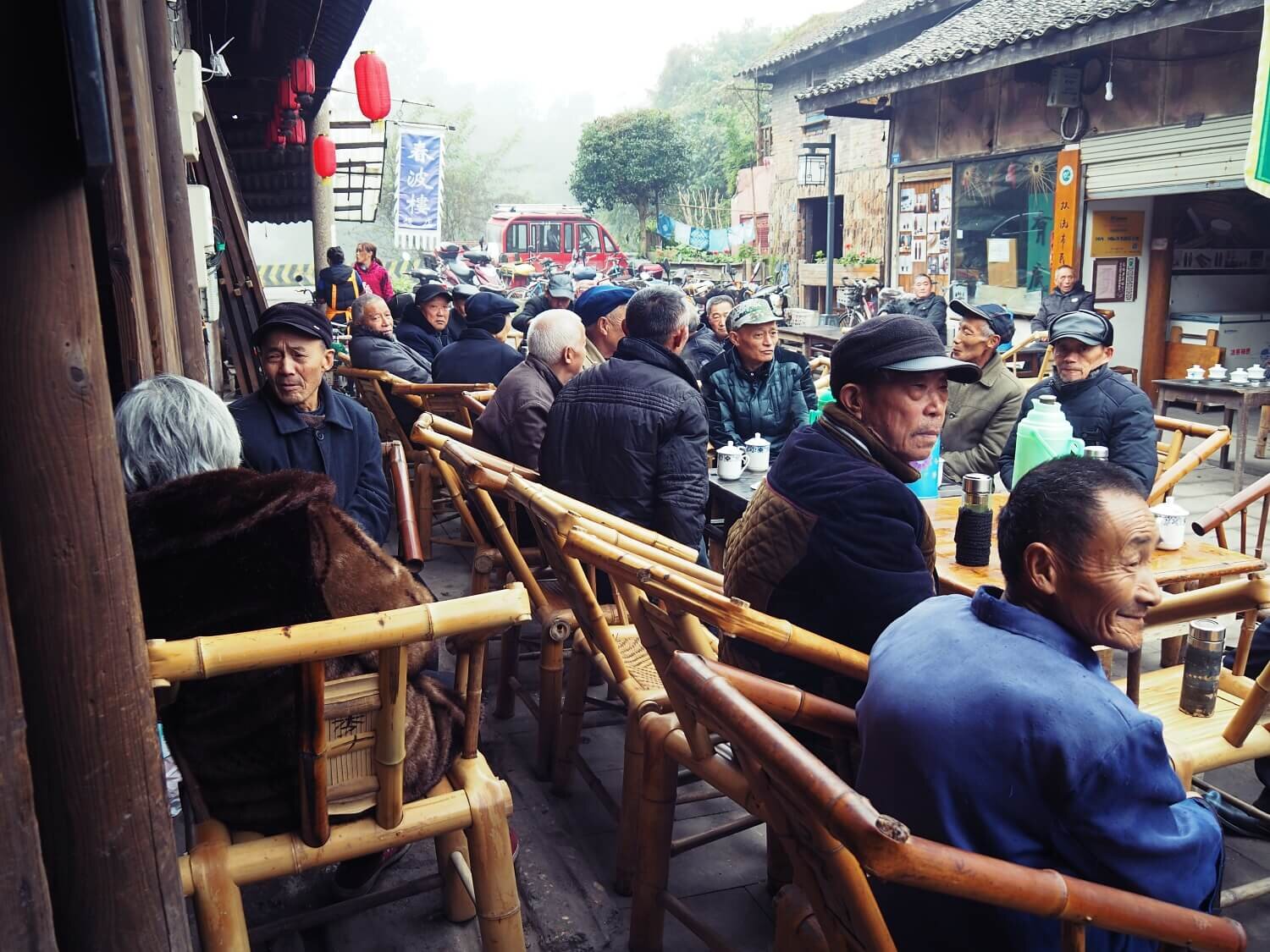
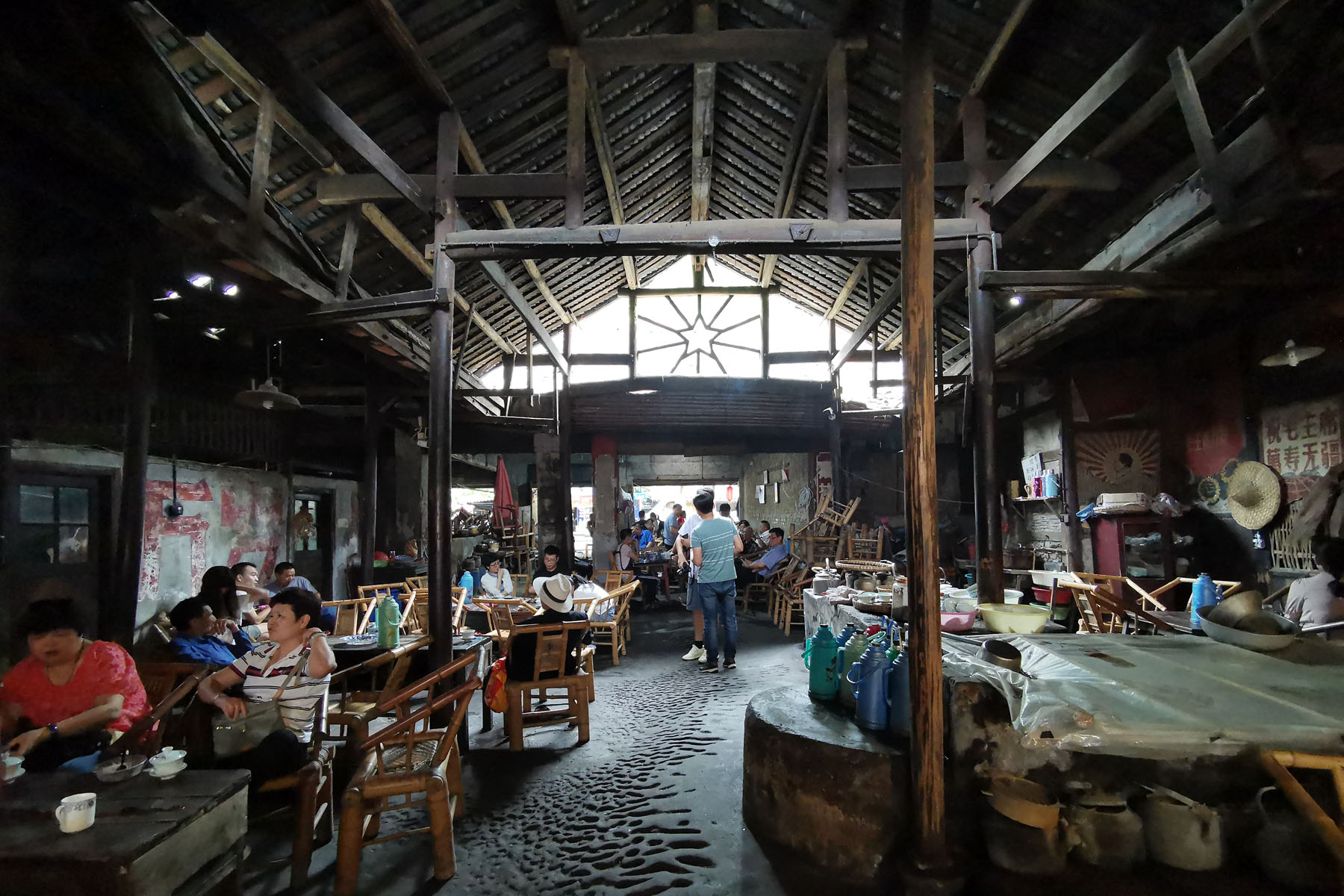
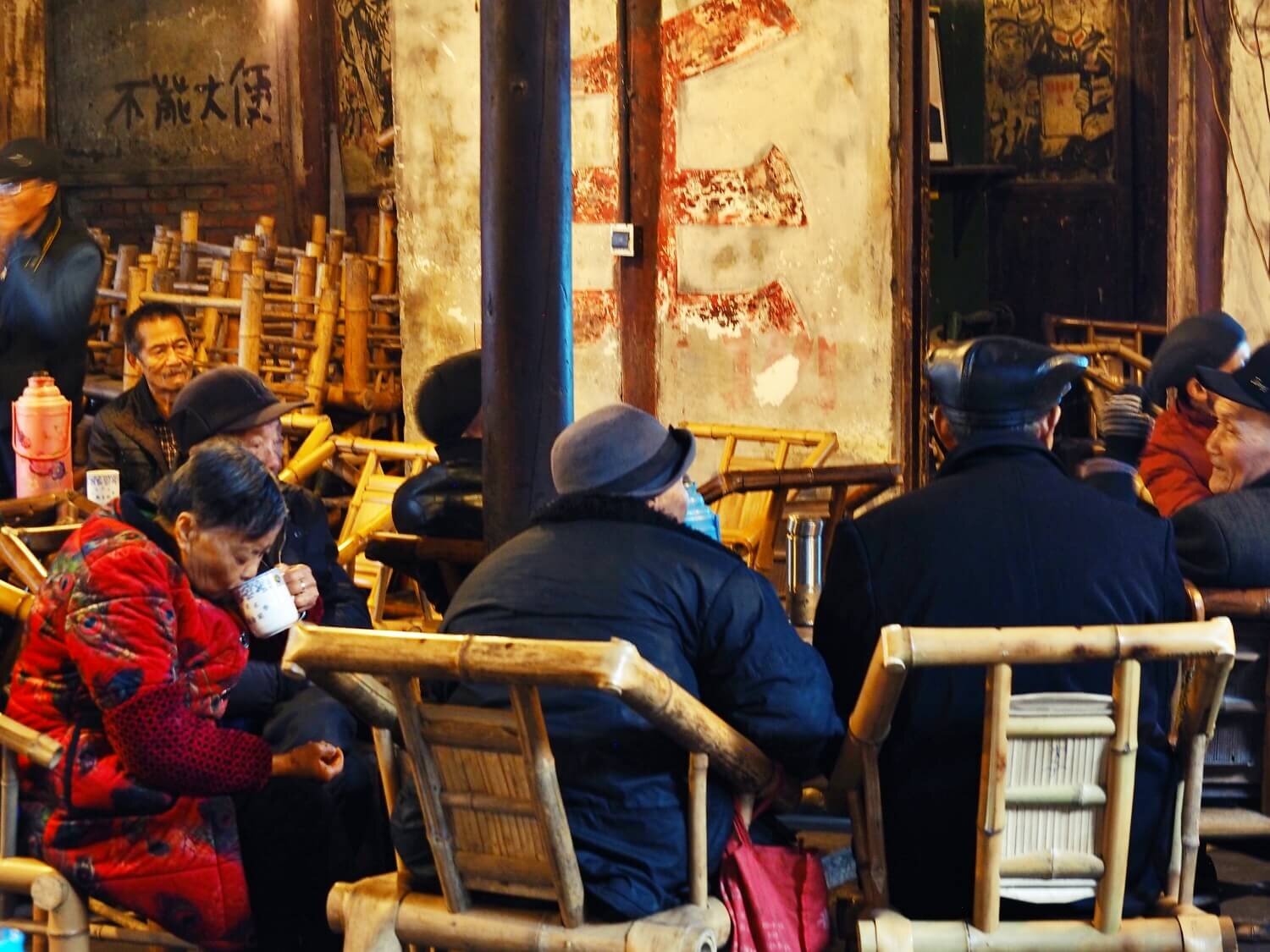
Visitors duck through a low doorway into a single timber hall lit by a skylight, where morning sun cuts hard shafts through steam and smoke — photographers should arrive by 07:30 to catch the light. At the heart of the room squats the lamp-black "tiger stove," a coal-fired counter of dented kettles where the owner pulls coals with tongs in a pose famous among shutterbugs. Bamboo chairs cluster on the "thousand-foot mud" floor: packed earth polished mirror-smooth by a century of shoes, deliberately never restored into tidiness. Village elders — some with tobacco pipes, daily regulars for decades — still pay one yuan for bottomless tea while visitors pay ten; ask politely before close-up portraits. The teahouse opens around 04:30, with the 05:00–08:00 hours the most atmospheric.
In 2026 Pengzhen thrives as a day-trip favorite from Chengdu, reachable by bus or taxi along the expressway toward Shuangliu. Since 2022 a village-scale photo festival has seeded murals and small galleries through the lanes, drawing weekend crowds without displacing the daily rhythm of locals. Beyond the teahouse, old-street Pengzune rewards wandering: Qing and Republic-era shopfronts, flower-decked alleys, and rice-cake and sugar-painting stalls along Yongfeng Street, most shops keeping 08:00–18:00 hours. The teahouse itself welcomes visitors until roughly 18:00. It remains, above all, a working social institution of the town around it — a place where Chengdu's celebrated tea culture survives not as performance but as ordinary, unhurried daily life.
Highlights
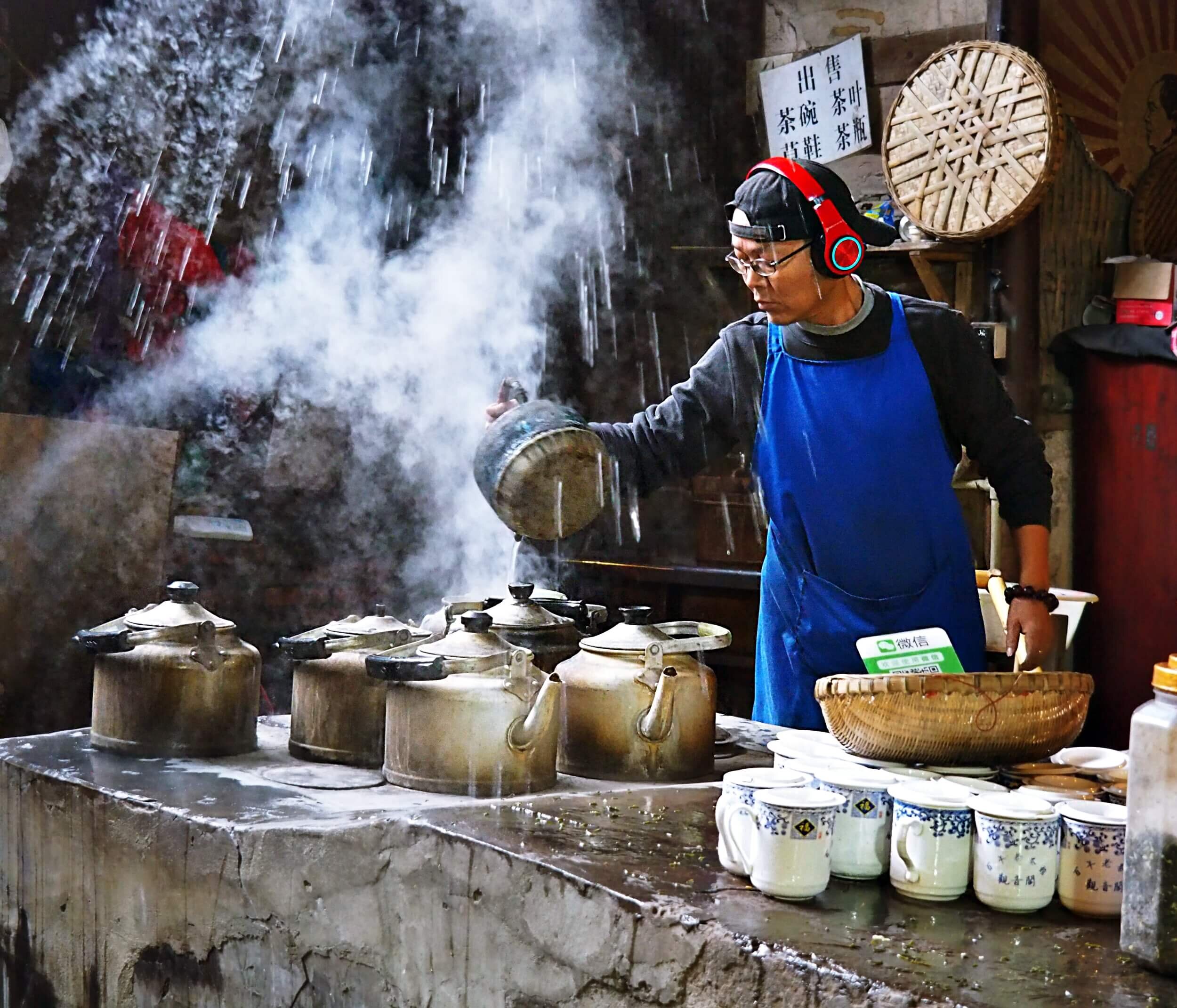
The Tiger Stove
The coal-fired counter of dented kettles; the owner pulls coals with tongs in a famous pose for visitors.
Skylight beams
Morning sun through the tile gap cuts hard shafts across steam and smoke — arrive by 07:30 for them.
One-yuan tea regulars
Elders who've come daily for decades, tobacco pipes and all; ask before close-up portraits.
The 'thousand-foot mud' floor
Uneven packed earth polished by a century of foot traffic; the interior has never been 'restored' into tidiness.
Old-street Pengzhen
Qing and Republic-era shopfronts, flower-decked alleys, rice-cake and sugar-painting stalls along Yongfeng Street.
Photographic festival heritage
A village-scale photo festival since 2022 has seeded murals and small galleries around the lanes.
Photo Gallery
Comments