 Travel in China
Ming Xiaoling Mausoleum — the tomb of Ming dynasty founder Zhu Yuanzhang beneath Purple Mountain, where a Sacred Way of stone beasts curves around a plum-blossom hill toward an imperial mound unopened since 1398; part of a UNESCO World Heritage Site.
Dive deeper: full travel guide · transport & map · where to stay & book
Construction of Ming Xiaoling began in 1381 and took roughly twenty-five years at the southern foot of Purple Mountain, sealing Zhu Yuanzhang — the Hongwu Emperor, 1328–1398, founder of the Ming dynasty — and Empress Ma in a treasure mound that has never been excavated. Its plan established the prototype that later Ming and Qing imperial tombs followed for centuries, Beijing's Ming Tombs included, and in 2003 UNESCO inscribed it as part of the Imperial Tombs of the Ming and Qing Dynasties World Heritage Site. The mausoleum is famed for an unconventional Sacred Way: instead of a straight axis, its avenues of stone sculpture curve around Meihua (Plum Blossom) Hill, where the Wu Kingdom emperor Sun Quan lies buried — a layout traditionally likened to the Big Dipper.
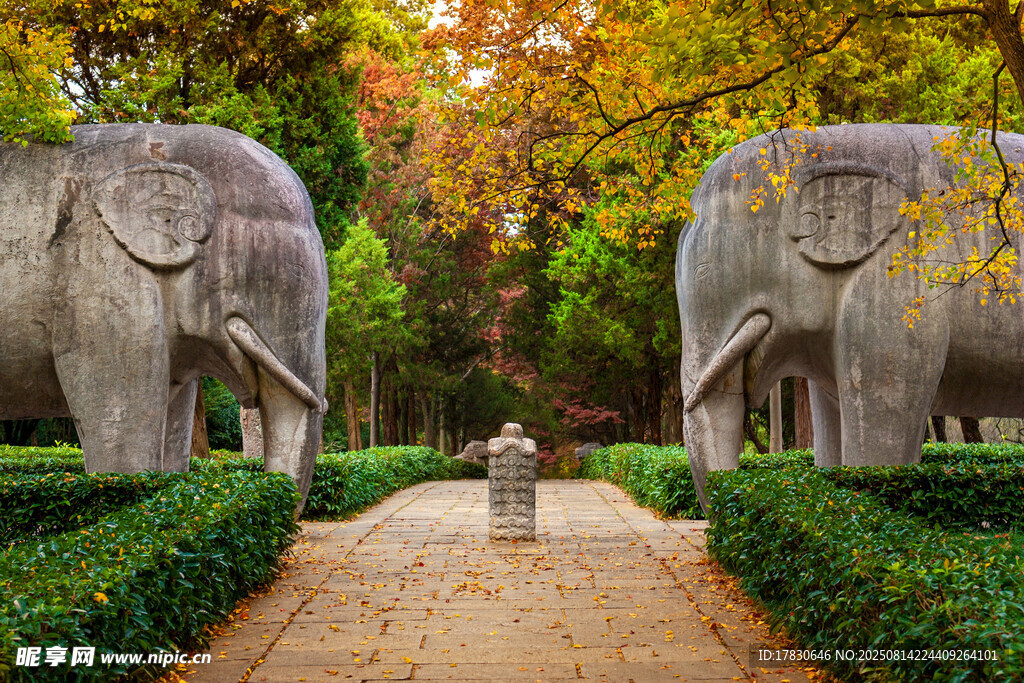
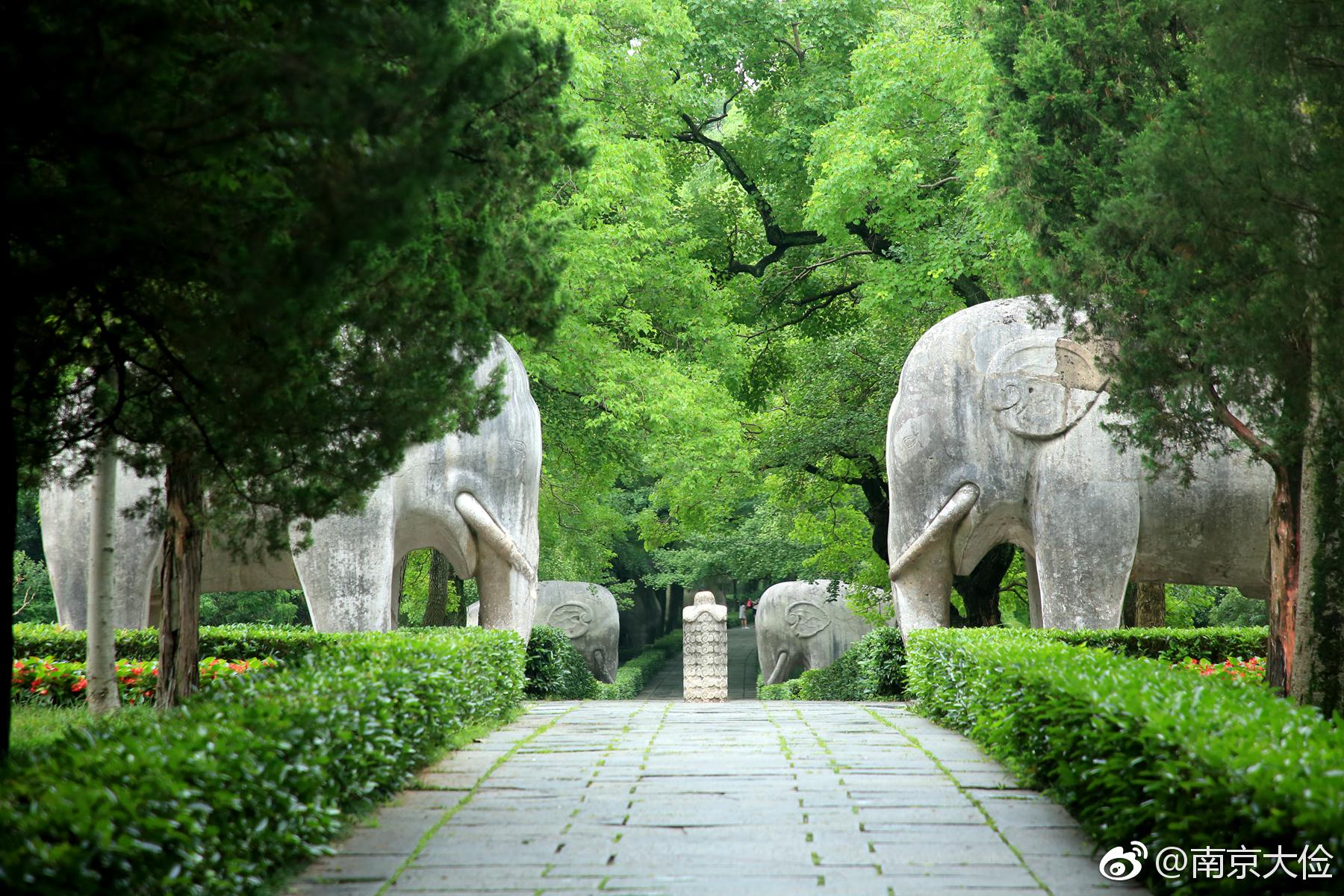
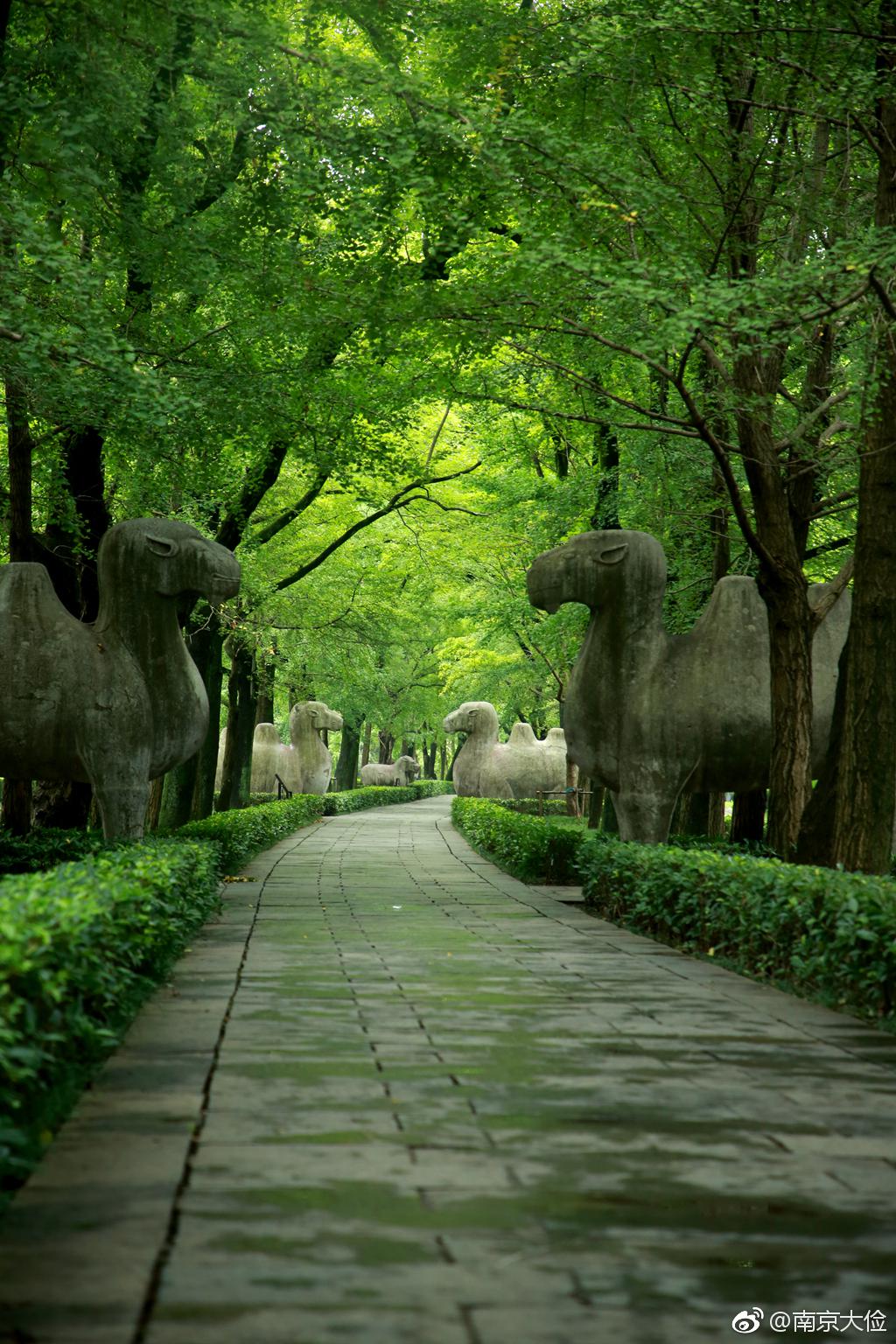
The walk begins at the Great Golden Gate and the Sifangcheng Pavilion, whose stele of 2,746 characters was dictated by the Yongle Emperor in praise of his father. The 615-metre Stone Elephant Road then unwinds in a gentle arc — twelve pairs of lions, xiezhi, camels, elephants, qilin and horses, each pair kneeling and standing, all carved from single blocks of stone around 1381–1405 — before the straight 250-metre Wengzhong Road, guarded by armoured generals and civil ministers and mid-way cloud-and-dragon pillars. The tomb proper follows through the Wuchangmen gate and the sacrificial hall ruins to the Square City, whose stone Soul Tower is the only vantage over the great sealed mound; the free Ming Xiaoling Museum beyond models the 'five-arch drainage' engineering that has kept the tomb dry for six hundred years.
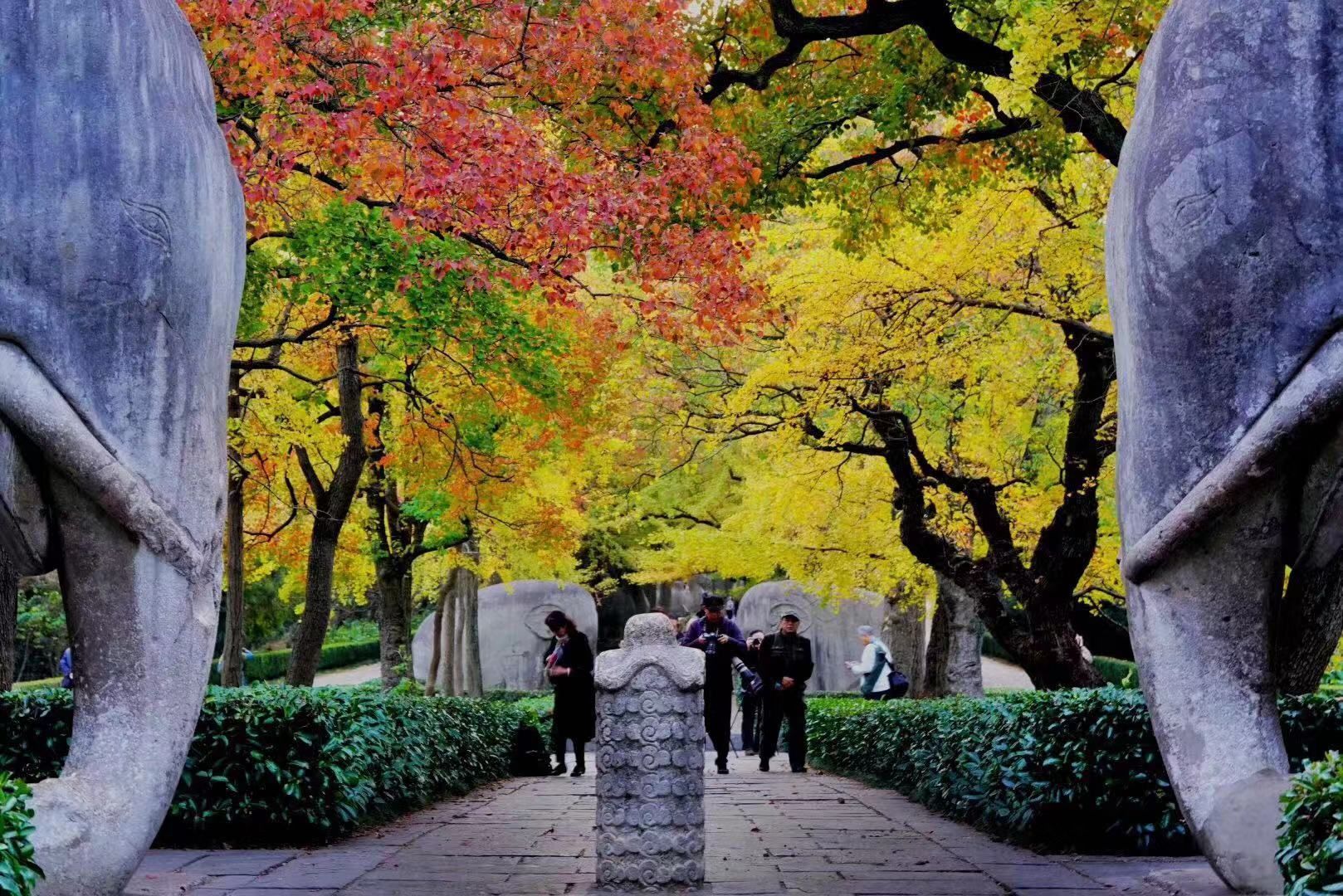
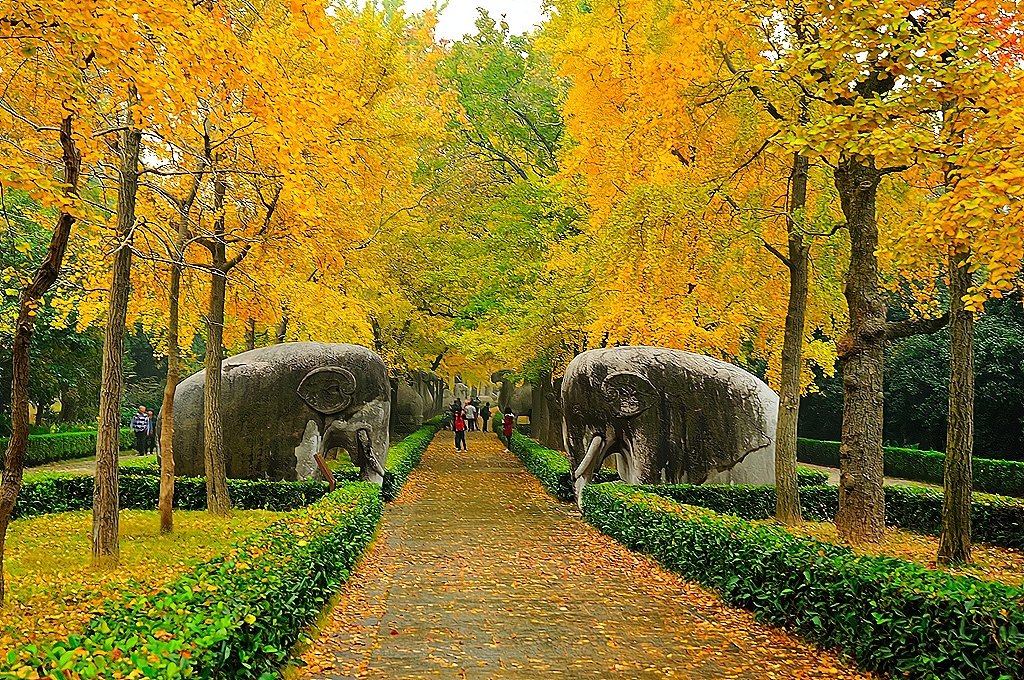
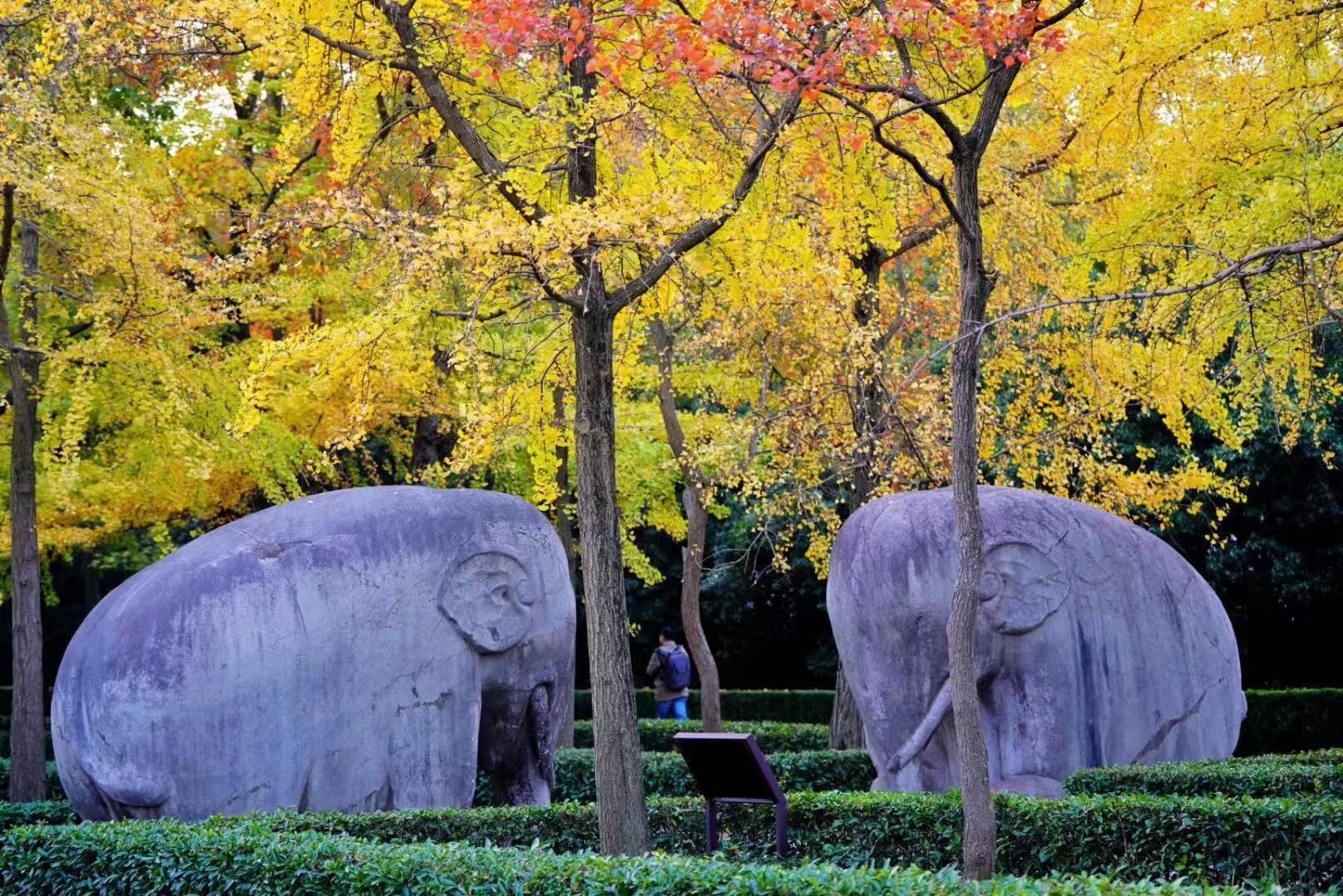
Late autumn gilds the gingko, maple and cypress canopy into what locals call 'Nanjing's most beautiful 600 metres', while late February to mid-March brings the plum blossom of Meihua Hill — some 35,000 trees of more than 300 varieties, celebrated by the Nanjing International Plum Festival since 1996. Entry costs CNY 70 (about CNY 60 online) with a CNY 100 combo covering the whole Zhongshan scenic belt, and arriving before the 06:30 ticketing start is free. Metro Line 2 reaches Muxuyuan Station ten minutes from Gate 3, and the mausoleum pairs naturally with Sun Yat-sen Mausoleum and the Music Terrace in one full Purple Mountain day.
Highlights
Stone Elephant Road (Shixianglu)
The 615-metre first section of the Sacred Way, lined with 12 pairs of stone beasts carved from single rock masses around 1381–1405. In late November the gingko and maple canopy makes it 'Nanjing's most beautiful 600 metres'.
Wengzhong Road Stone Officials
The Sacred Way's second act: a 250-metre straight stretch guarded by pairs of armoured generals and civil ministers (wengzhong), plus 6.6-metre carved cloud-and-dragon pillars positioned mid-way — a unique Ming Xiaoling trademark.
Meihua (Plum Blossom) Hill
One of China's premier plum groves — roughly 35,000 trees of 300+ varieties on the hill where Wu emperor Sun Quan lies buried. Peak bloom mid-February to mid-March, celebrated by the annual Nanjing International Plum Festival since 1996.
Square City & Soul Tower (Fangcheng Minglou)
The massive rampart behind the sacrificial hall ruins, topped by a stone tower — the only route to glimpse the great unexcavated treasure mound (Baocheng) of the Hongwu Emperor, sealed since 1398.
Sifangcheng Pavilion Ruins
The remnant of the Sacred Virtue Stele pavilion near the Great Golden Gate, where the 2,746-character stele dictated by the Yongle Emperor praises his father's deeds — the starting point of the classic one-way walking route.
Zixia Lake & Ming Xiaoling Museum
A quiet reservoir in the forest north of the tomb, plus a free museum (closed Mondays) at the 7th gate that models the tomb's construction and the 'five-arch drainage' engineering that kept the mound dry for 600 years.
Photo Gallery
Comments