 Travel in China
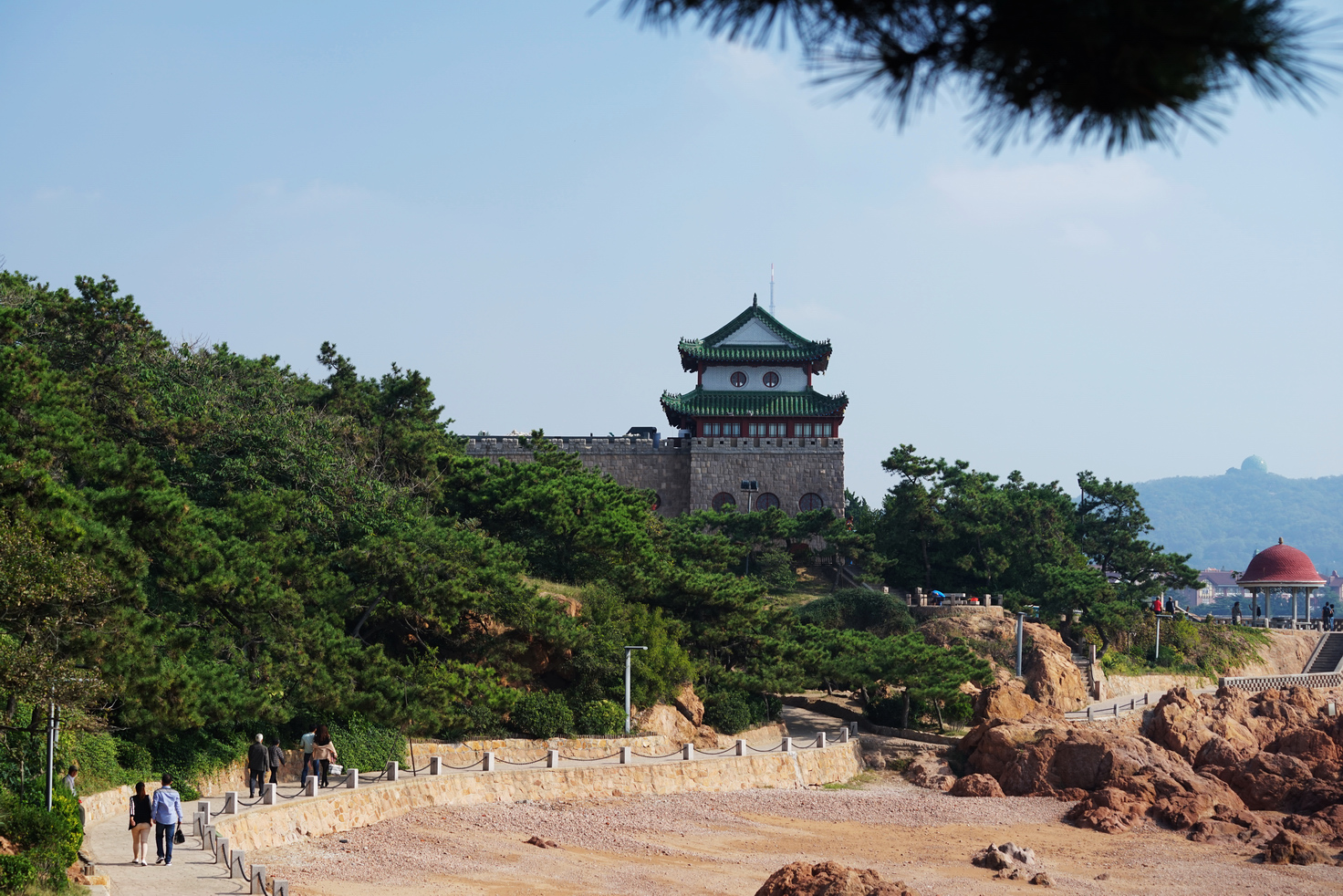
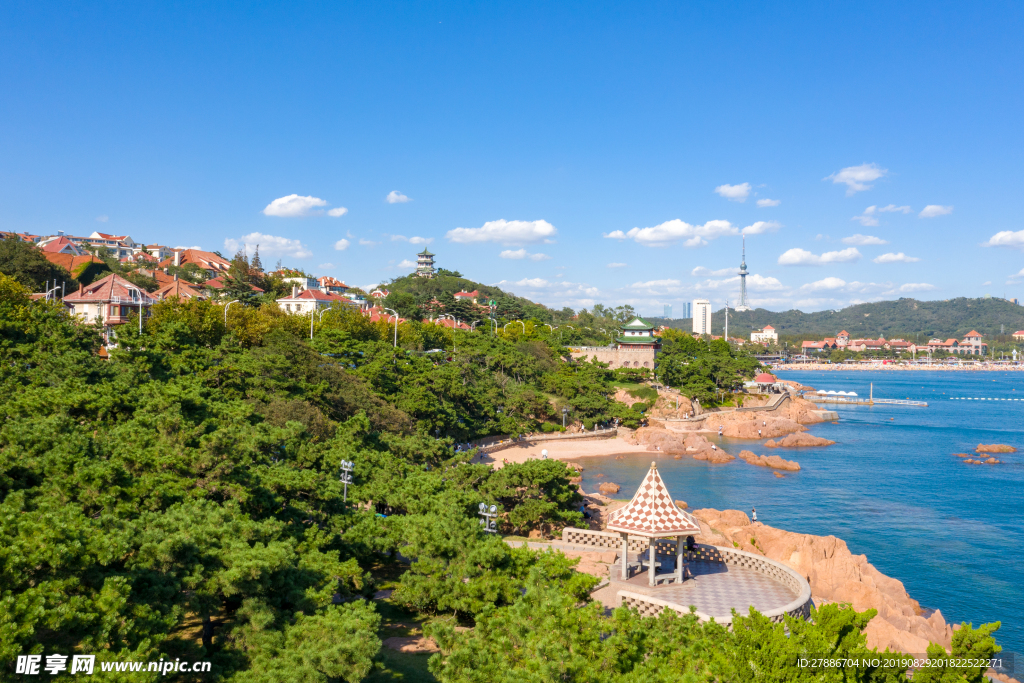
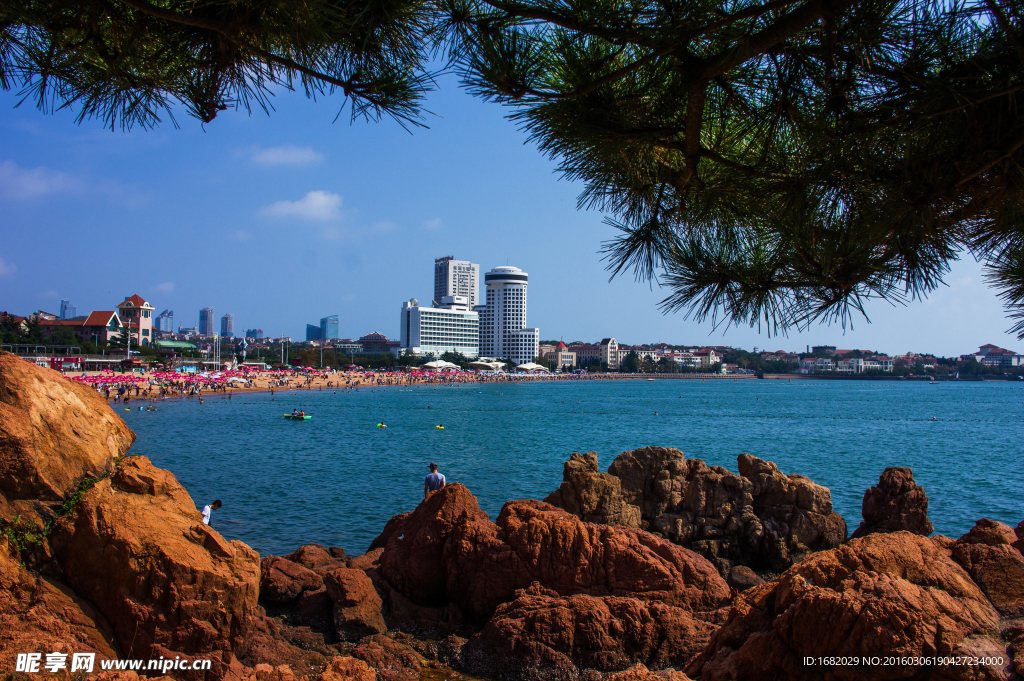
Lu Xun Park is Qingdao's most distinctive free seaside park, stretching about 2 km along a narrow bedrock coast between Little Qingdao and No.1 Bathing Beach in Shinan District. First planted as a German-era windbreak of black pines in 1903 and opened as a park in 1929, it was renamed in 1950 to honor writer Lu Xun. Its signature is the best-preserved red-reef coastline in China — ochre-red rocks (top) and grey-brown bases washed by clear blue water, backed by 1,800 wind-bent black pines. Free and open 24 hours, the park's stone paths, western-style pavilions, the 72 m Lu Xun Poetry Gallery with 45 hand-written poems, the Lu Xun statue, and a 700 sqm outdoor seal pool make it a cultural-coastal walk. It is the connective tissue of the old-town seafront: Little Qingdao to the west, Qingdao Underwater World at its east end, and Xiaoyushan above. Wedding photo shoots and tide-pool exploring on the reefs are everyday scenes.
Dive deeper: full travel guide · transport & map · where to stay & book
Lu Xun Park is Qingdao's most distinctive free seaside park, stretching about two kilometers along a narrow bedrock coast between Little Qingdao and the No.1 Bathing Beach in Shinan District. Its story begins in 1903, when German colonists planted black pines as a windbreak; the strip opened as a public park in 1929 and was renamed in 1950 to honor Lu Xun, one of modern China's most influential writers. Today the park stands out for two reasons: it preserves the best red-reef coastline in China, and it blends literary culture into a natural setting in a way few Chinese parks manage, making it both a local favorite and a meaningful stop for visitors.
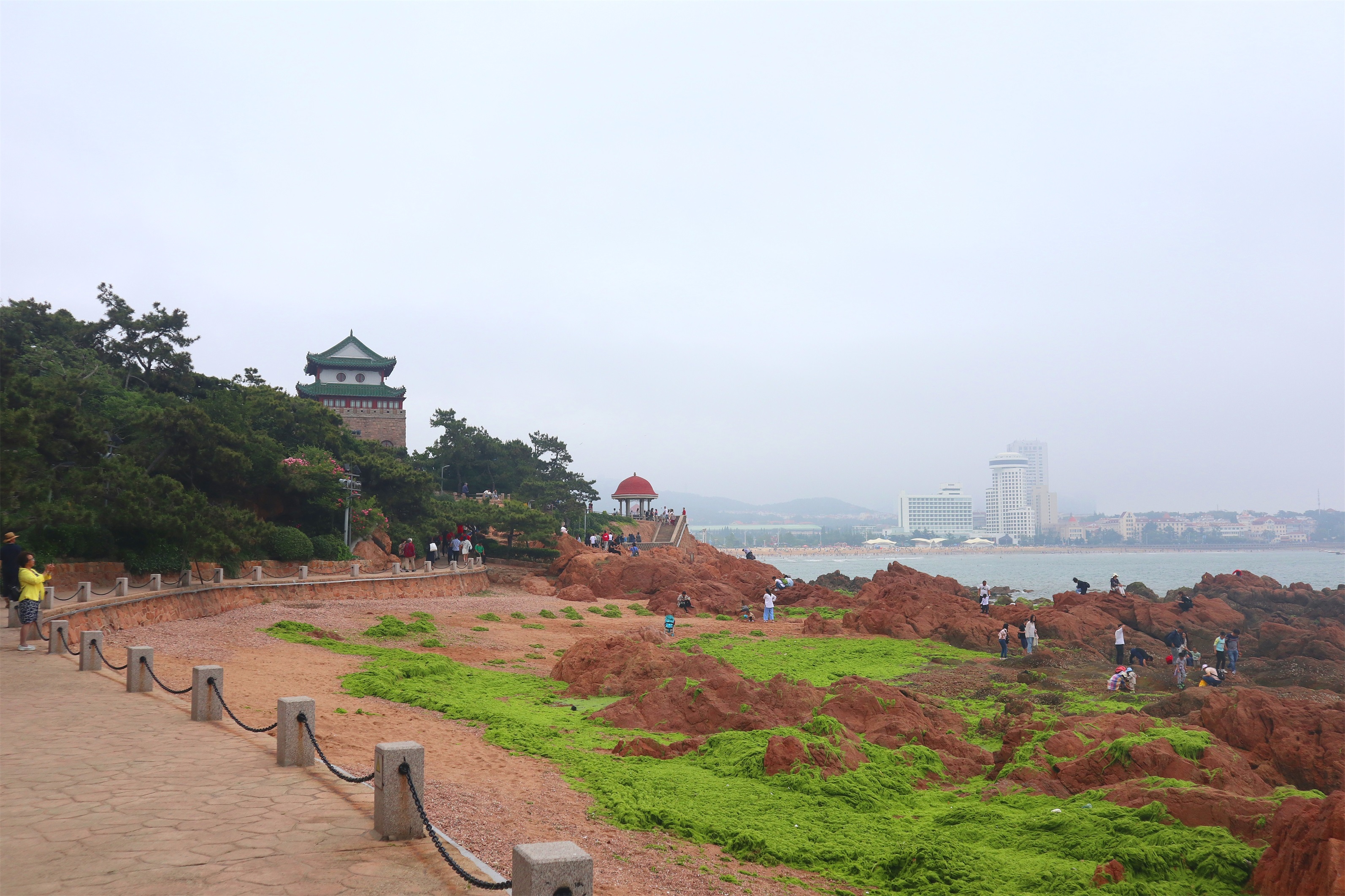
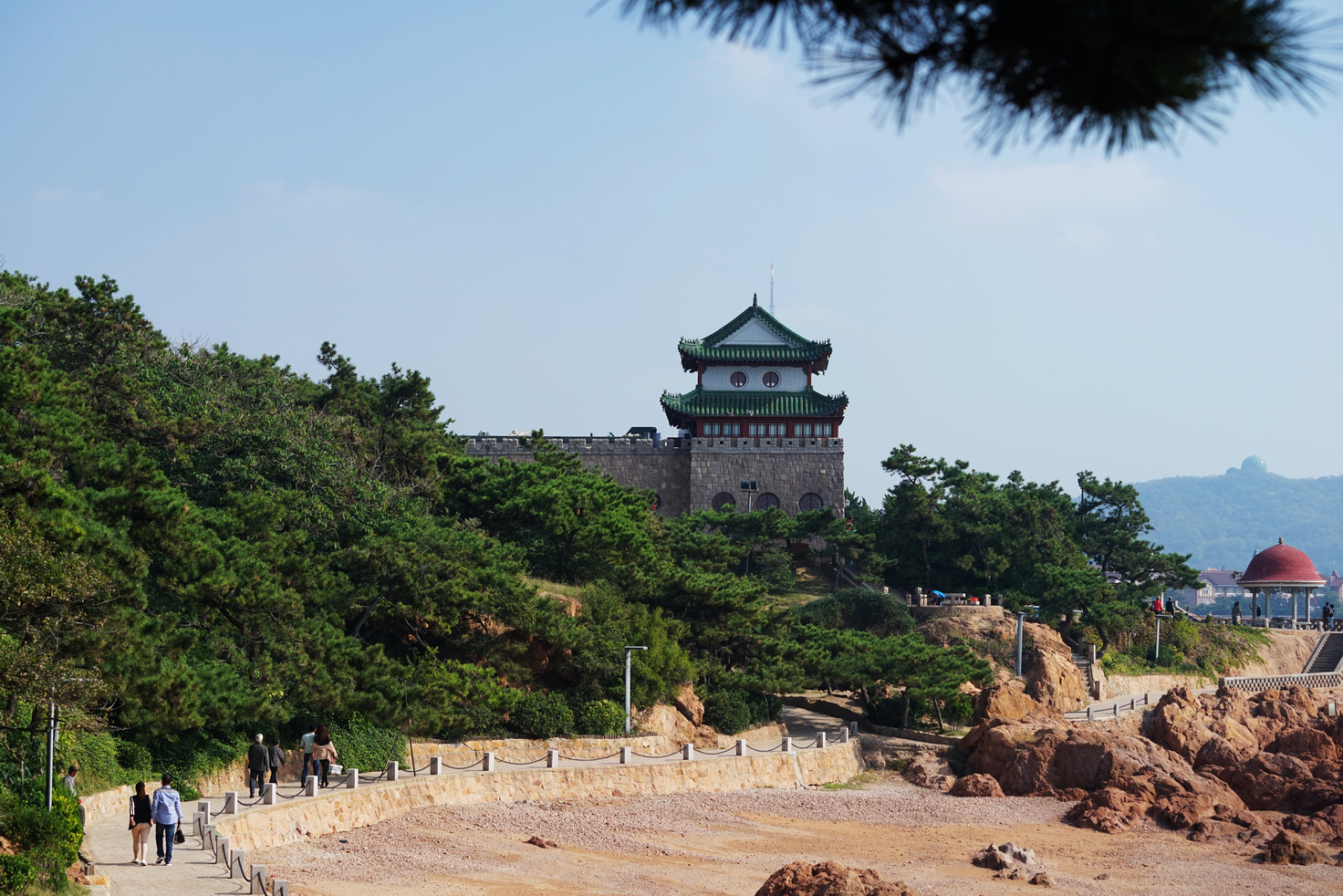
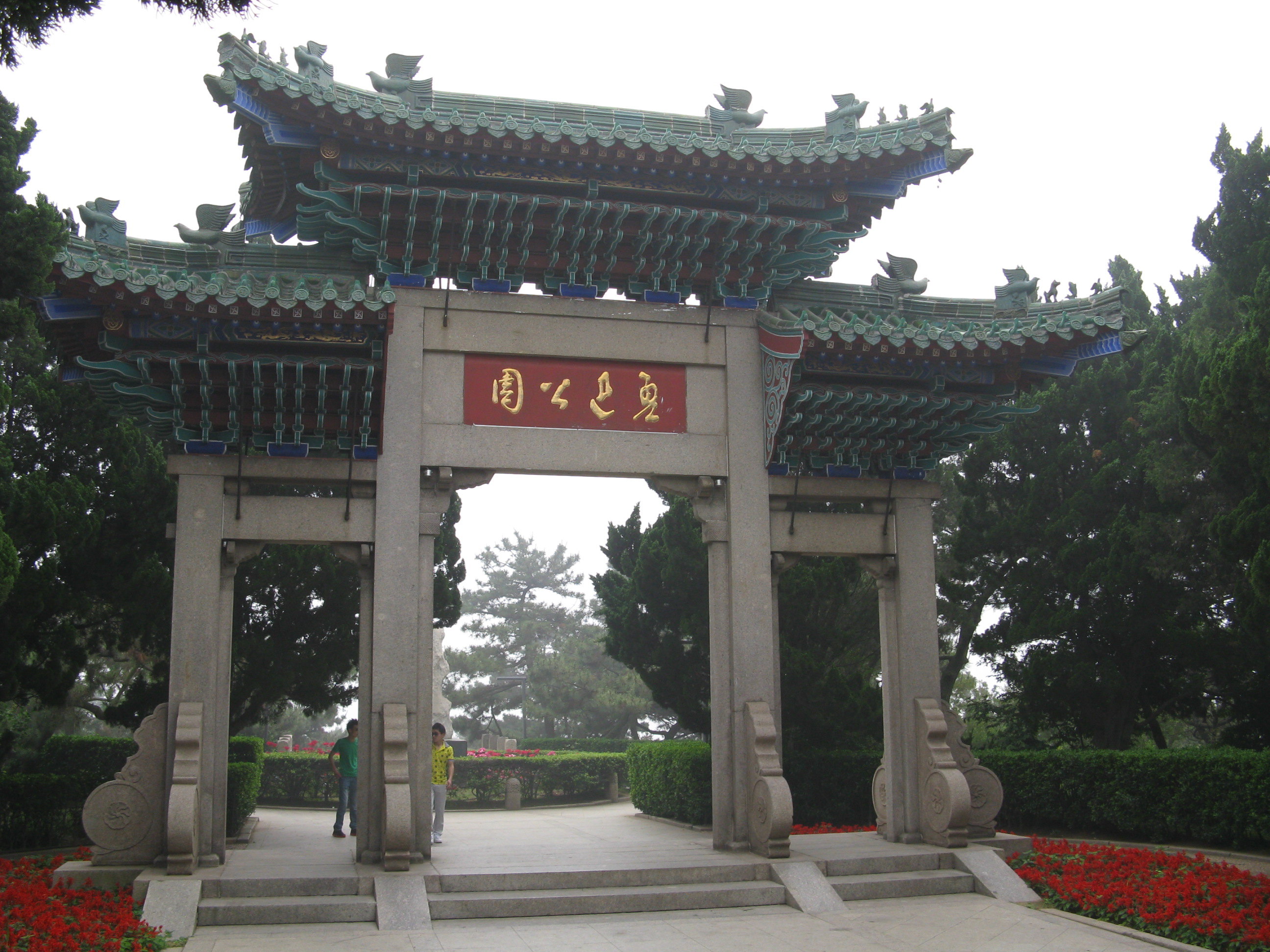
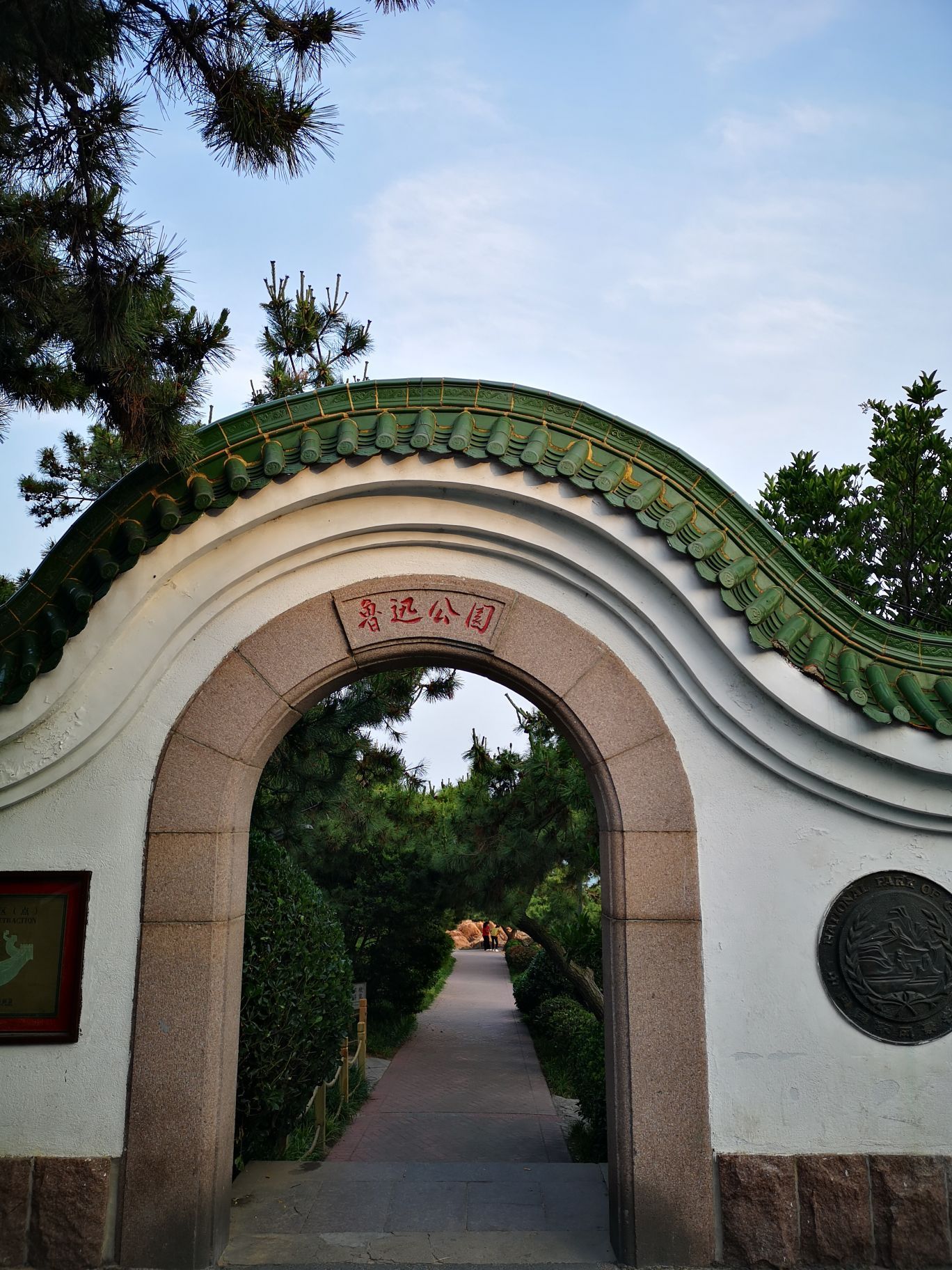
The visitor experience is a slow coastal walk on stone paths beneath a canopy of more than 1,800 wind-bent black pines, with warm ochre-red reef rock below and clear blue water washing against grey-brown bases. The color contrast is striking and completely unlike cold black basalt coasts elsewhere, best appreciated at low tide in slanting light, though the reefs are slippery when wet. Cultural highlights include the 72-meter Lu Xun Poetry Gallery, a red-granite wall carved with 45 hand-written poems and a portrait relief, the Lu Xun statue, the classic stone archway entrance inscribed in Lu Xun's own calligraphy, and a 700-square-meter outdoor seal pool near the east end. Wedding photo shoots are common, and tide pools invite exploration.
Admission is completely free, no reservation needed, and the park is open 24 hours year-round, so you can time a visit for sunrise or an evening stroll. Spring through autumn offers the best combination of comfortable walking weather and vivid reef color, while low tide and morning or late-afternoon light reward photographers most. The park is also the connective tissue of the old-town seafront: Little Qingdao sits to the west, Xiaoyushan rises above, and the paid Qingdao Underwater World (open 7:30 to 18:30) anchors the east end, so a full morning can naturally combine the reef walk with one or both neighbors. Wear shoes with good grip for the rocks.
Highlights
红礁石海岸 (Hong Jiaoshi Haian)
The best-preserved red-reef coast in China — warm ochre rock against blue sea, completely different from cold black basalt coasts. Best photographed at low tide in slanting light; reefs are slippery when wet.
黑松林 (Hei Song Lin)
Over 1,800 wind-sculpted black pines planted from 1903 form a dark green canopy over the whole park — the 'green skeleton' that frames every photo of the red rocks.
鲁迅诗廊 (Lu Xun Shi Lang)
A 72 m red-granite wall carved with 45 Lu Xun hand-written poems and his portrait relief, plus the famous line 'Fierce brow to the thousand accusers, head bowed to the children.'
石牌坊大门 (Shi Paifang Damen)
The classic Chinese-style stone archway at the Qinyu Road entrance, inscribed '鲁迅公园' in Lu Xun's own calligraphy — the park's classic photo frame.
海豹池 (Haibao Chi)
A 700 sqm outdoor seal pool (since 1966) near the east section where seals surface close to visitors — popular with kids, free to watch.
听涛观景亭 (Tingtao Guanjing Ting)
Wind-bent-pine-shaded pavilions perched on the rocks (Listening-to-Waves, Sea-Viewing, Tide-Viewing) — sit, hear surf hit the reef, and look across to Little Qingdao's lighthouse.
Photo Gallery
Comments