 Travel in China
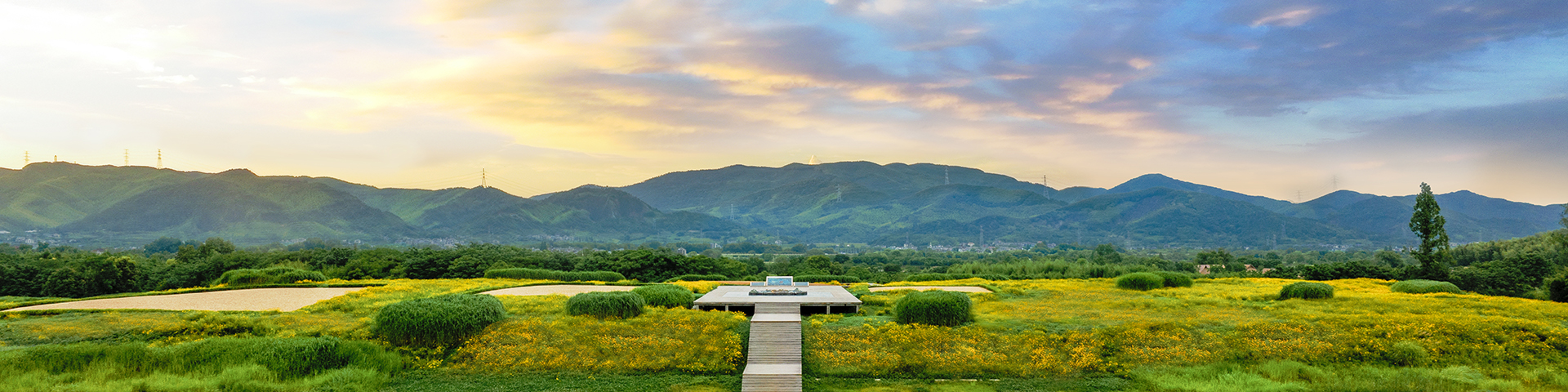
Liangzhu Archaeological Park preserves the 5,300-year-old capital of a Neolithic kingdom on Hangzhou's northwestern edge — UNESCO-listed in 2019 as evidence that Chinese civilisation spans five millennia. The 3.66-square-kilometre core reveals a city designed on water: earthen walls, eight water gates, the Mojiaoshan palace terrace, and the Fanshan royal cemetery that yielded the jade cong defining Liangzhu art, while the outer dams form the world's earliest known large-scale hydraulic system. Managed like an open-air museum — daily quotas, advance reservation, a ¥20 shuttle circuit — with the jades themselves in the museum 4 km east.
Dive deeper: full travel guide · transport & map · where to stay & book
Before the first dynasty, a kingdom here already built like one. Some 5,300 years ago the Liangzhu culture raised a walled capital on the plain northwest of modern Hangzhou — earthen ramparts enclosing roughly 3 square kilometres, pierced by eight water gates because this was a city designed on water, its streets canals. At the centre stood the 30-acre Mojiaoshan palace terrace; on the western flank, the Fanshan royal cemetery. When archaeologists opened its eleven high-status tombs in 1986 they found more than a thousand jades — cong tubes and bi discs whose designs define Liangzhu art — and the outer dams proved to be the world's earliest known large-scale hydraulic system, centuries older than the pyramids. UNESCO inscribed the site in 2019.
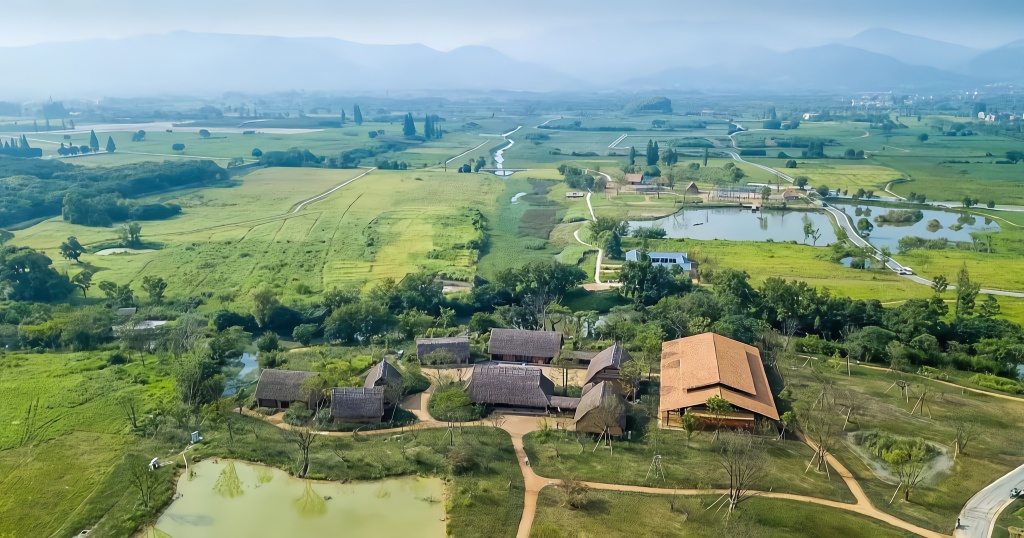
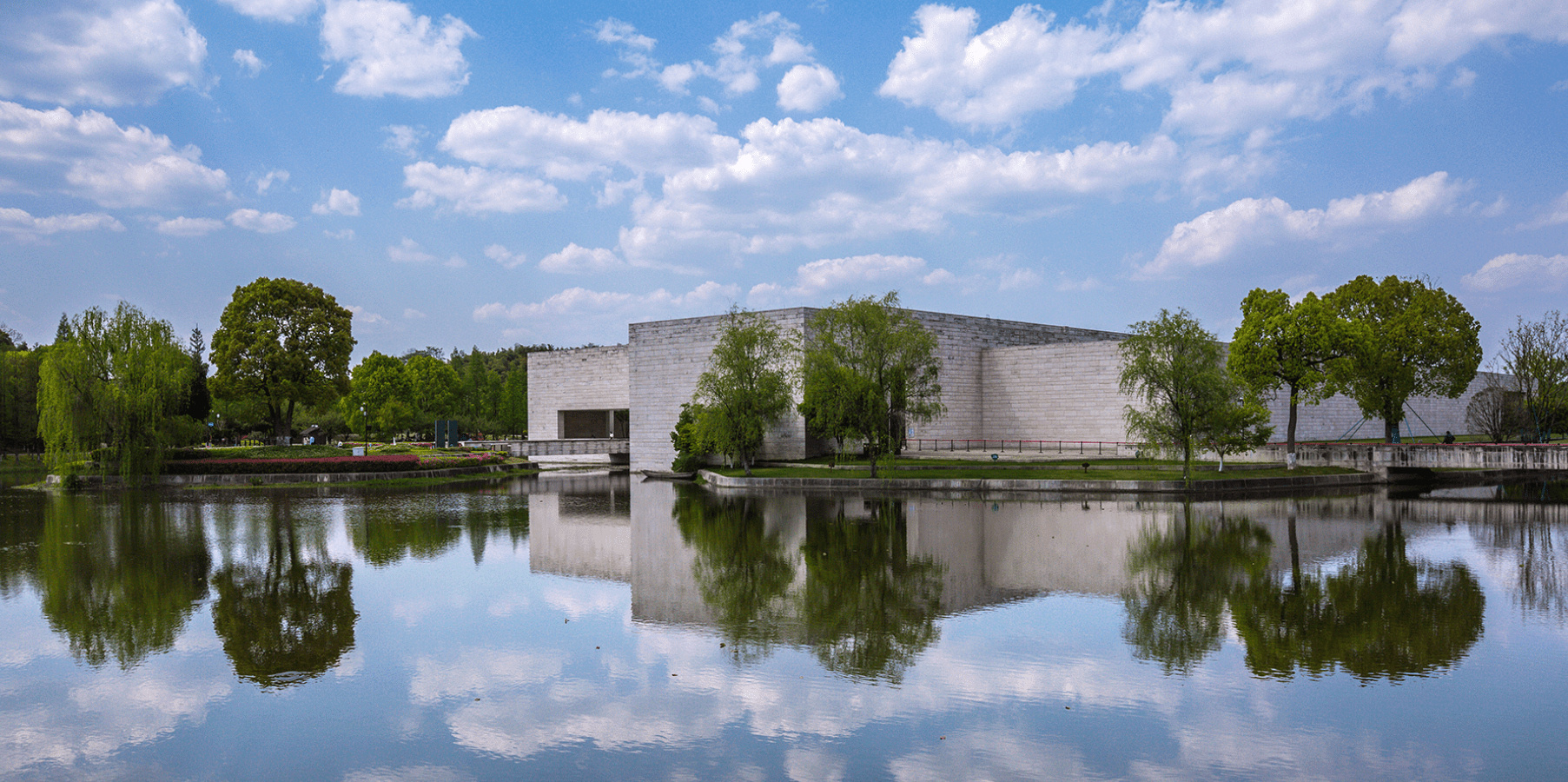
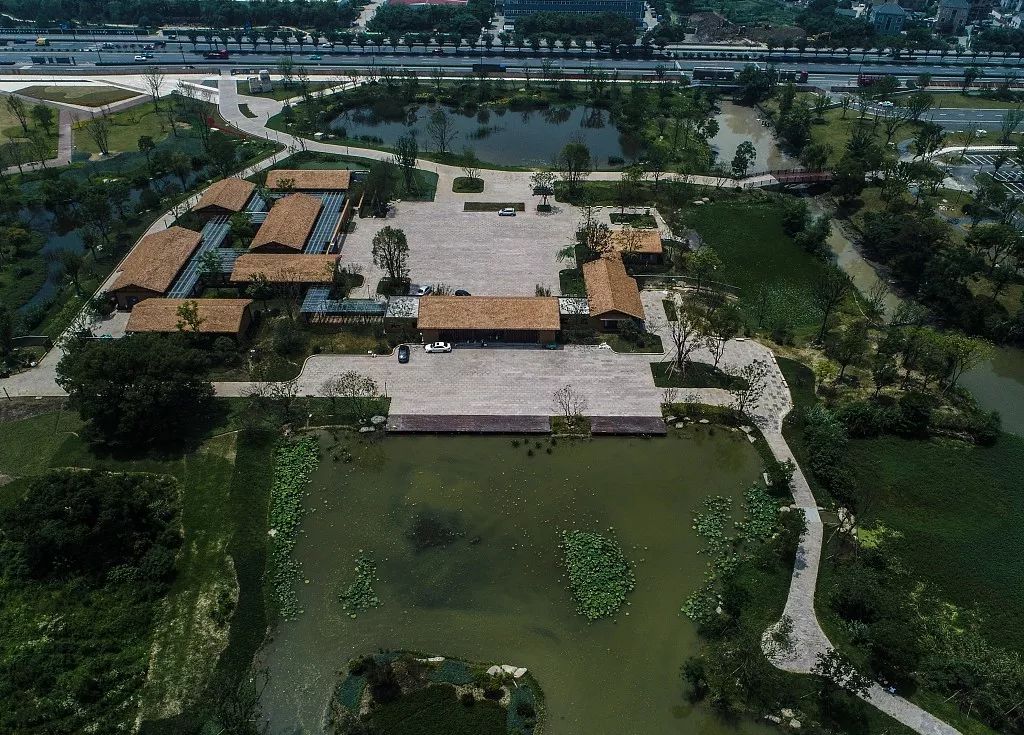
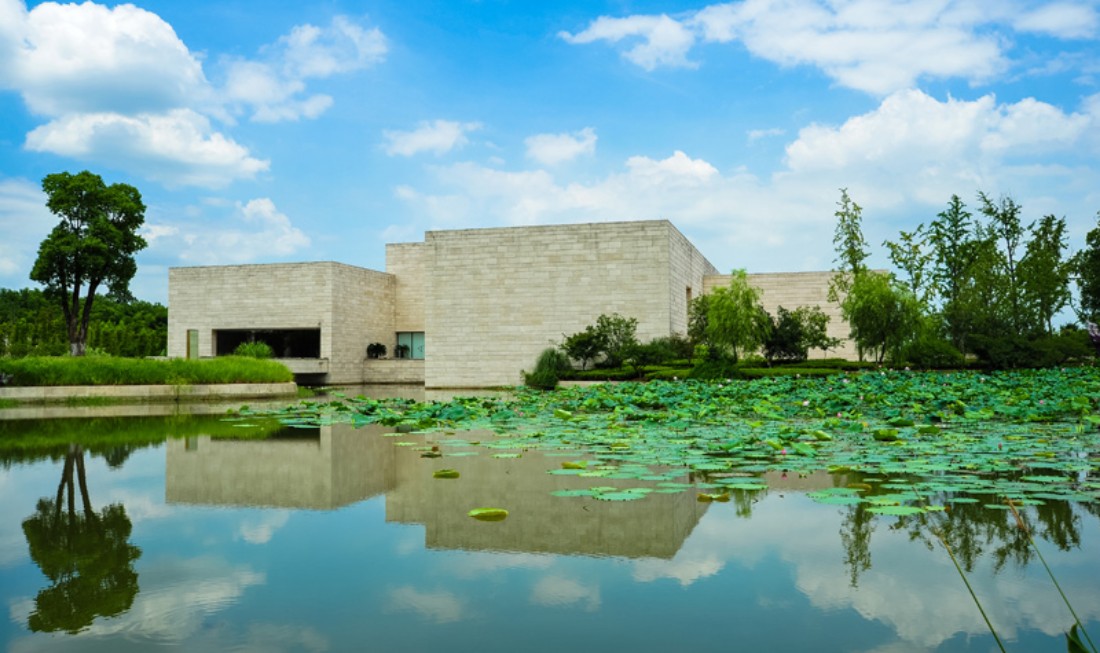
The park keeps the city legible without rebuilding it. A 3.66-square-kilometre core of reed marsh, restored paddies and earthen mounds is served by a shuttle circuit linking ten zones: the monumental timber-column reconstruction on Mojiaoshan marking the lost great hall, the Fanshan display hall reconstructing the 1986 burial as found, the Chizhongsi granary mound with its twenty tonnes of carbonised ancient rice, and a deer enclosure that has become the family favourite. The scale is the point — this is an open-air museum of a landscape, not a reconstruction of a city — and the separate Liangzhu Museum 4 km east, designed by David Chipperfield, holds the actual jades, linked to the park by a free shuttle.
Visiting in 2026 runs like a reservation-first museum: daily quotas around 15,000, booking through the official 'Liangzhu City' mini-program at least a day ahead, ¥60 for adults (¥30 concessions, free for Hangzhou household or six-month social-security holders) and a ¥20 shuttle circuit — the park is far too spread out to walk entirely. Hangzhou residents scan in at the gates with their citizen card; full-price e-tickets scan by ID or QR, while free and concession tickets must be exchanged at the visitor-centre window. Allow three to four hours for the shuttle loop, a full day adding the museum and Yaoshan — and note the Monday museum closure, the south and west gates (the east centre is closed for renovation), and the drone ban.
Highlights
Mojiaoshan Palace Terrace
The 30-acre earthen platform was the kingdom's ceremonial centre, with re-created massive timber columns marking the lost great hall. It is the park's spiritual core.
Fanshan Royal Cemetery
Eleven high-status tombs produced over a thousand jades, including the 'king's' cong from tomb 12. A display hall reconstructs the burial as found in 1986.
World's Earliest Dams
The peripheral dam system, dating to roughly 3300-2300 BCE, is the oldest known large-scale water engineering on earth, older than the pyramids.
Deer Enclosure
A herd of tame sika deer beside the Daguan Hills rest area has become the park's family favourite. Feeding sessions run twice daily in quieter afternoons.
Rice & Water City Landscape
Chaotic reed marshes, restored paddies and the Chizhongsi granary mound (20 tonnes of ancient carbonised rice) keep the wetland city visible.
Liangzhu Museum Pairing
The David Chipperfield-designed museum 4 km away displays the actual jade cong and bi. A free shuttle bus links it with the park's south gate.
Photo Gallery
Comments