 Travel in China
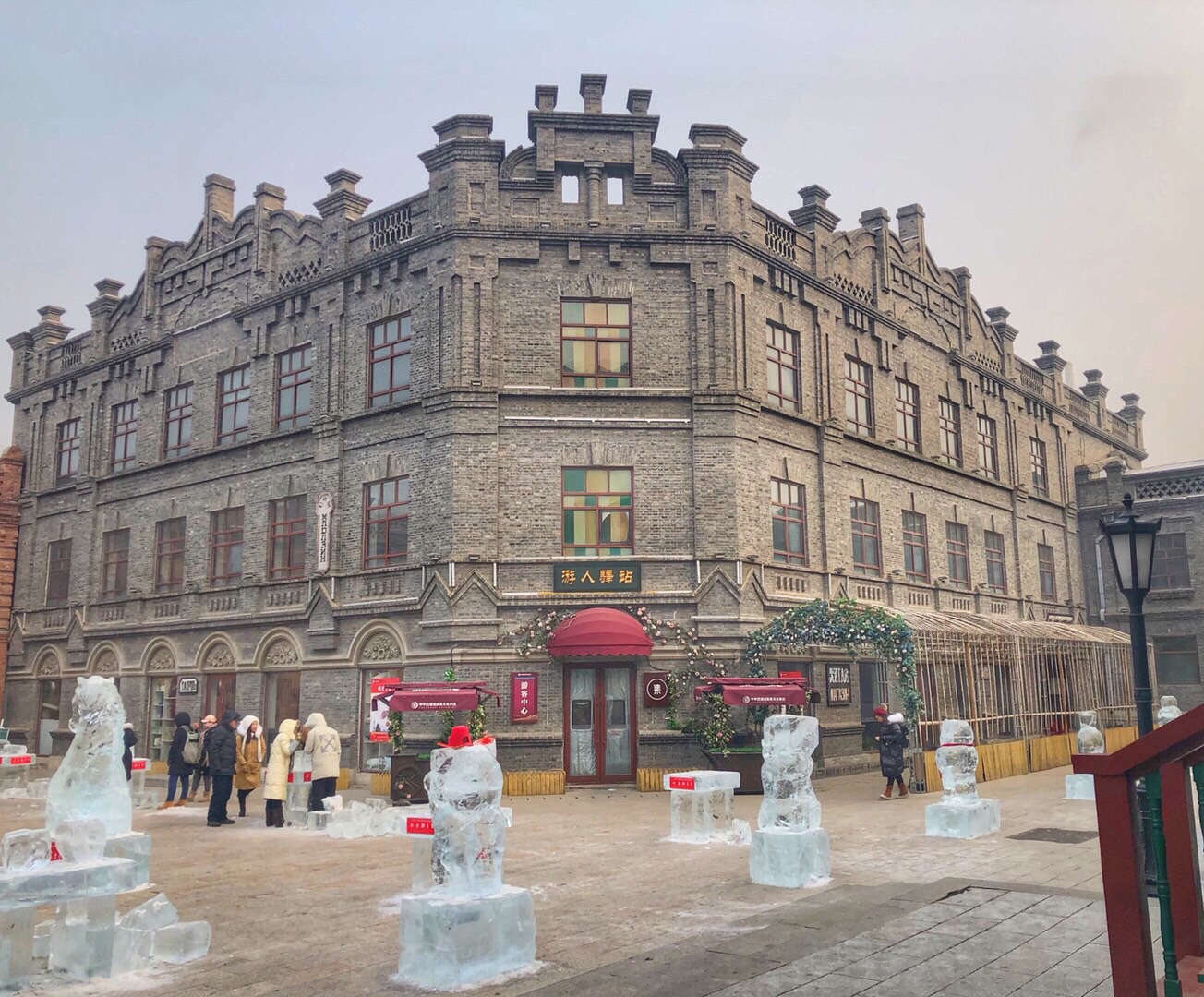
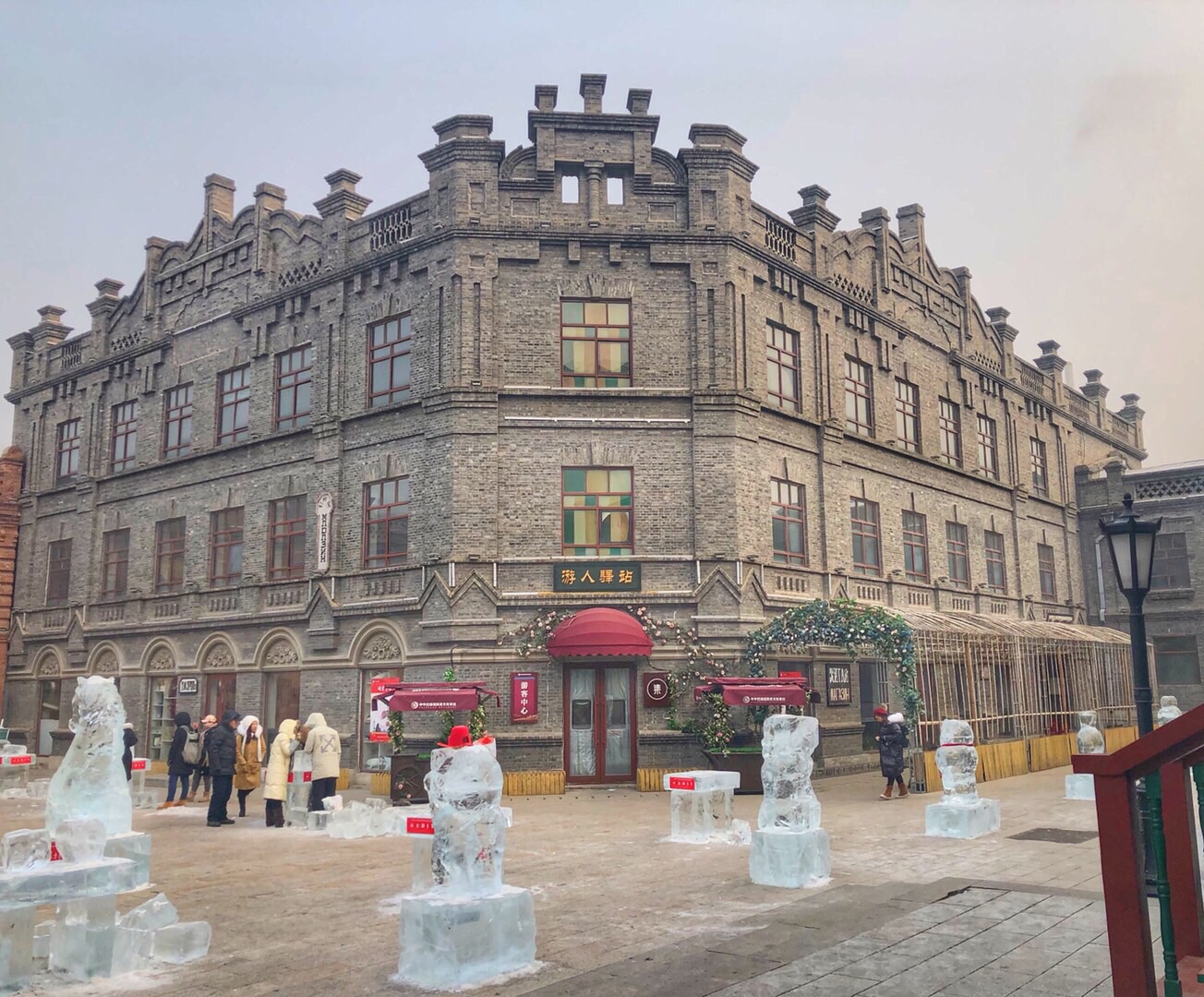
The Chinese Baroque Historic District in Daowai District is the largest and best-preserved 'Chinese Baroque' architectural complex in China. In the early 1900s, Chinese merchants who came northeast ('Chuang Guandong') built Western Baroque-style facades decorated with Chinese auspicious motifs—bats, pomegranates, peonies and coins—around traditional courtyard houses with wooden galleries, creating a 'Western outside, Chinese inside' style found nowhere else. The district around Jingyu Street, Naner and Sanshi streets is free, open 24/7 and requires no reservation, packed with century-old restaurants (Zhang Bao Pu since 1902, Lao Ding Feng since 1911). The 2024-25 restoration reopened the Jingyu Street 'baking-stone' road and Phase 3 blocks; in 2025 the district drew nearly 20 million visits with 980 million CNY revenue. In Nov 2026, 18 newly restored heritage buildings were listed for commercial lease, and the immersive live-action quest 'Baroque Storm' plus a winter ice-art season with dozens of ice sculptures launched. Metro Line 3 has a dedicated station.
Dive deeper: full travel guide · transport & map · where to stay & book
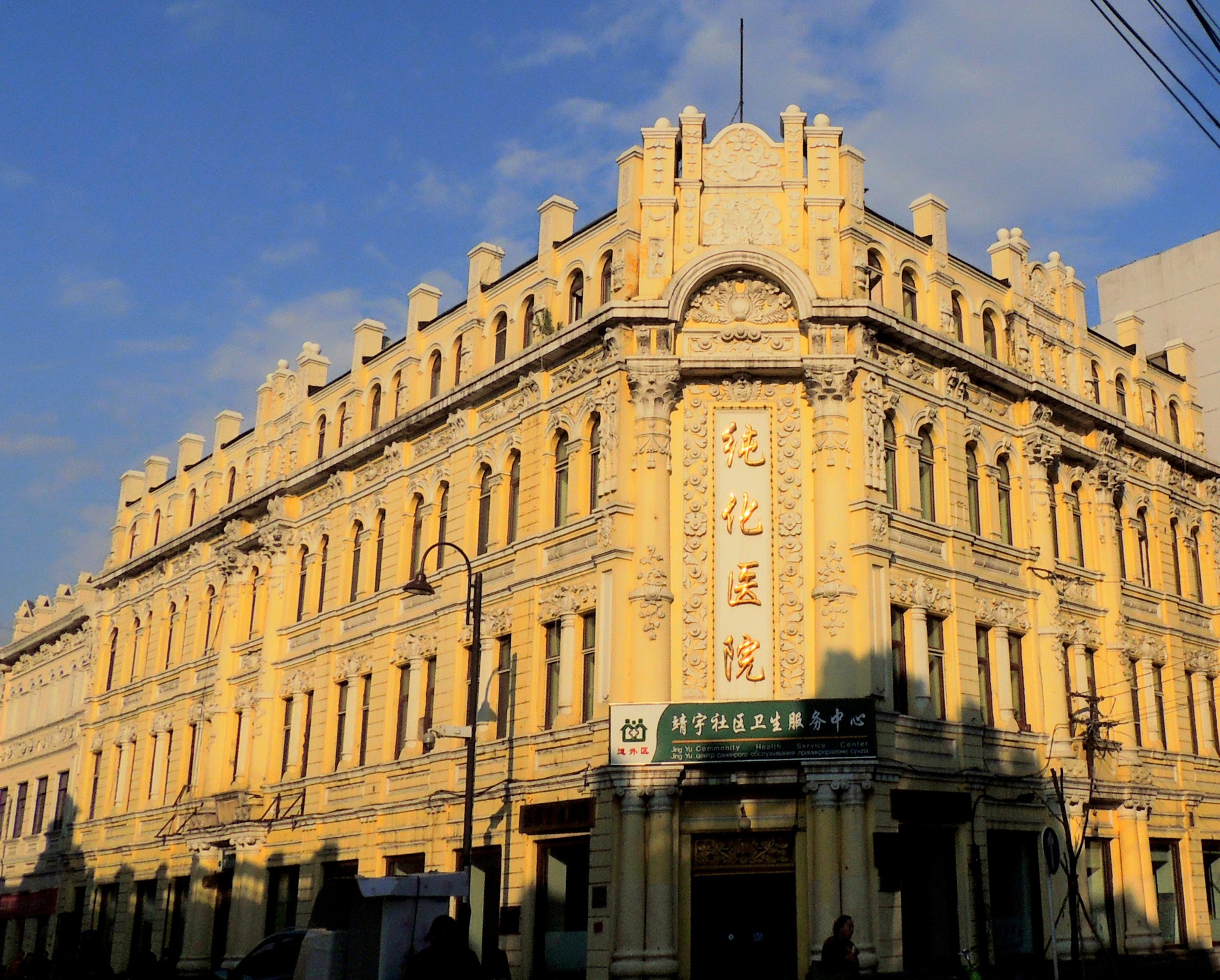
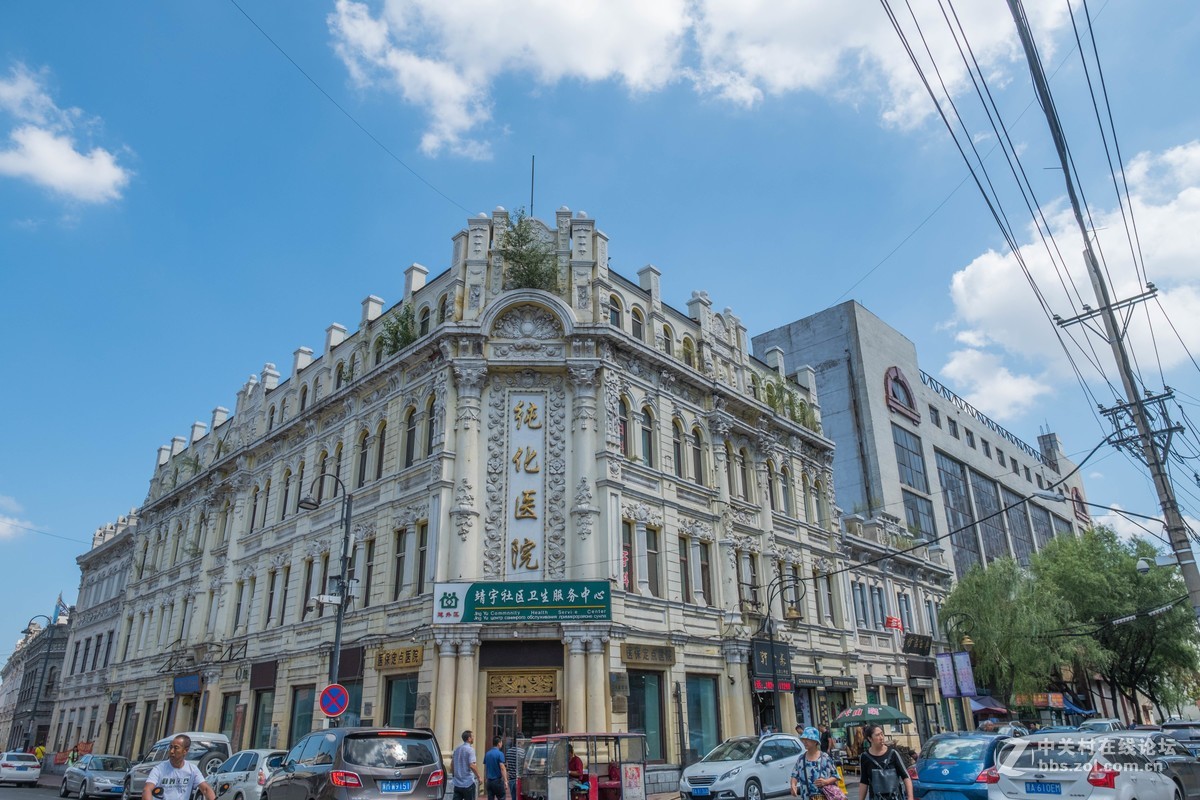
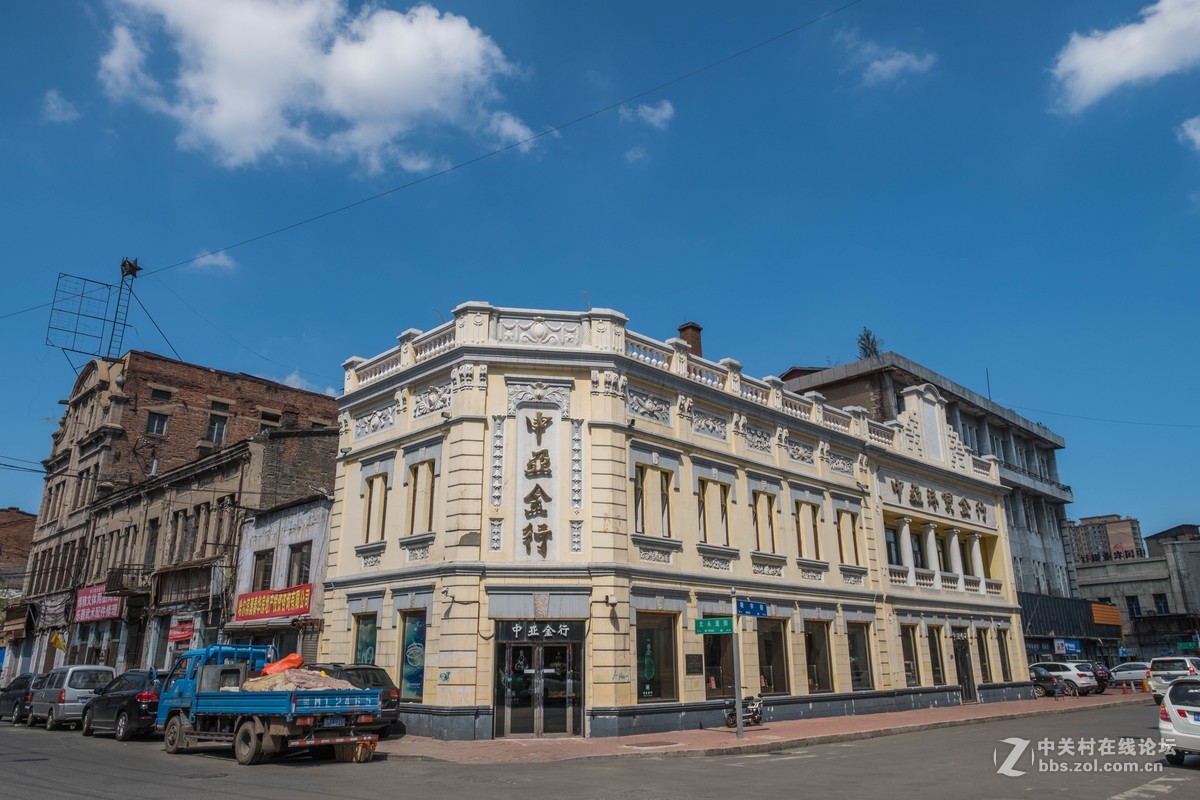
The Chinese Baroque Historic District in Harbin's Daowai District is the largest and best-preserved ensemble of "Chinese Baroque" architecture in China. In the early 1900s, Chinese merchants who journeyed northeast during the great Chuang Guandong migration built Western Baroque-style facades around traditional courtyard houses. The results are striking: European columns, pediments and curves embellished with Chinese auspicious carvings of bats, pomegranates, peonies and copper coins, while inside lie classic courtyards with skywells and wooden ring-galleries. This "Western outside, Chinese inside" fusion, created by Chinese builders for Chinese businesses, exists nowhere else at this scale, making the district a unique architectural record of entrepreneurship and cultural blending.
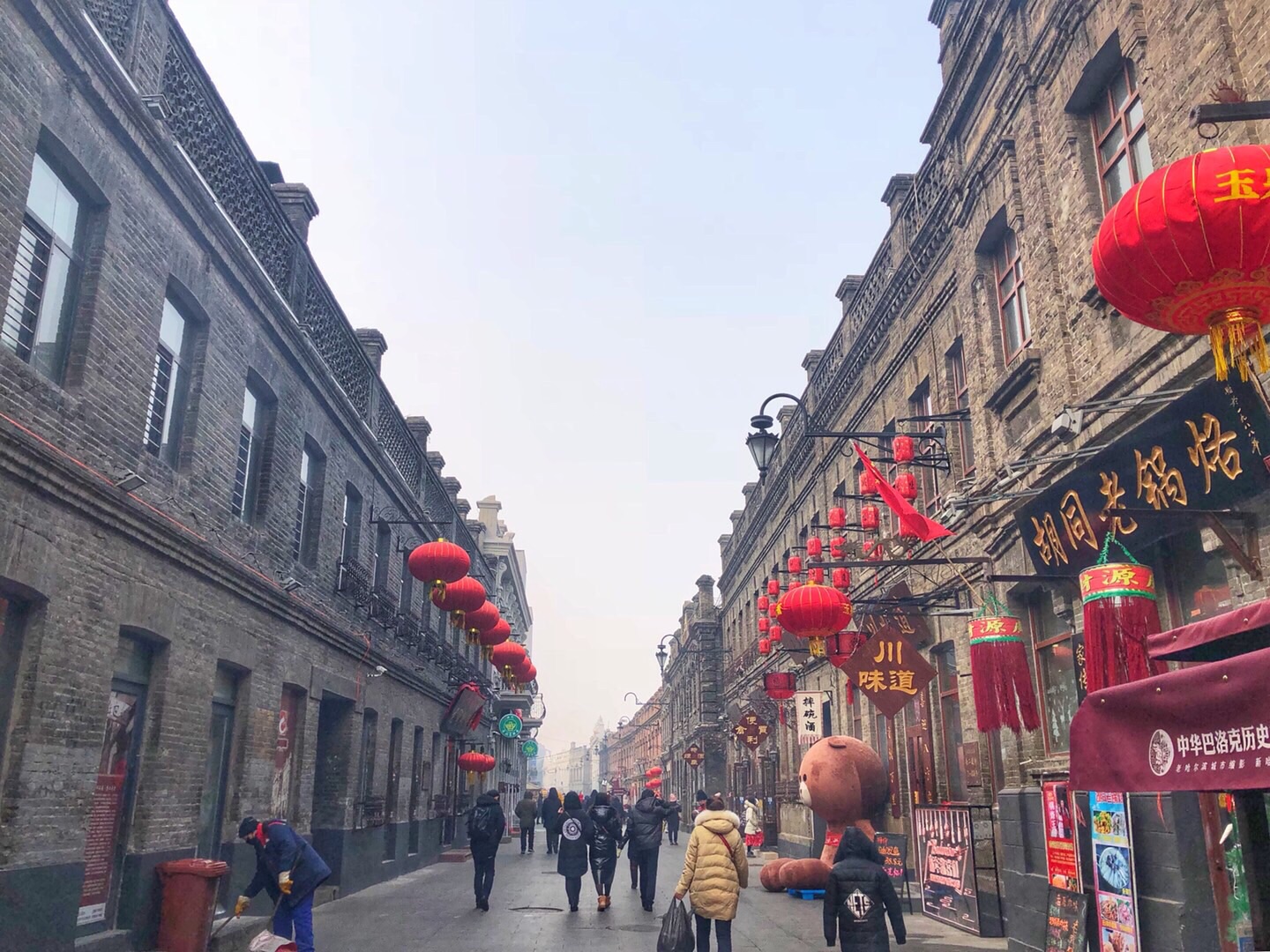
Today the area around Jingyu, Naner and Sanshi streets is a lively open-air destination. Visitors stroll the restored century-old "bread-stone" cobbled road on Jingyu Street, where corner towers once formed old Daowai's earliest commercial center. Over a hundred ornate facades reward slow looking, and heritage courtyards such as Renyi Court offer quieter corners. Food is a major draw: seventeen century-old brands gather here, including Zhang Bao Pu, serving rib-stuffed baozi since 1902, and Lao Ding Feng pastry, founded in 1911. Local specialties like guobaorou, smoked-sauce meats and sticky-bean buns tempt at every turn, though expect queues of 20 to 40 minutes at famous shops at mealtimes.
The streets are free, open 24 hours year-round, and require no ticket or reservation; shops run roughly 9:00 to 21:00 and museums about 9:00 to 16:30, closed Mondays. Lanterns lit at dusk make evenings especially atmospheric. A major restoration completed in 2024-25 reopened the Phase 3 blocks and the cobbled road, and the district drew nearly 20 million visits in 2025, so it now anchors any Harbin itinerary alongside Central Street and Saint Sophia Cathedral. Allow half a day, combining daytime architecture browsing with an evening meal, and visit in the late afternoon to catch both daylight details and the illuminated night scene.
Highlights
中华巴洛克建筑群 (Zhonghua Baluoke Jianzhuqun)
Over a hundred facades mix Baroque columns, pediments and curves with Chinese auspicious carvings—bats (fu), pomegranates, peonies and copper coins—while inside are traditional courtyards with skywells and wooden ring-galleries. It is the largest surviving ensemble of this Sino-Western hybrid style in China.
靖宇街面包石老街 (Jingyu Street Cobbled Road)
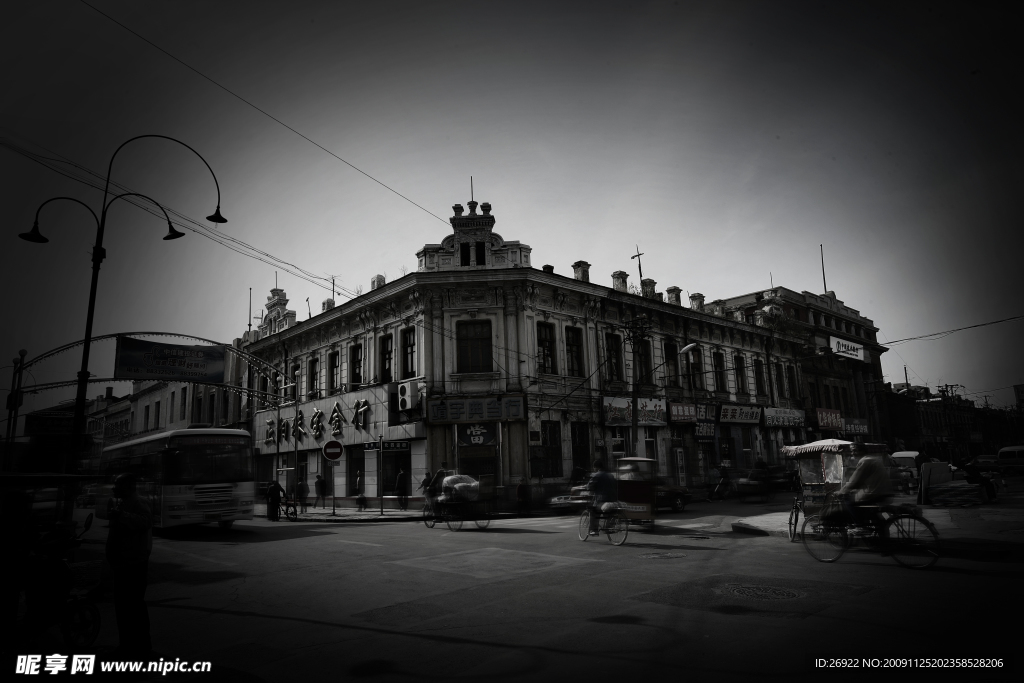
The restored century-old 'bread-stone' paved main axis reappeared in the 2024 Phase-3 reopening. The corner towers at Jingyu Street and Nantoudao Street formed old Daowai's earliest commercial center in the 1900s.
老字号美食 (Laozihao Food)
Seventeen century-old brands gather here, including Zhang Bao Pu (ribs baozi, since 1902) and Lao Ding Feng pastry (since 1911), plus guobaorou, smoked-sauce meats and sticky-bean buns. Expect 20-40 minute queues at famous shops at meal times.
仁义大院与飘雪小院 (Renyi Courtyard & Snowing Yard)
The restored Renyi Courtyard keeps a traditional four-sided courtyard with bronze relief walls retelling merchant history; the 'Snowing Yard' offers year-round artificial snow, Manchu hotpot and free performances—a viral photo spot.
巴洛克风云实景探游 (Baroque Storm Live Quest)
An immersive role-play quest through the lanes launched with the 2026-27 winter season: visitors take on identities, shopkeepers act as NPCs, turning the whole street into a stage of 1920s merchant Harbin.
红色展馆与音乐小院 (Red Museums & Music Yard)
The 'Fourteen Years of Northeast Anti-Japanese War' exhibition and Harbin Commercial Culture Museum opened in 2025-26, while the Harbin Music Academy's Baroque Music Yard hosts courtyard concerts and street performances.
Photo Gallery
Comments