 Travel in China
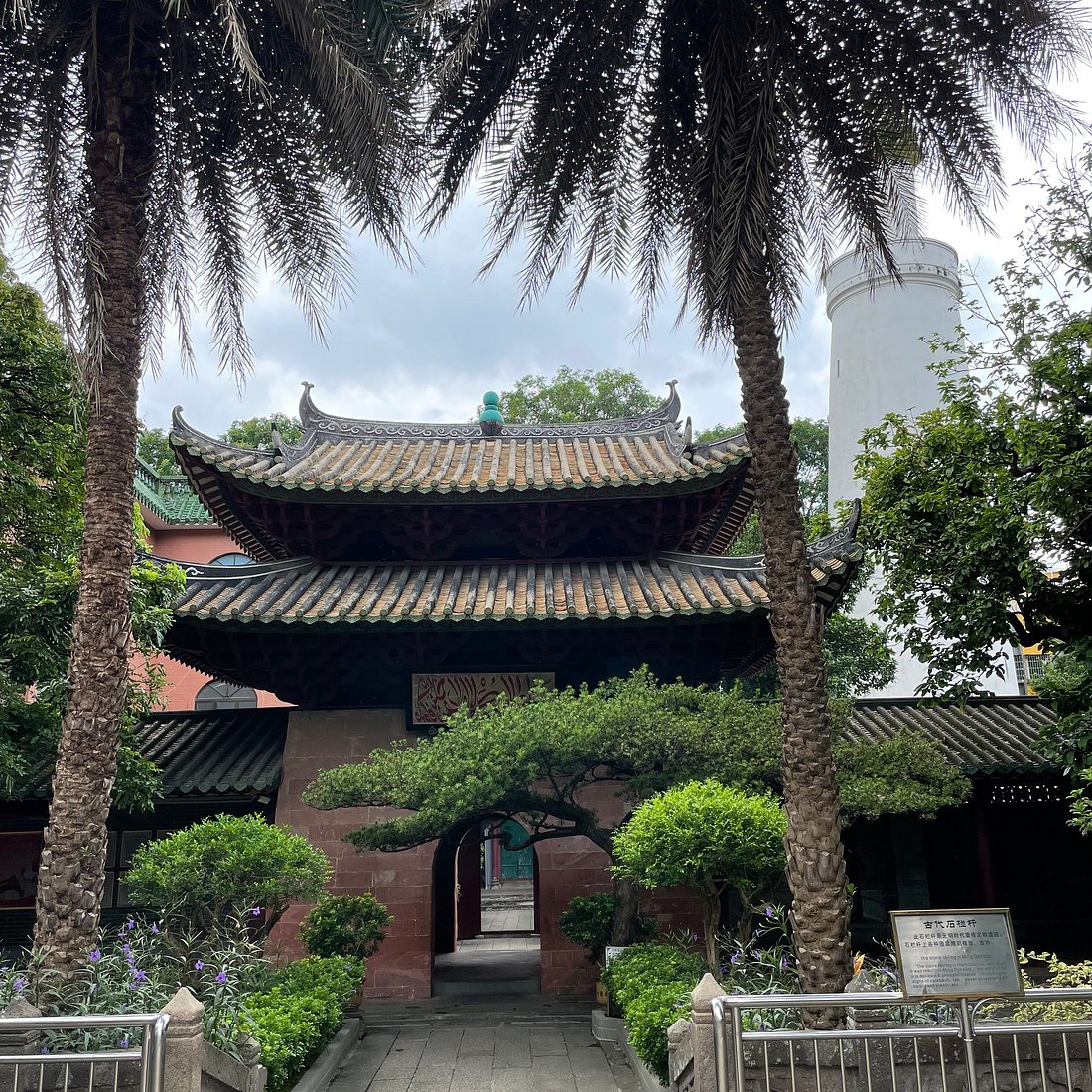
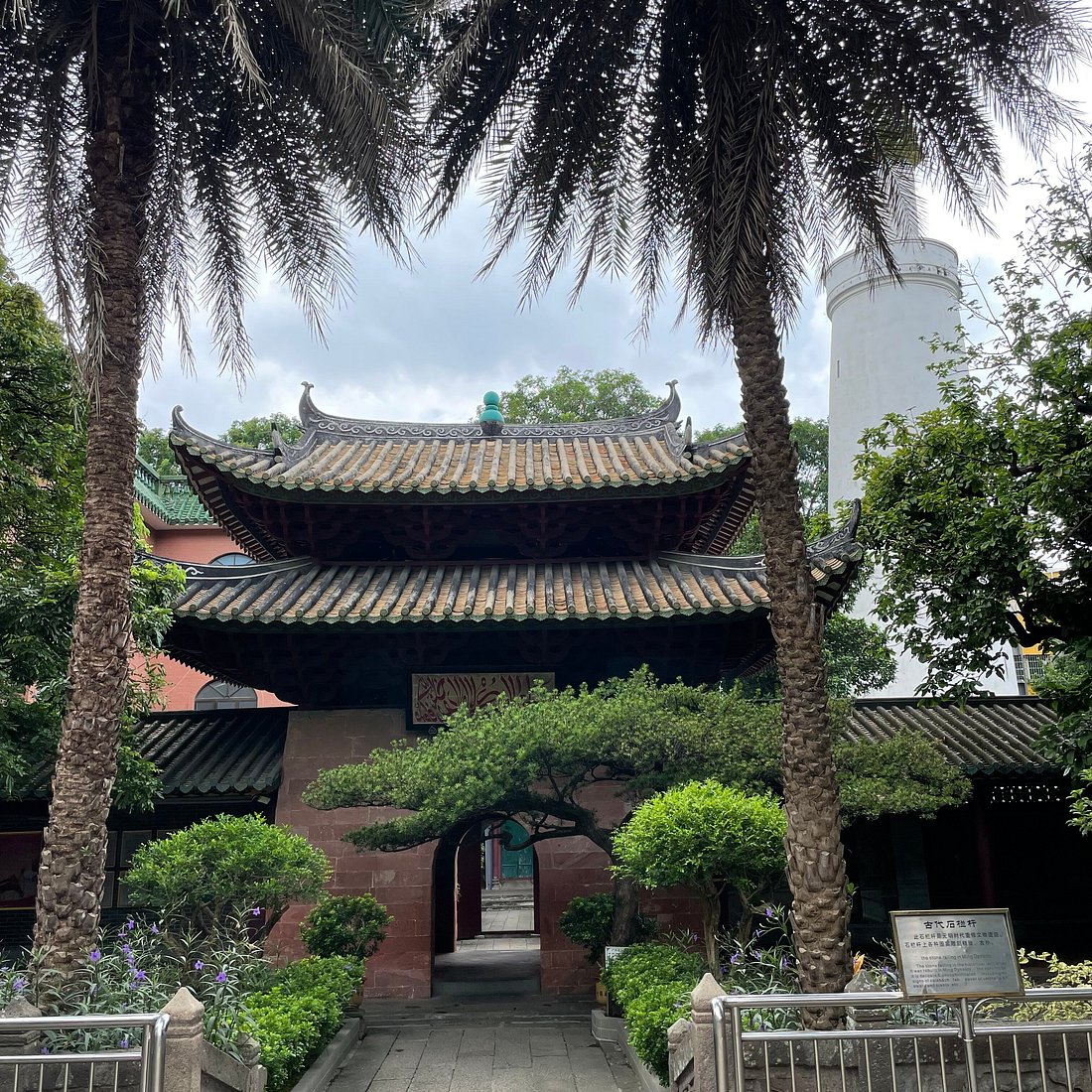
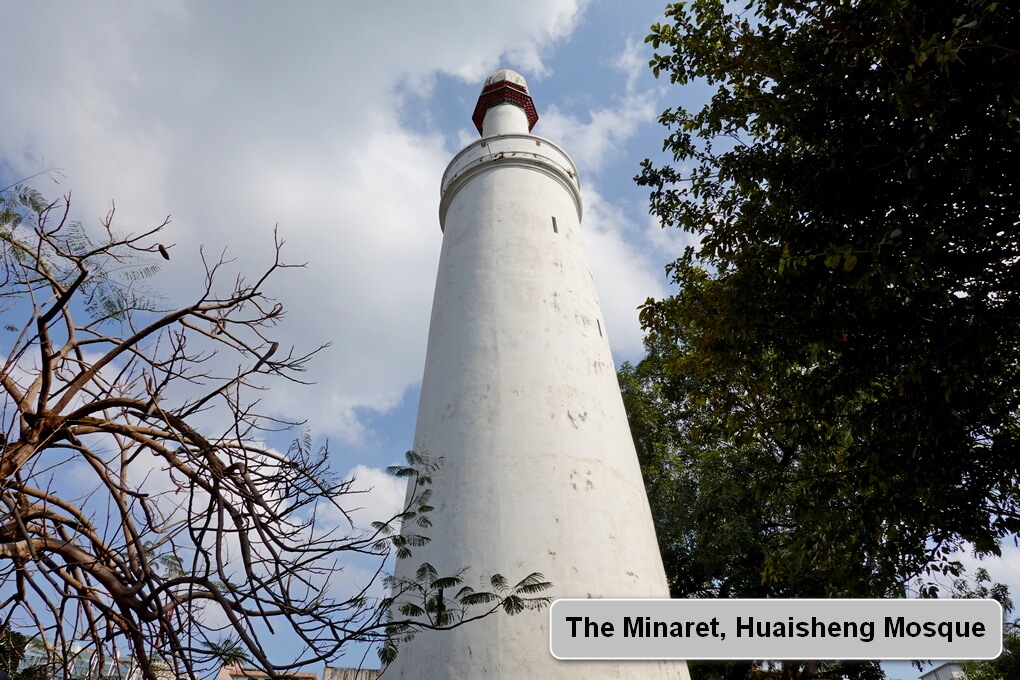
Tradition holds that Huaisheng ('Remembering the Sage') Mosque was founded around 627 in the early Tang, by the Arab missionary Waqqas, an uncle of the Prophet who is said to have sailed to Guangzhou along the Maritime Silk Road. What is certain is that this is China's oldest surviving mosque, guarded by a 36-metre whitewashed Tang-era minaret that once guided boats up the Pearl River. Free, quiet and half-hidden on Guangta Road — the ancient port made visible.
Dive deeper: full travel guide · transport & map · where to stay & book
Tradition holds that Huaisheng — 'Remembering the Sage' — was founded around 627, in the early years of the Tang Zhenguan era, by Sa'd ibn Abi Waqqas, the Prophet's uncle, said to have reached Guangzhou by sea along the Maritime Silk Road. By the 9th century Arab travellers were already describing a mosque by the Pearl River, and today Huaisheng is honoured as China's oldest surviving mosque and one of the four great ancient coastal mosques, alongside Hangzhou's Phoenix, Yangzhou's Crane and Quanzhou's Shengyou. Its masonry minaret, the Guangta or 'Light Tower', rose on the Tang riverbank as a beacon for Arab dhows; fire destroyed much of the complex in 1343, the tower survived, and the courtyards were rebuilt in 1350 and again in 1695. The site joined China's national-heritage list in 1996.
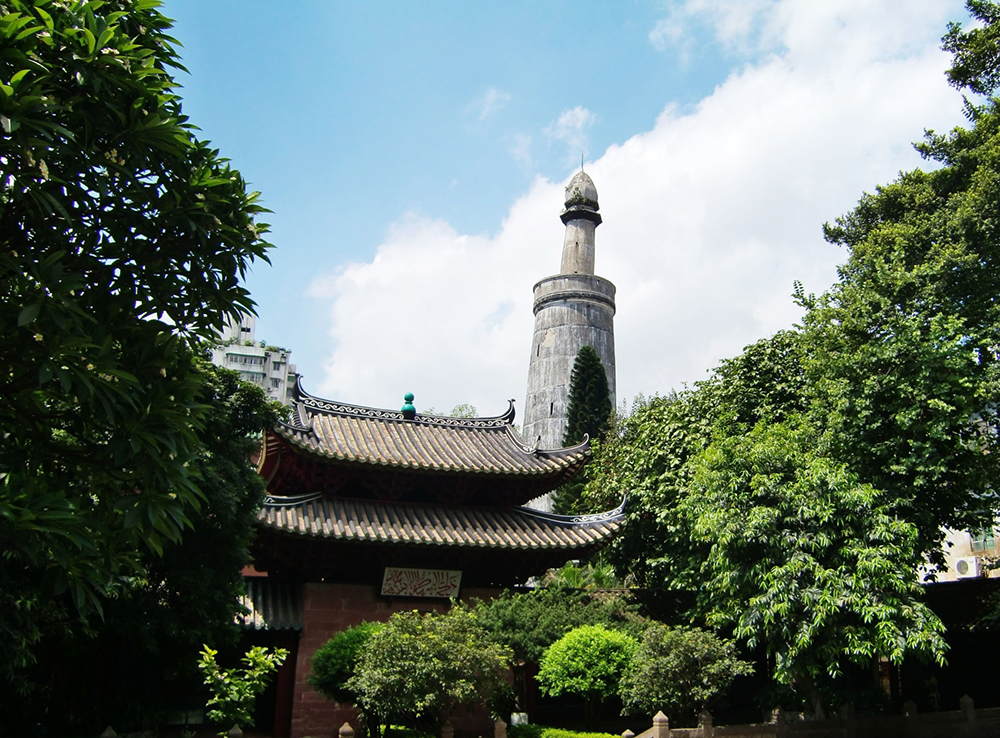
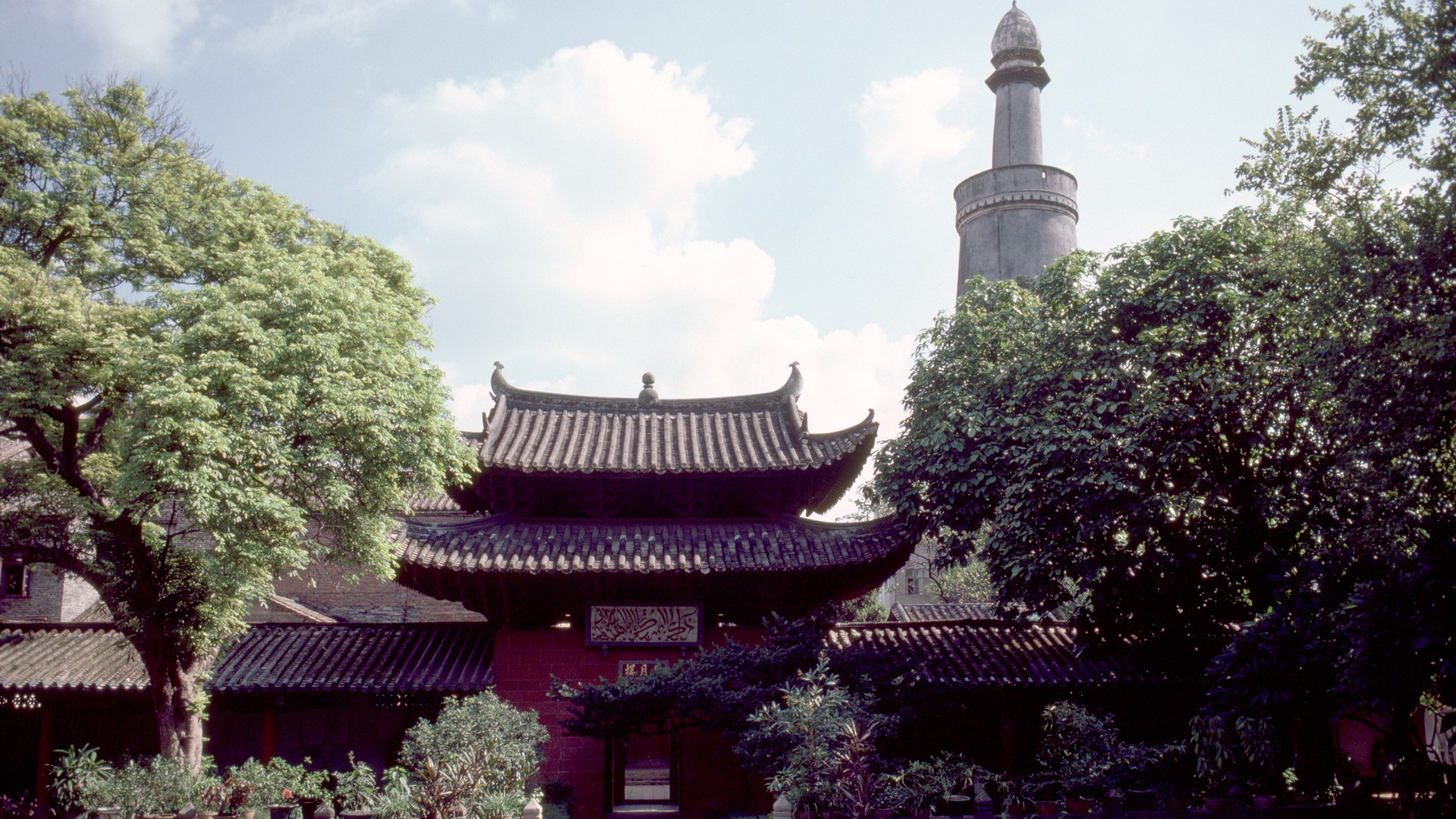
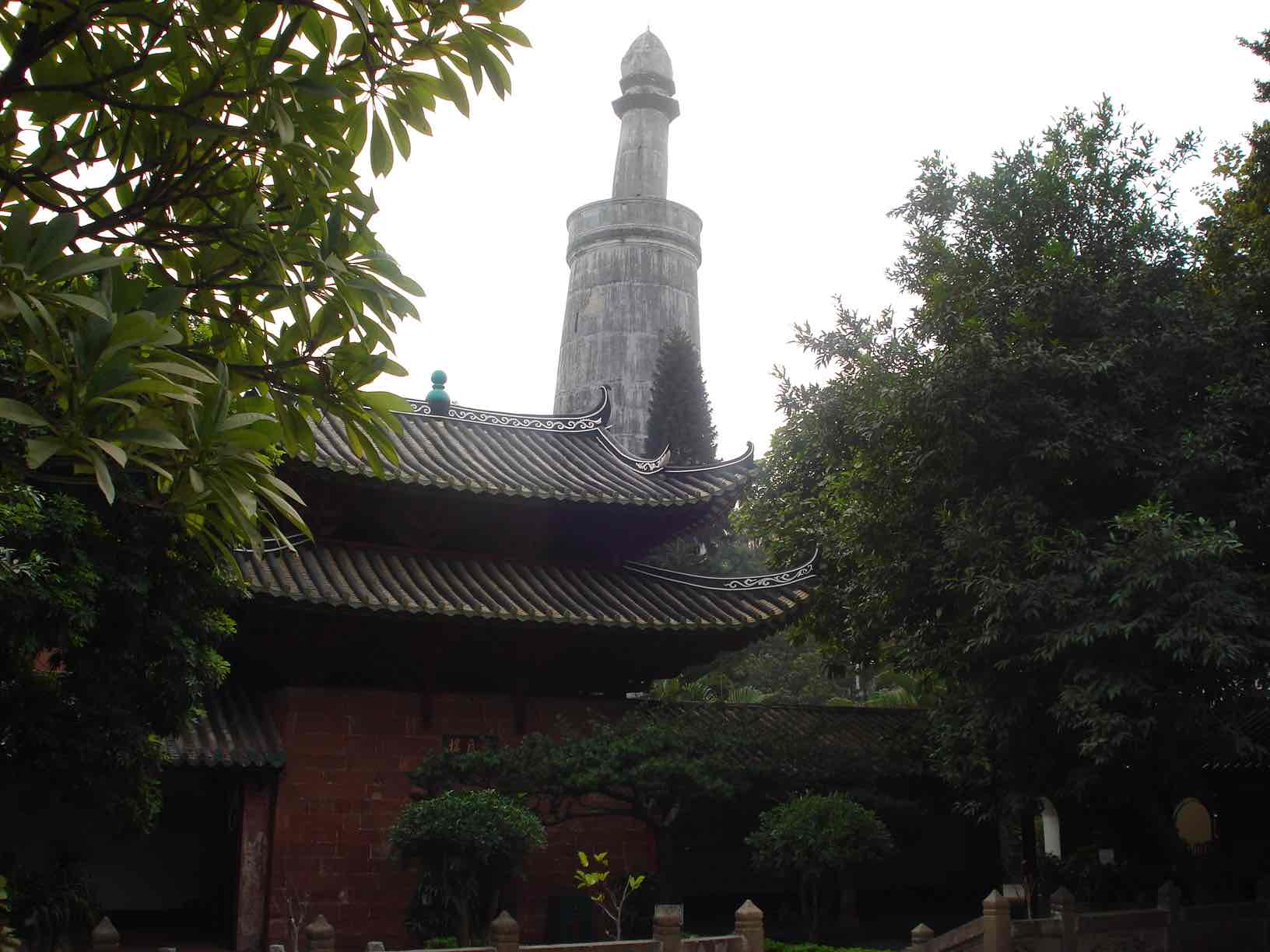
The compound faces south across roughly 3,800 square metres in a thoroughly Chinese plan: three ceremonial gates, the red-sandstone Moon-Watching Tower rebuilt in 1695, the prayer hall on its Ming stone balustrade carved with the 'hidden Eight Immortals', and the scripture hall behind. Yet the hybrid message is unmistakable — the Guangxu-era imperial plaque 'Jiao Chong Xi Yu' ('Honour the Teachings from the Western Regions') hangs over the third gate, and the 36-metre minaret stands apart at the southwest corner: a smooth, whitewashed cylinder that resembles no Chinese pagoda. Two spiral staircases coil independently around its solid core to the platform where a lantern once guided boats home. Beyond the walls, lane names such as Dashi ('Arabia') preserve the memory of the Tang-era Fanfang, the walled foreign quarter.
Visiting in 2026 is a study in respectful restraint. The street front is open around the clock, but the mosque is a living congregation and non-Muslim travellers should expect a polite refusal at the inner gates — plan for the exterior, the gates and the minaret, best in soft morning light. A city protection plan covering 2021-2035, issued in December 2025, locks in conservation of the tower and its historic streetscape for the coming decade. The practical play is the old-town walk: the mosque sits 500 metres from Ximenkou station on Metro Line 1, and pairs naturally with Guangxiao and Liurong temples for a 90-minute 'three faiths on one street' loop that condenses a thousand years of Guangzhou's openness to the world.
Highlights
Guangta (Light Tower)
The 36-metre Tang-era brick minaret — a smooth whitewashed cylinder unique in China, once a night beacon for ships on the Pearl River.
Double Spiral Staircases
Two helical ramps corkscrew independently around the tower's solid core — 1,300-year-old geometry that lets climbers pass without ever meeting.
'Jiao Chong Xi Yu' Imperial Plaque
The Qing Guangxu-era gift on the third gate reads 'Honour the Teachings from the Western Regions' — an imperial nod to a foreign faith.
Moon-Watching Tower (1695)
A fortress-like gatehouse of red sandstone with doubled eaves; rebuilt in 1695, its four arches once fixed the fasting calendar by moonlight.
Ming Balustrade of 'Hidden Immortals'
The stone railing before the prayer hall is carved with the 'hidden Eight Immortals' — a Taoist motif borrowed onto a Muslim platform.
Fanfang Street Names
Lanes around the mosque still carry names like Dashi ('Arabia Lane') and Zhuojia Li — the Tang foreign quarter written into modern asphalt.
Photo Gallery
Comments